
Raw Material - An Interview with Caroline Roberge
Caroline Roberge is one half of the creative duo Le Tenon et la Mortaise and curator of Point de chute, an exhibition held at Maison culturelle Armand-Vaillancourt from June 26 - July 26, 2026. The exhibition brought together nineteen Québec-based designers, craftspeople and artists working across contemporary furniture, collectible design, woodworking, ceramics, glass, fashion, paper, and more. Using production remnants and the processes that precede the finished object as its starting point — such as offcuts, sketches, mock-ups and prototypes — Point de chute reflected on the act of making itself, allowing artists to explore material beyond function and presentation to evoke questions of reuse, consumption and accumulation. Roberge spoke with Studio’s Editorial Assistant, Madeline Collins, about the act of curating craft and their approach to material practice.
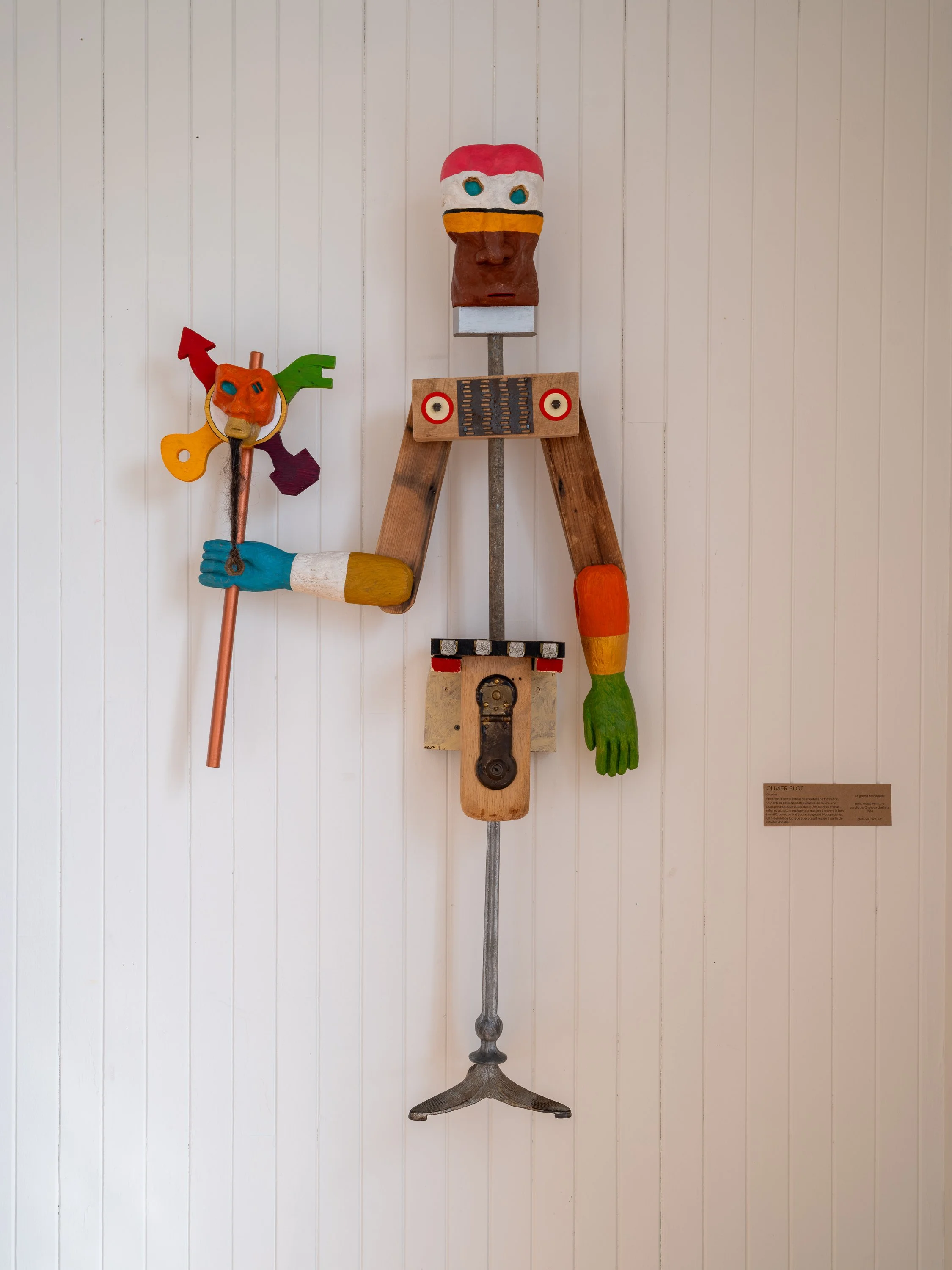
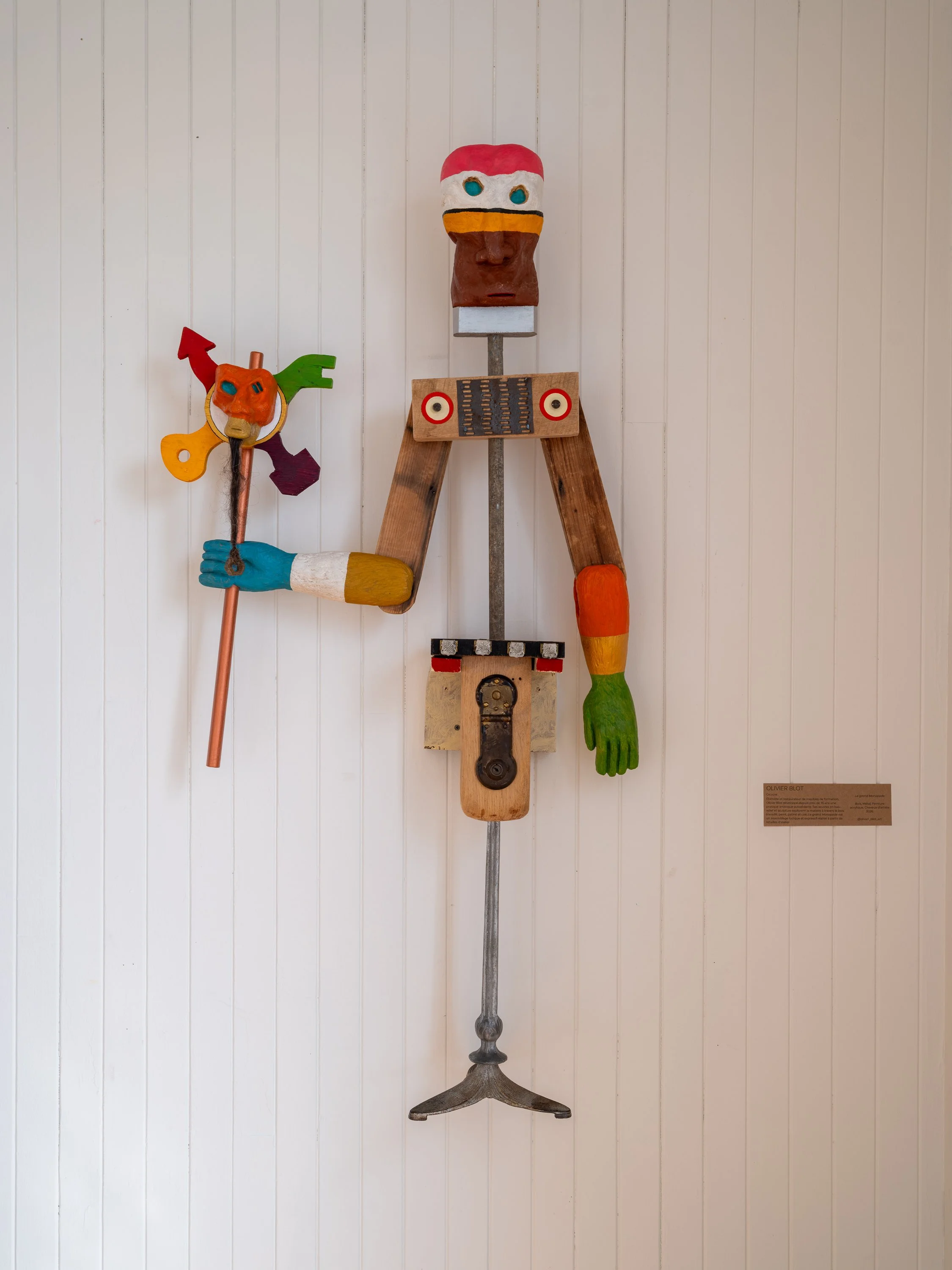
Olivier Blot, Le grand Monopode, 2026. Wood, metal, acrylic pain, hair of the artist. 60 x 135cm. Photo: Nathan Ethier Myette.
Madeline Collins: Congratulations on the opening of Point de chute! As a curator, how did you work to champion craft and material-forward work for the exhibition?
Caroline Roberge: When I was invited by the Maison Culturelle Armand-Vaillancourt to put together a show around design and craft, I asked myself, what could be a unifying, material-based link — something very hands-on — that would resonate across different crafts. Scraps and remnants became a way to reveal what usually remains invisible: the labour, the decisions, the transformation of raw material, and inevitably, the environmental footprint of making. They also opened a conversation about ingenuity—how makers continuously find ways to give value to what would otherwise be discarded.
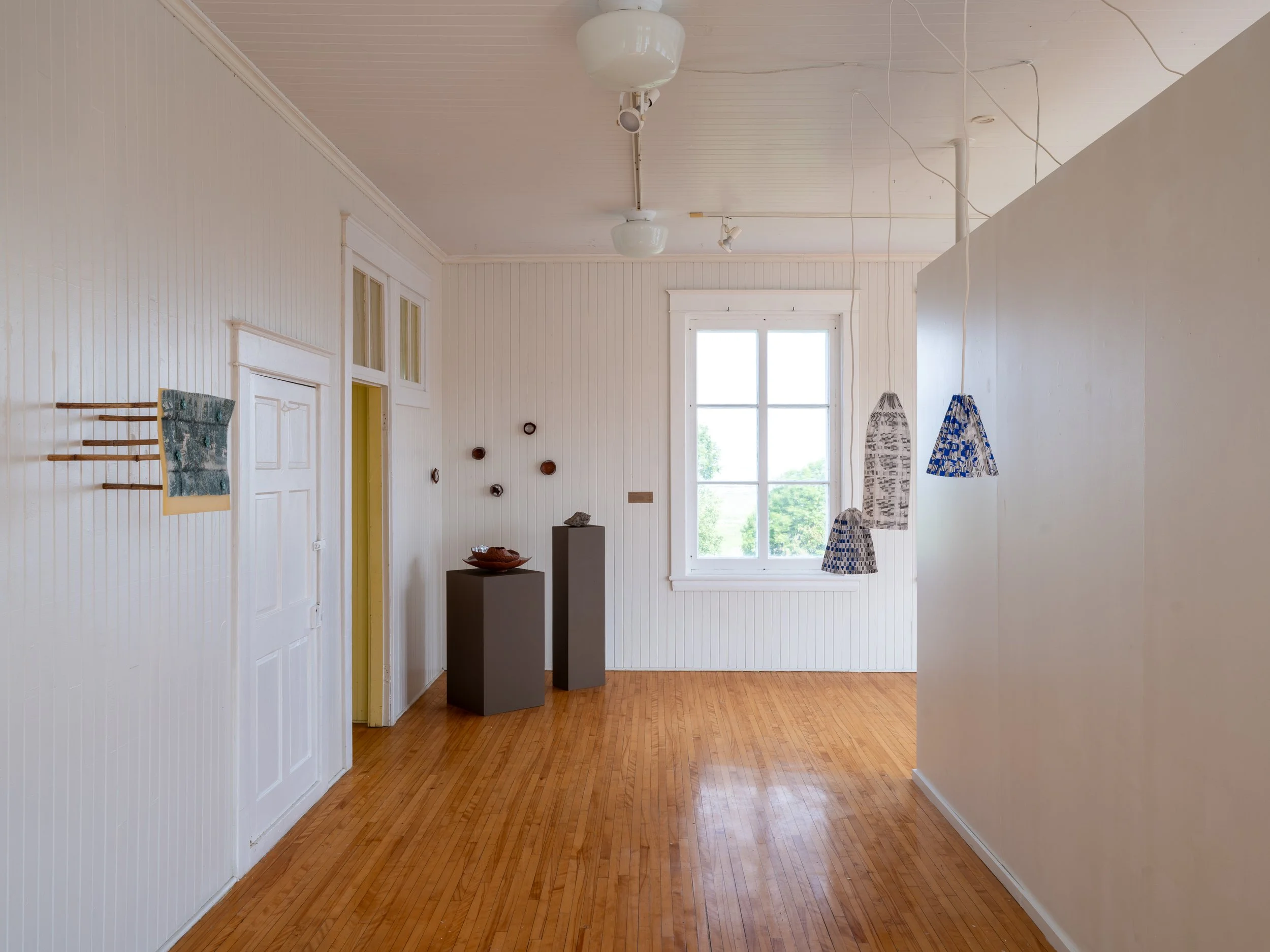
Installation view, Point de Chute, Maison culturelle Armand-Vaillancourt, June 26 - July 26, 2026. Photo: Nathan Ethier Myette.
MC: How do you approach curation of craft practice, and how is it informed by being a maker yourself?
CR: For this exhibition, I was driven by a desire to reveal an often unseen aspect of craft practice—to open the doors of our workshops—and make visible what usually remains behind the scenes. My instinct to focus on production scraps was immediately met with enthusiasm by the makers and designers I invited, because these remnants are part of their daily reality and an integral part of their creative process.
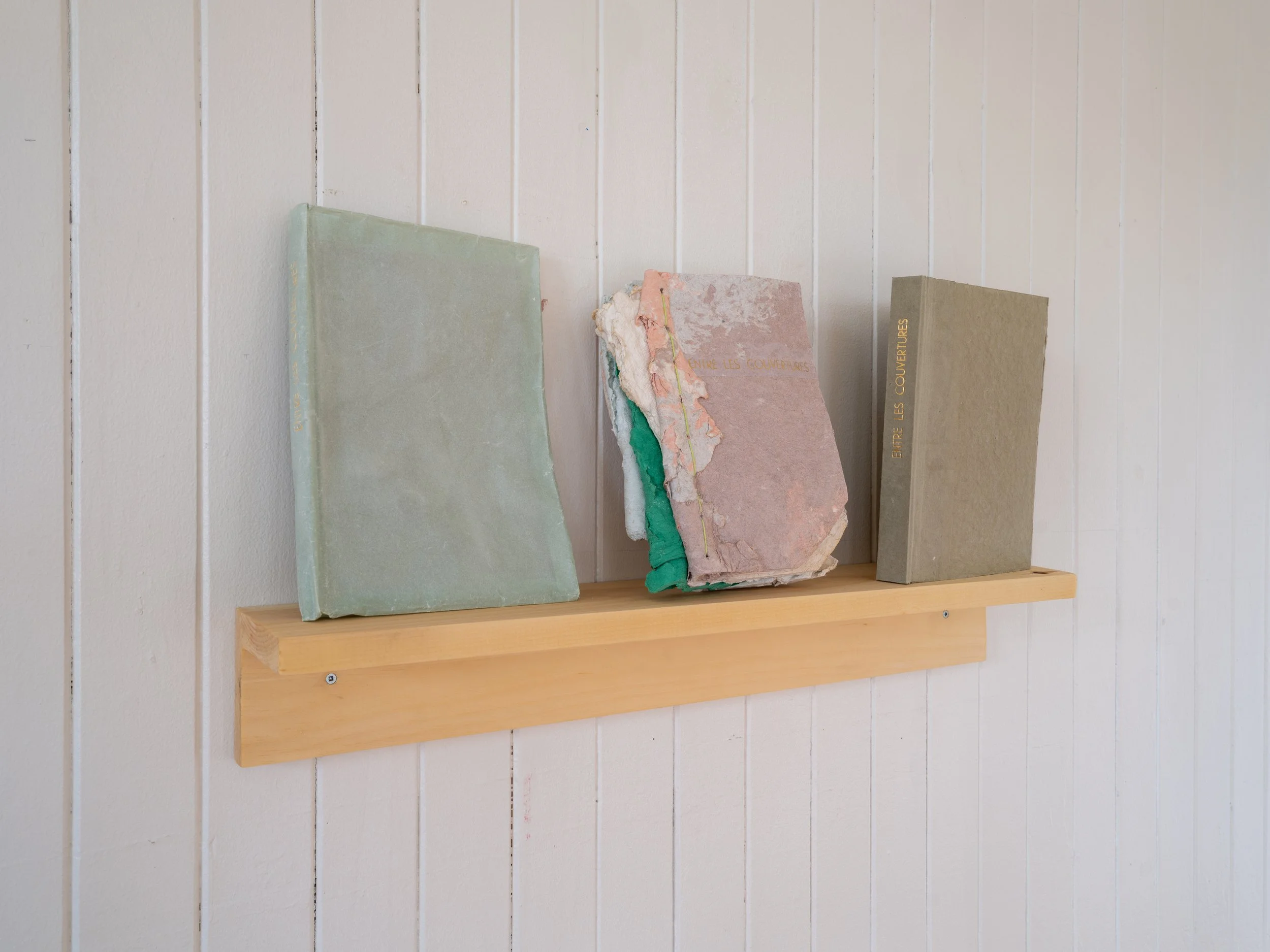
Atelier Retailles, Entre les couvertures: ce qui reste, Livres-Prototypes I, II et III, 2025-2026. Handmade paper, cotton pulp. 6" x 9" x 1". Photo: Nathan Ethier Myette.
Like many of the exhibitors, my partner and I at Le Tenon et la Mortaise had kept aside leftovers in the hope of reusing them — we experimented with our own sawdust and wood chips when trying to imagine a new purpose for them. This show was material-oriented, so being a maker myself enriched my view on the subject. My background in art history encouraged me to step back and consider the broader conceptual implications. I wanted the exhibition not only to showcase objects, but to invite reflection on what remains invisible in craft: the hidden labour, the material transformations, and the traces left behind by every act of making.
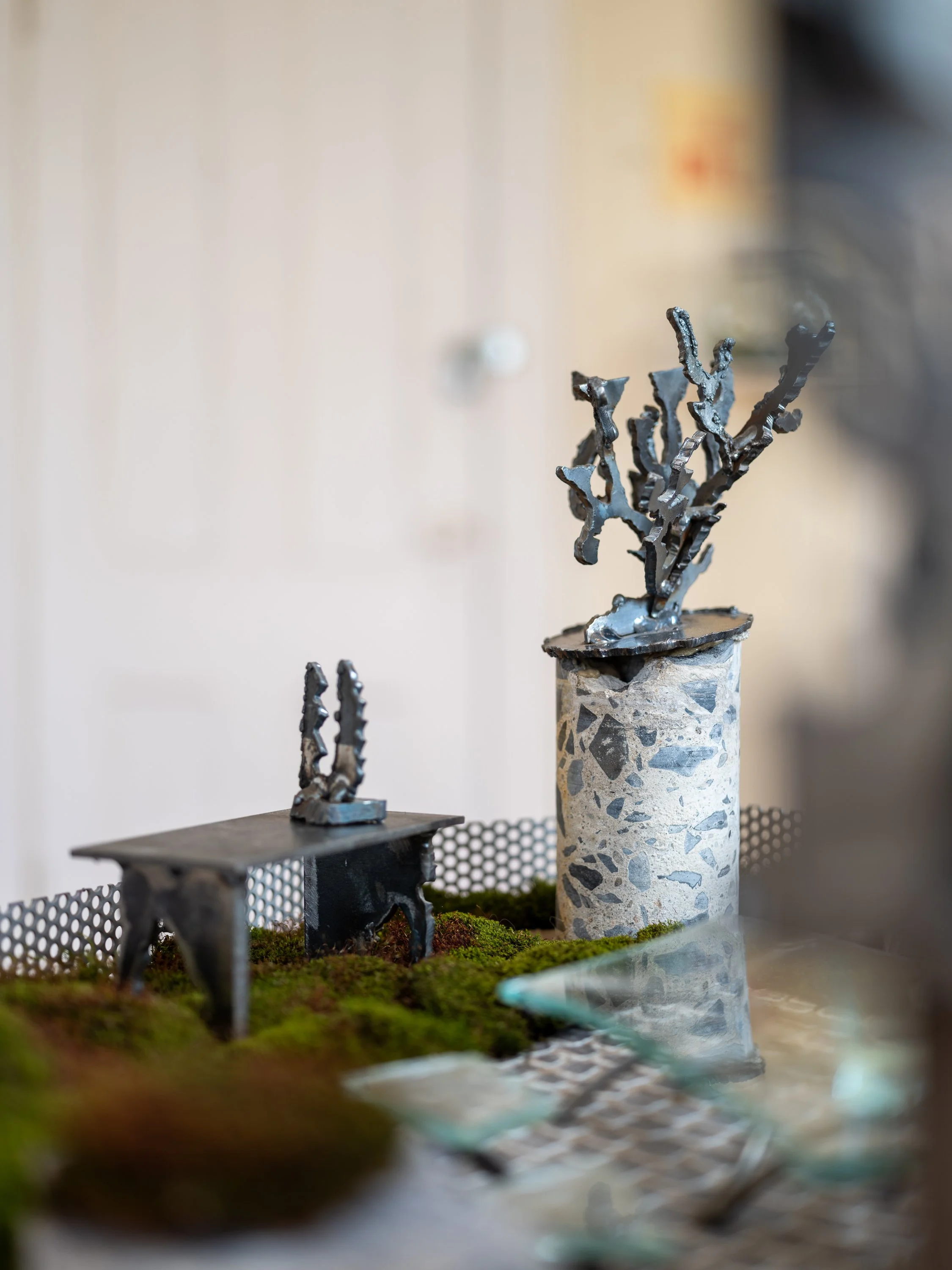
Alexis Vaillancourt, Sans titre (detail), 2026. Steel. 16’’x16’’x16’'. Photo: Nathan Ethier Myette.
MC: Can you elaborate on the questions of sustainability, slow making, and reuse that permeate the exhibition? What role do you see these values playing in craft practice? What insights do you hope viewers leave with?
CR: To me, the value of craft practices in regard to remnants and scraps is the sort of 360-degree view we have on our processes. By being involved from start to finish, we are aware of the life cycle of the raw material, and we are better able to envision a second life, to explore its many possibilities. Reuse is not only about reducing waste. It can become a source of creativity. Many of the exhibitors showed that a remnant is not simply a leftover—it can become the starting point of a completely new material or object.
I hope visitors left with a renewed appreciation for everything that existed before a finished object reached them, and with the understanding that every object carried invisible traces of material, labour, and choices.
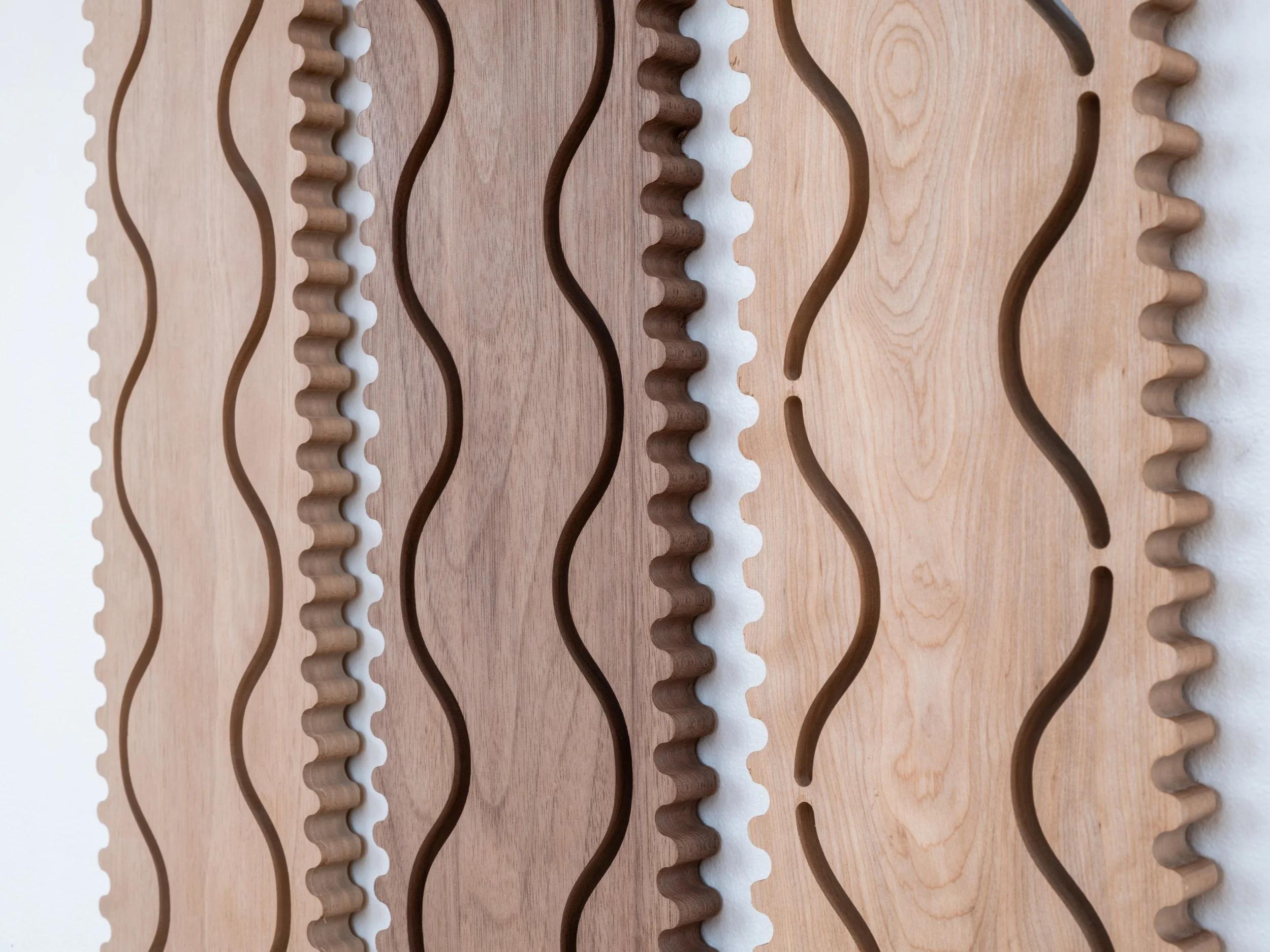
Vivi Lamarre, Calepinage 1, 2026. Black walnut and yellow birch. 11” x 30”. Photo: Nathan Ethier Myette.
MC: How do you approach bringing together such different material practices in a single exhibition? How do you imagine the many materials speak with each other?
CR: All the exhibitors approached the subject in one of three ways: some were already experimenting with their scraps and transforming them into another material; others had already thought of different ways they could reuse them and were waiting for an opportunity to develop their idea; and others addressed the environmental impact of production processes directly. I think these three approaches naturally resonated together.
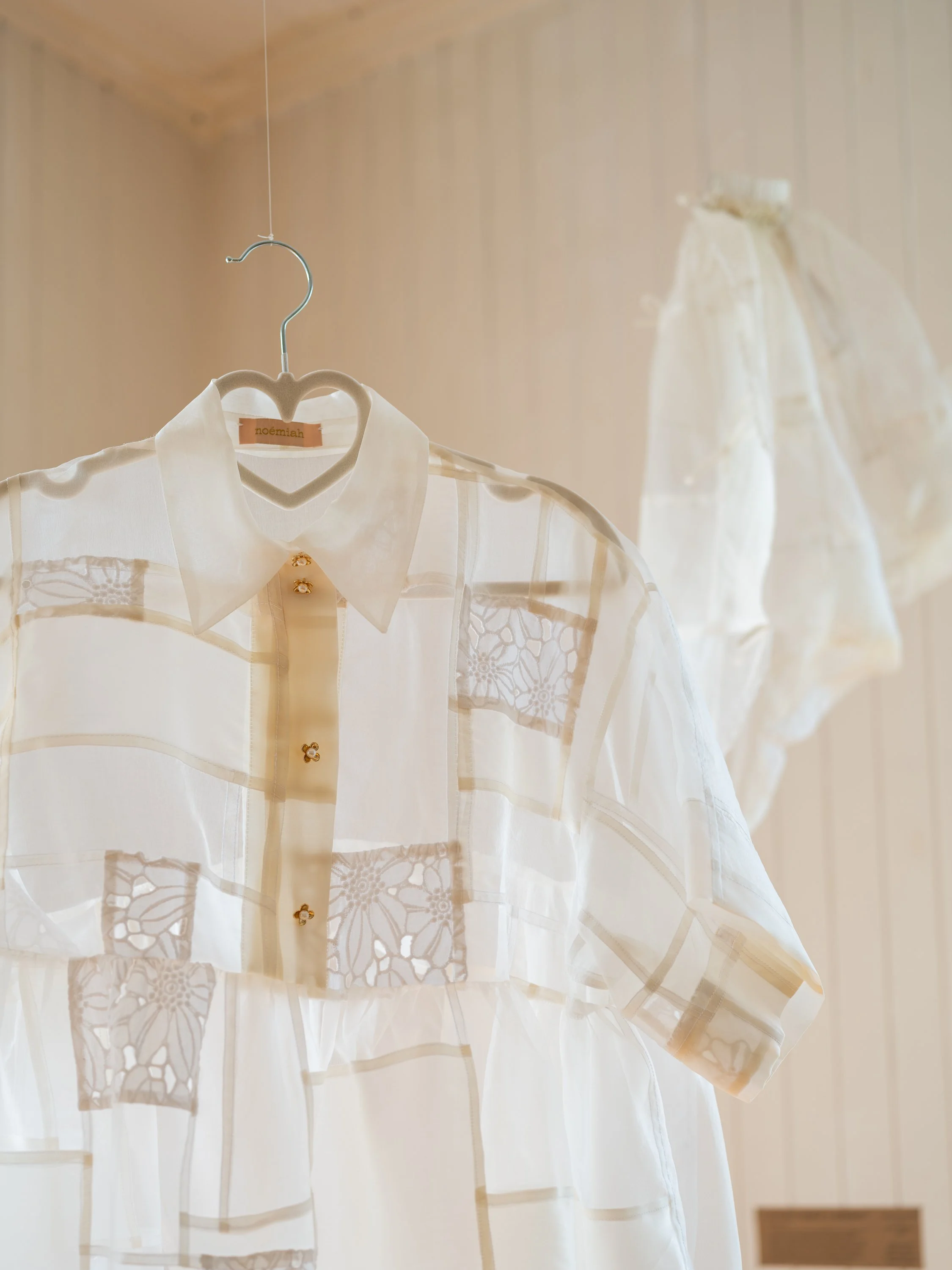
Le Point visible x noemiah, Wedding dress and veil, 2026. 100% silk, gold-plated brass. 16" X 27". Photo: Nathan Ethier Myette.
Although wood, leather, textiles, glass, and ceramics behave very differently, the questions they raise are remarkably similar. Every material leaves traces, every process generates remnants, and every maker develops a personal relationship with them. That common experience became the real thread that connected all of us in the exhibition.
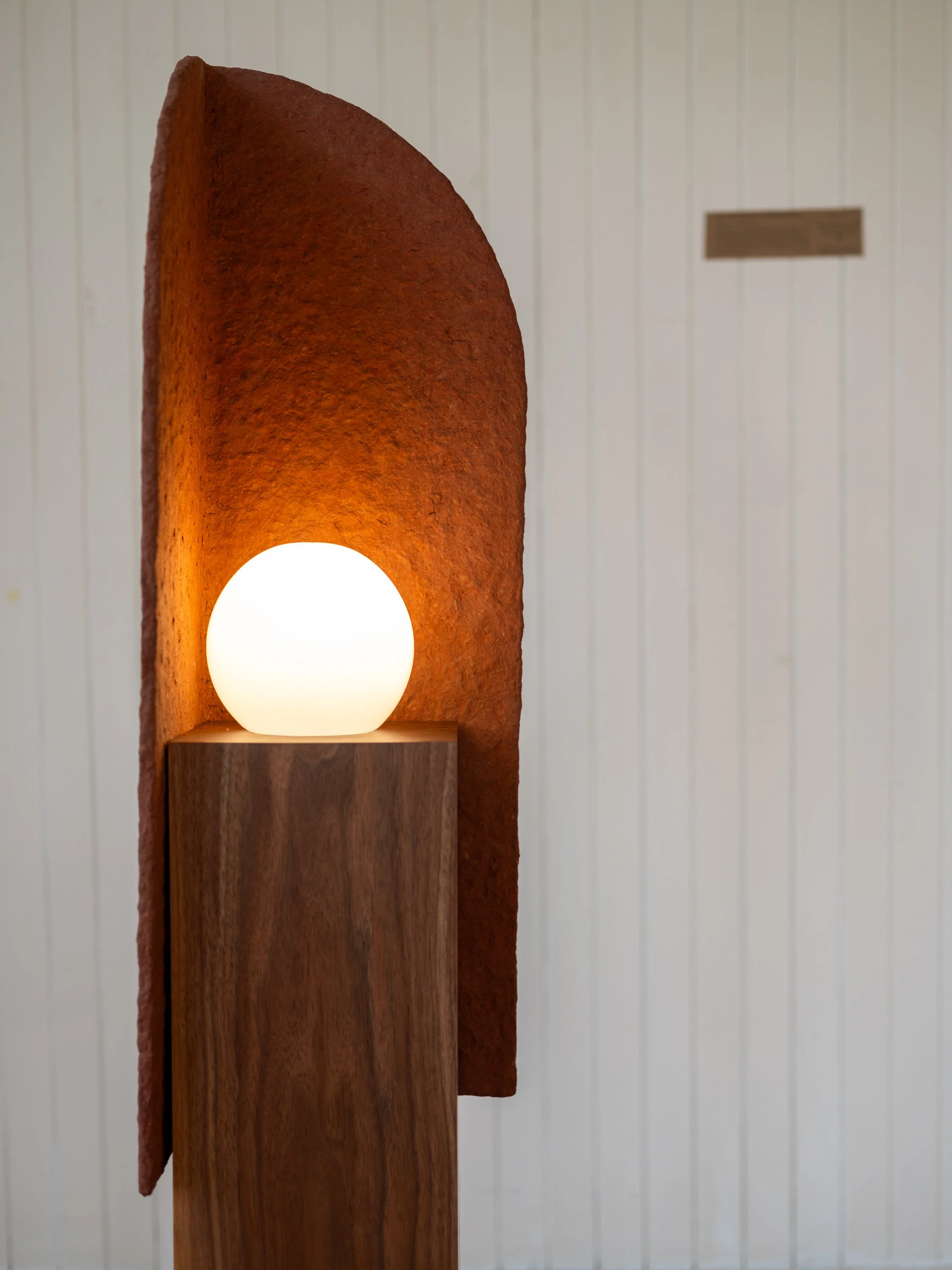
Le Tenon et La Mortaise, Ce qui reste, 2026. Black walnut, cardboard, sawdust, plywood, glass, 9’’x9’’x54’'. Photo: Nathan Ethier Myette.
Exhibiting artists:
Alexis Vaillancourt: https://www.alexisvaillancourt.com/
Vivi Lamarre: https://www.vivilamarre.com/
Noemiah: https://noemiah.com/
Le Point Visible: https://lepointvisible.com/
Le Tenon et la Mortaise: https://letenonetlamortaise.com/
Atelier Pellerin: https://www.raphaelpellerin.com/
atelier b: https://atelier-b.ca/
A&J Métissage: https://www.aj-metissage.com
Atelier V Cuir: https://ateliervcuir.com
Fusion f: https://fusionf.studio/
Marianne Stratis: https://www.instagram.com/marianestratis/
Olivier Blot: https://www.instagram.com/olivier_blot_art/
Stéphane Dumont: https://arbolcuisine.com
Laboratoire Textile: https://www.laboratoiretextile.ca