
Forage and Fire
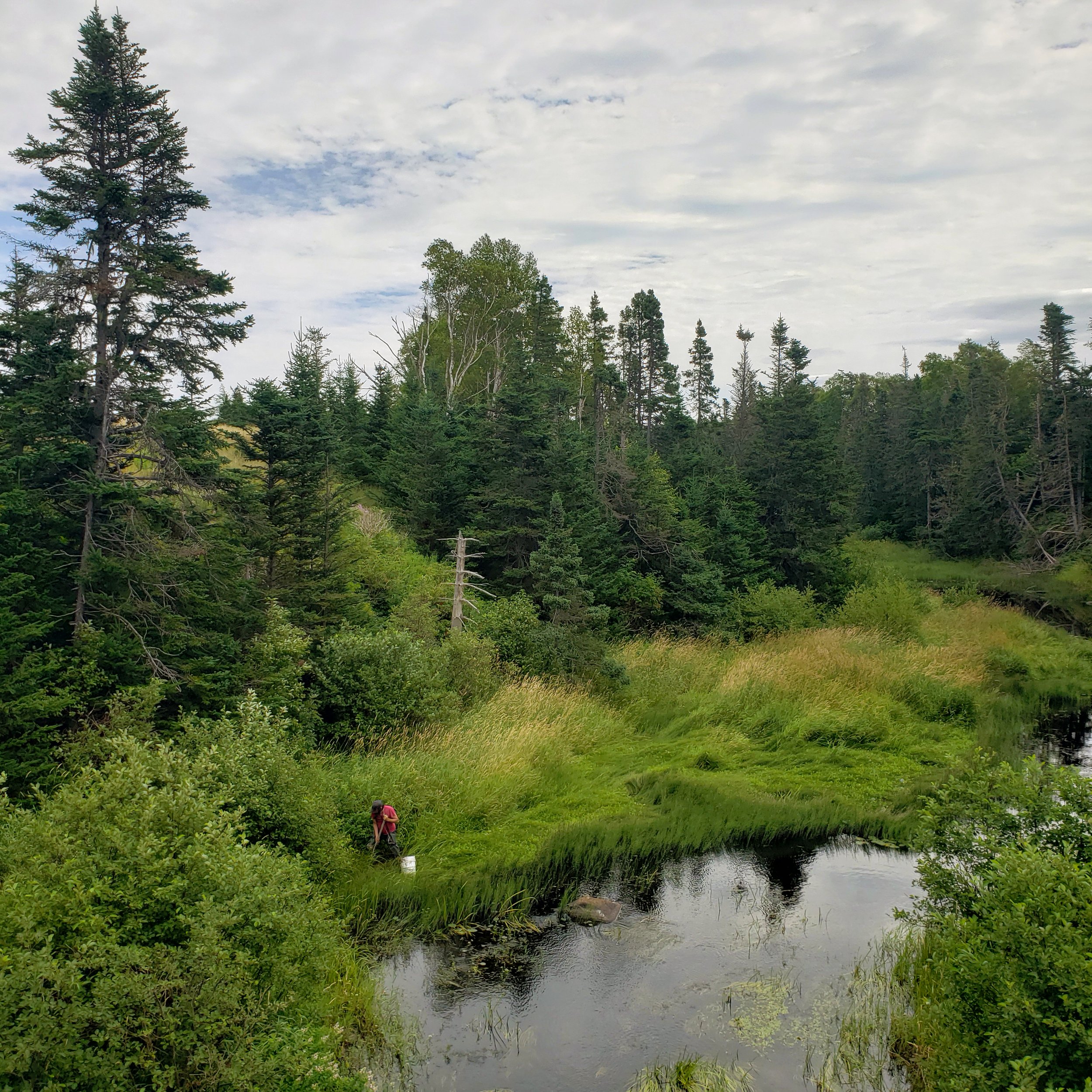
Collecting at a clay deposit near Lethbridge, NL. Photo: Paige Thompson.
Twenty-five kilometers from the easternmost tip of the Bonavista Peninsula, Newfoundland born and based artist Michael Flaherty is inviting the limitation of working with local materials into his practice — and the results are abundant.
After completing a foundational diploma in visual arts at the College of the North Atlantic, Flaherty’s pursuit of ceramic education took him off-island to Nova Scotia College of Art and Design in 2001, and the University of Regina in 2007, followed by various residencies and teaching appointments across the country. He established Wild Cove Pottery — whose name takes inspiration from a site of local clay explored by early Newfoundland potter Margo Meyer — in his current home of Port Union in 2015, signaling a purposeful re-tethering to place. He has spent many years researching, locating, and processing local materials in the region, intent on divesting from commercial products, and exploring what Flaherty muses as “an aesthetic of pottery just made in Newfoundland” might be.
It is difficult to discuss local materials and the land without acknowledging Indigenous relationships to them. Although documentation of pre-contact pottery in Newfoundland/Ktaqmkuk is limited, pottery sherds found in Labrador and the Beothuk use of ochre-rich clay suggest a broader and still under-examined history of Indigenous engagement with clay in the region.
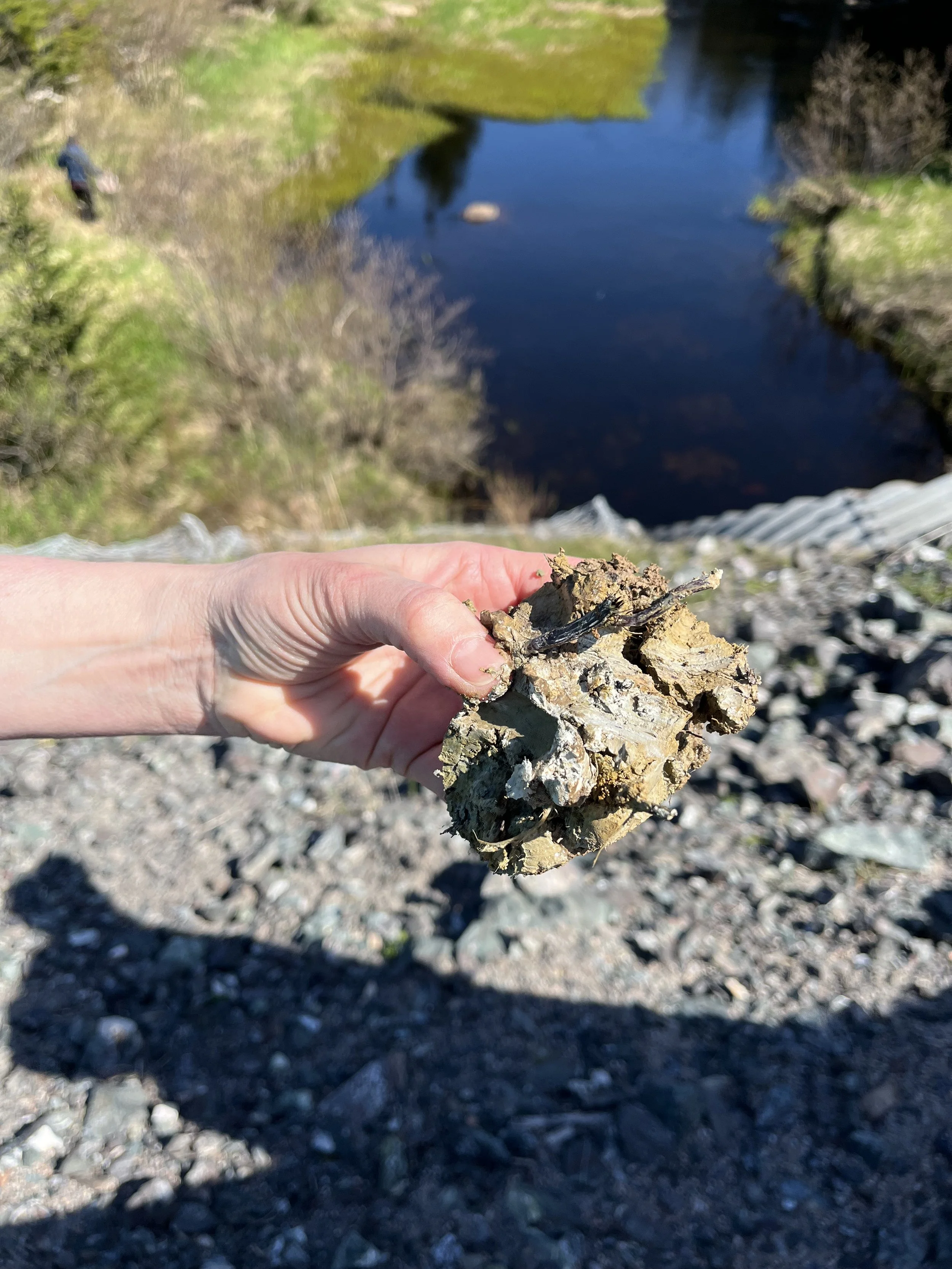
Unprocessed clay from deposit near Lethbridge, NL.
Flaherty begins his search for local clay deposits by consulting historical prospecting, mining, and government records to identify sites of potential material and mineral richness. Flaherty is looking for materials that will satisfy a variety of categories and concerns, these include plasticity, firing temperature, and colour. Once collected, foraged clay is dried, crushed, screened to remove rocks and debris, and reconstituted to achieve specific properties, with special attention to its firing temperature.
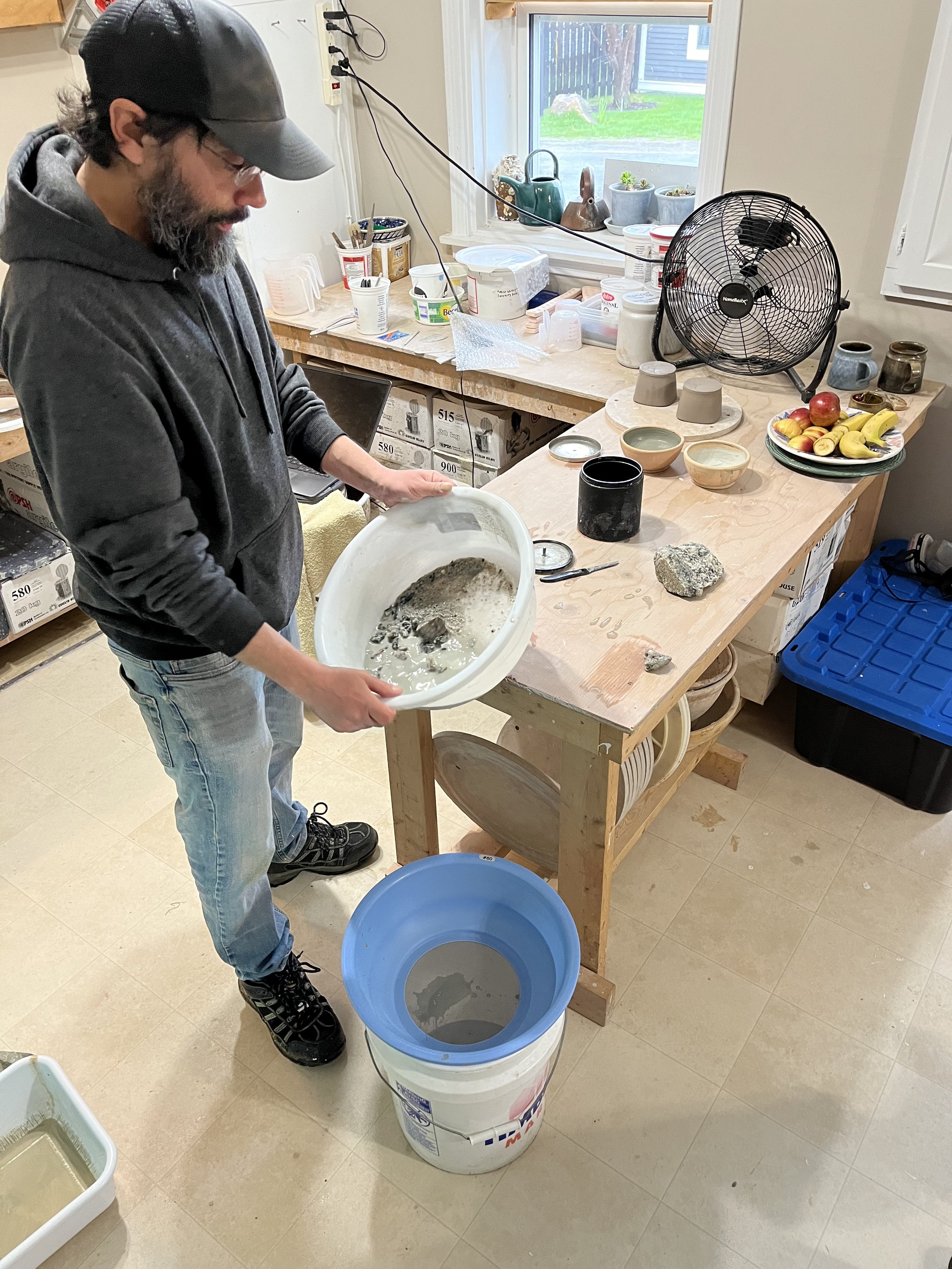
Michael Flaherty processing foraged minerals to use in glaze recipes. Photo: Alex Chouinard-McLellan.
Potential glaze materials — granite, silica, quartz, and limestone — are gathered from visits to old quarries, then undergo laborious manual processing that Flaherty explains as “crushing them up and trying to melt them by blending them together in different proportions”. While trial and error testing through repeated firings can provide valuable information about these materials — temperature of maturation, melting point, colour — Flaherty is interested in building knowledge around them chemically as well. Samples are sent to the Eastern Analytical laboratory in Newfoundland to be analyzed for chemical composition, which allows him to better predict how materials will perform as glaze ingredients and serves to “reinforce field knowledge when out collecting” he notes.
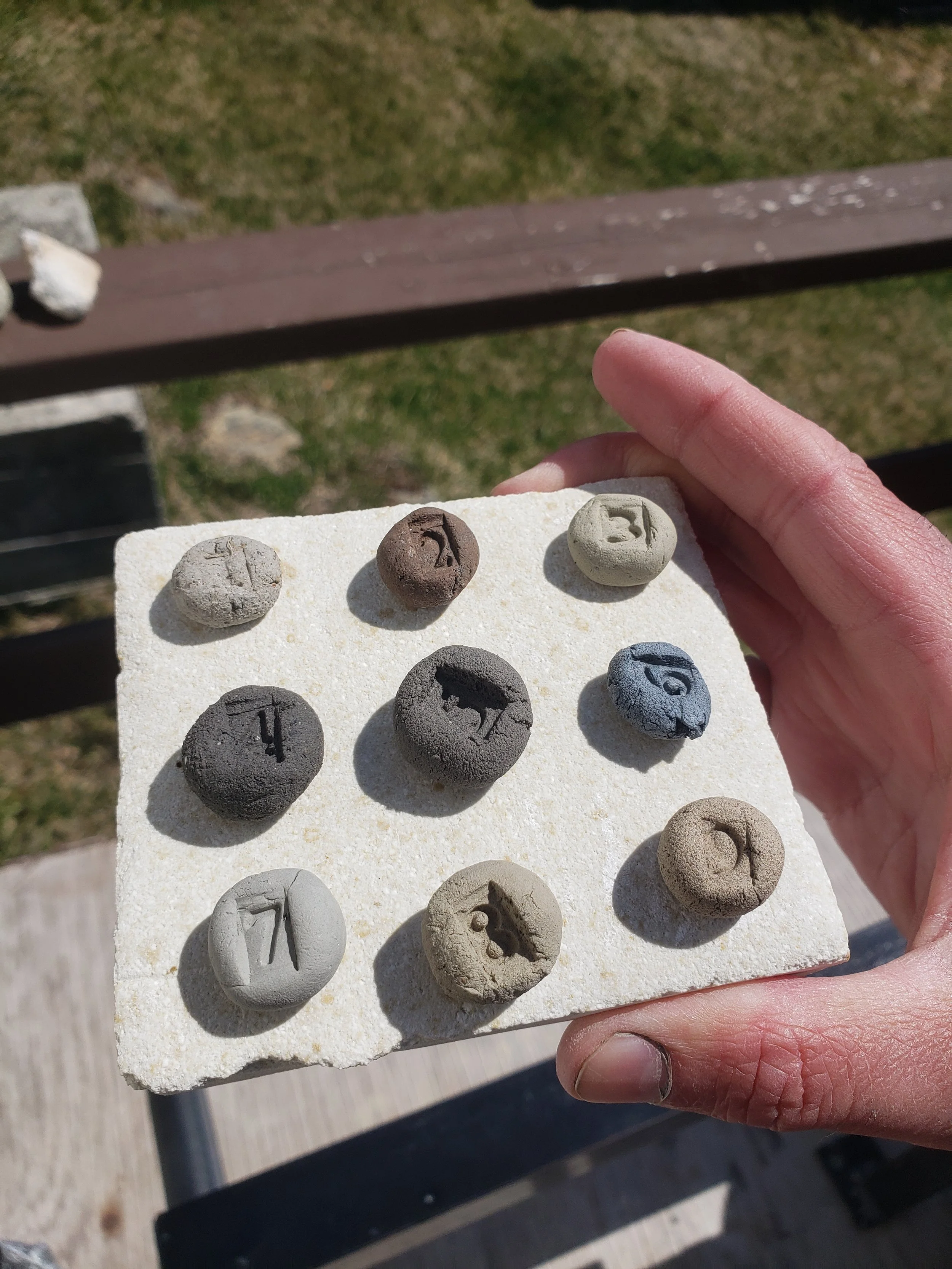
Small samples of unfired clay from the island. Photo: Michael Flaherty.
Beyond the materials required to make a base glaze, Flaherty seeks colourants, which are largely derived from metals. Iron (producing blues, greens, browns) is generally bountiful while copper (producing reds and greens) is less so. Recently, Flaherty has identified a source for pigment — basalt tailings from a 19th century copper mine — in northern Newfoundland. While Flaherty acknowledges there is a certain cachet to achieving a local copper red glaze — “the novelty of the minerals that are involved is kind of really interesting” — his engagement with this site of former resource extraction is meaningful beyond the material feat. Describing the mine site in Tilt Cove, Flaherty notes that none of the wealth generated from the mining process was worker-owned or stayed within the community. As he shares: “it's interesting to go there myself and extract the mineral and try to build knowledge about it — run a business, a small business in a rural community — just because of that background [of colonial resource extraction]”. By re-engaging with these materials as a local artist, Flaherty animates and (re)activates their narrative and technical value, developing and building upon a localized ceramic art tradition.
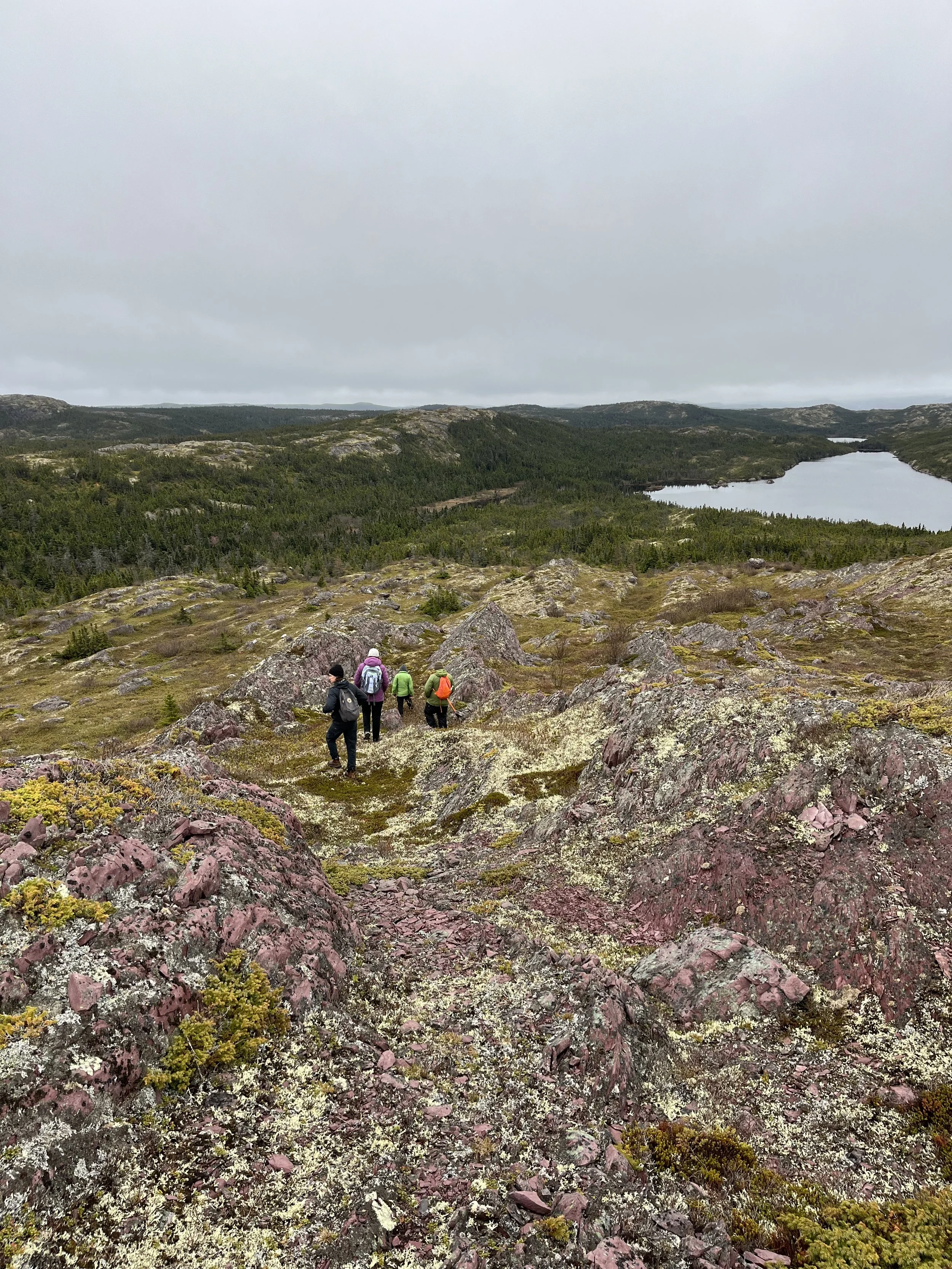
Hike near Meat Cove, NL (Forage & Fire 2024). Photo: Alex Chouinard-McLellan.
Flaherty’s train kiln, Buck. Photo: Michael Flaherty.
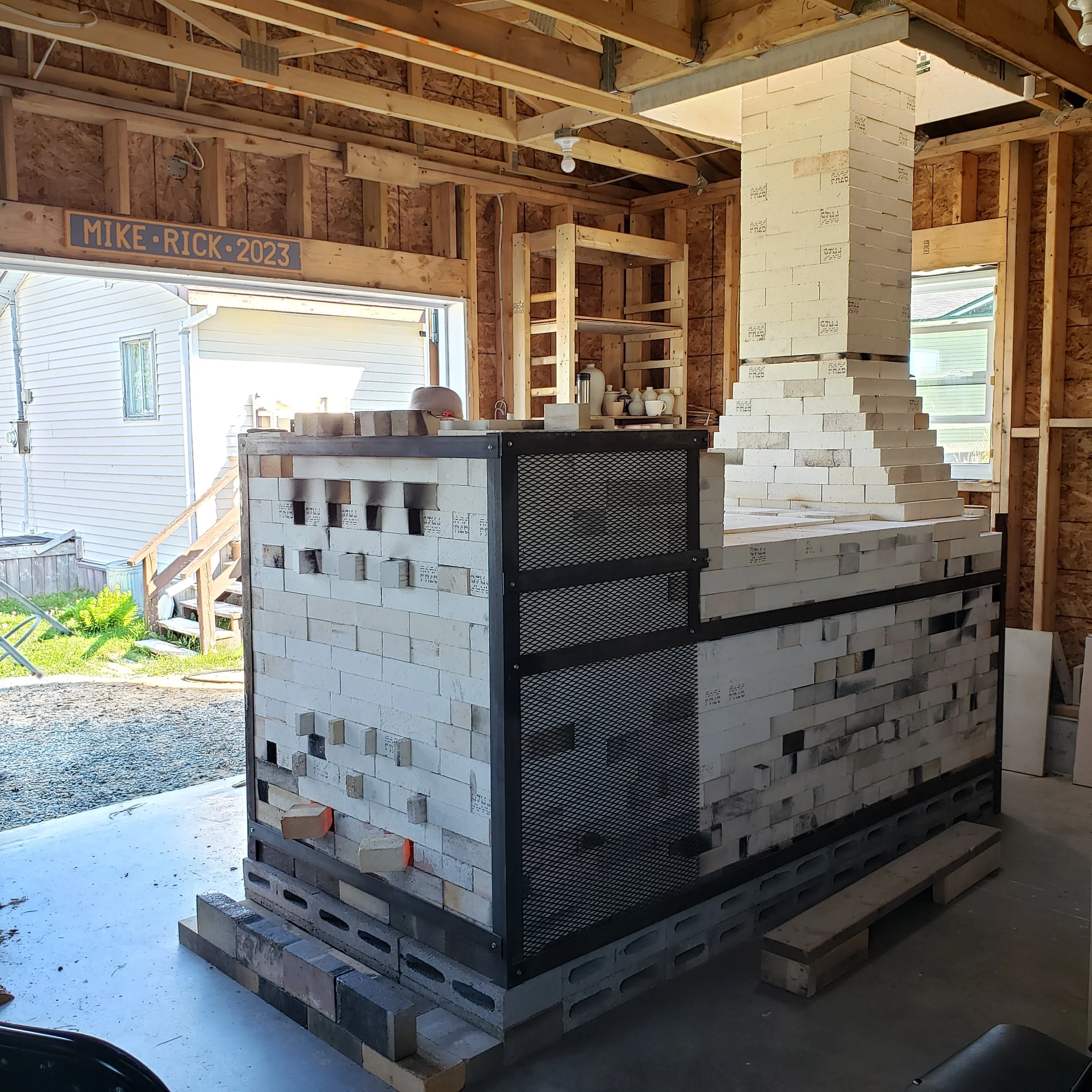
While the project of knowledge documentation is still percolating — Flaherty is considering an open source format or artist book — that of knowledge mobilization is well underway. In 2024, Flaherty hosted his first workshop on the topic: Forage & Fire. Now an annual offering, participants are invited to Flaherty’s home studio on the Bonavista Peninsula; to gather and process collected materials, then fire them in a wood-burning pottery kiln. As Flaherty expresses “in a lot of economically depressed places, there's just always a sense that things are better everywhere else. And I would refute that. And this is my refutation of that.”
A thoughtfully curated itinerary of in-studio demos, hikes to local material sites, and communal meals shape the week, with Flaherty’s wealth of knowledge unfolding organically in both structured and fluid space. This generous and direct invitation to partake in his process and practice can’t help but instill in participants a nascent or renewed engagement with place, consideration of local materials and their narrative import to the work we make. Beyond the ceramic pieces that emerge from the wood kiln at week’s end, it is this sharing of orientation to making that participants can carry forward in their own personal contexts and art practices. This is something Flaherty achieves in his role as instructor at the Haliburton School of Art & Design, and mentor within his own business and location, inviting students and summer apprentices into this practice.
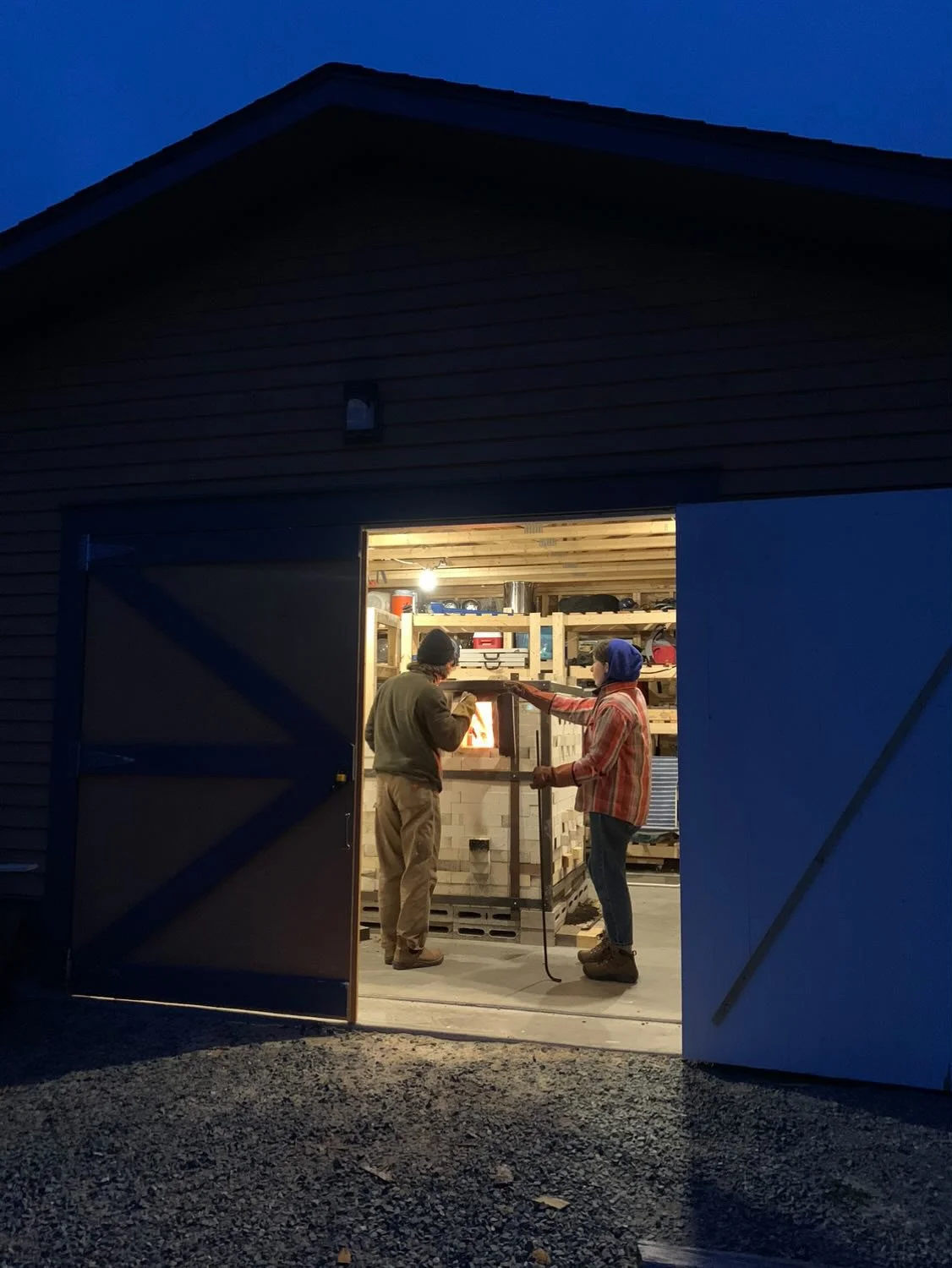
Night shift firing the wood kiln (Forage & Fire 2024). Photo: Alex Chouinard-McLellan.
That his work takes place in Port Union, the only union-built town in North America, feels like no coincidence given the ethos that guides it. This collaborative and community-engaged approach to art-making and presentation is active and diligently tended in the area, with Wild Cove Pottery having the vibrant community artspace Union House Arts as a neighbour, and the Bonavista Biennale taking place on the peninsula. It is hard not to see the use of local materials in Newfoundland as a practice of particular social and political import — as an insistence on the place’s plentifulness, as a setting that is materially abundant — one only has to look.
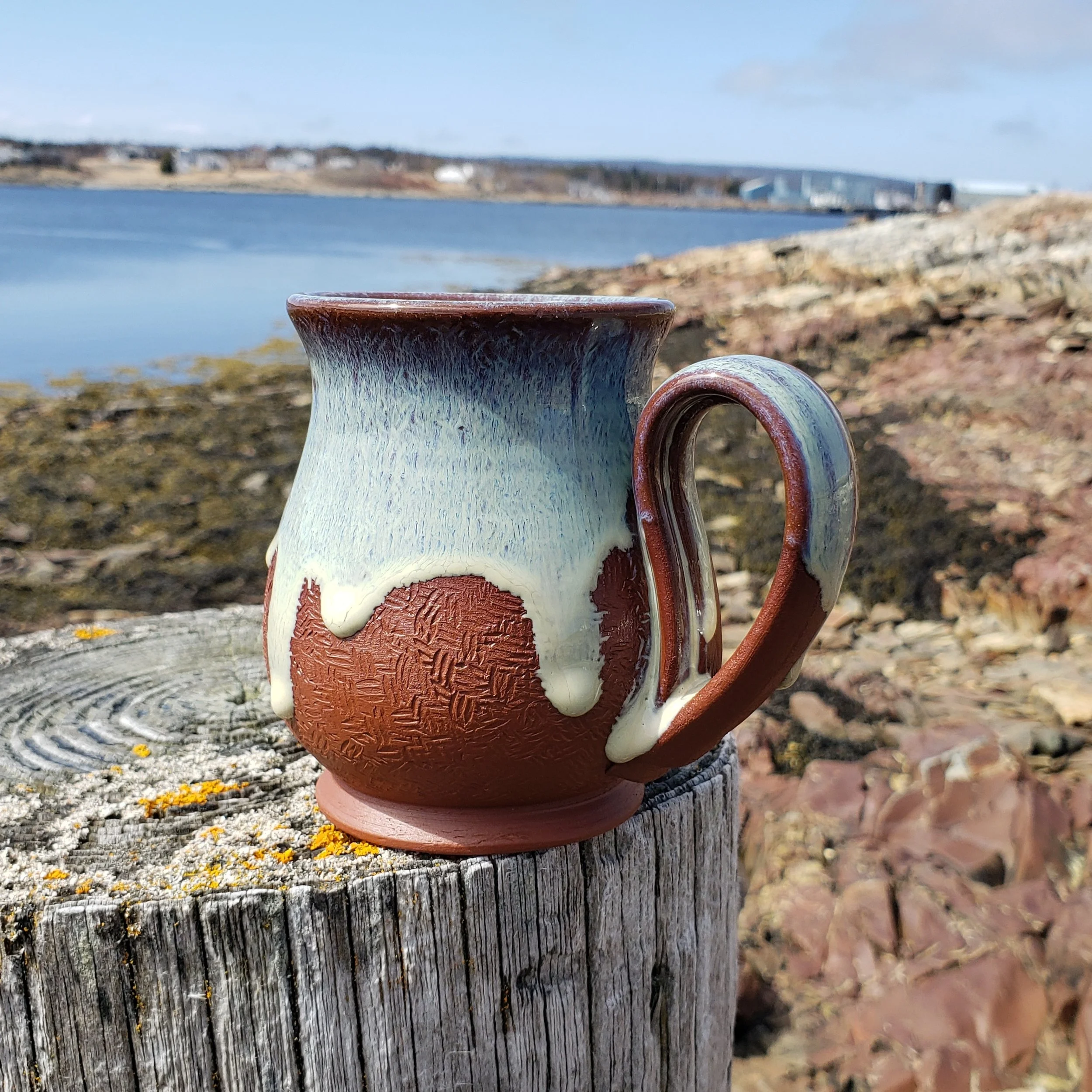
Local earthenware and glaze mug. Photo: Michael Flaherty.