
Jude Abu Zaineh
Halifax, Nova Scotia; Montreal, Quebec; Toronto, Ontario
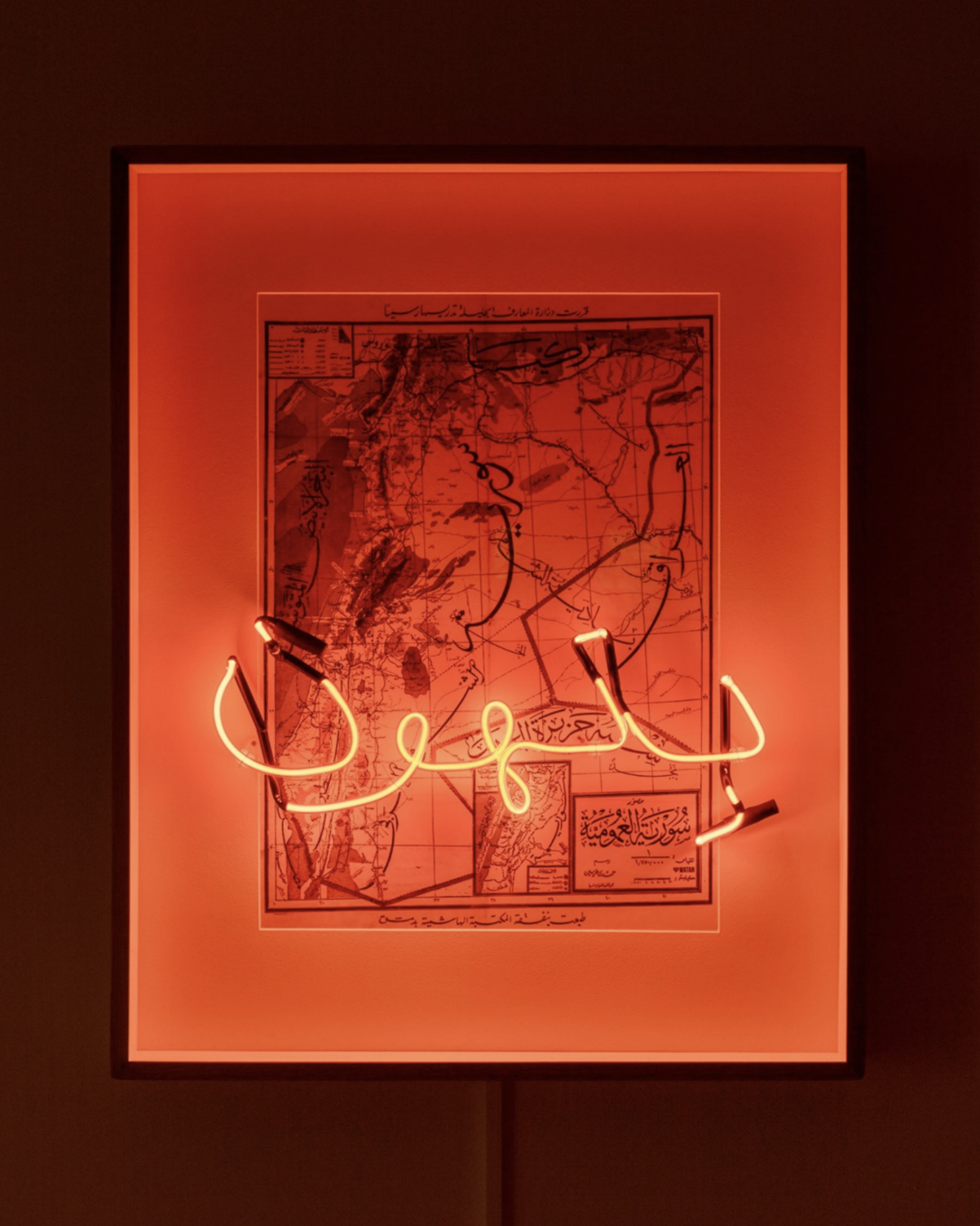
Jude Abu Zaineh, بِتهون | Bithoon (with map of Palestine), 2021. Neon in glass tubes, electrodes, transformer and digital print of map, 91 x 74 x 13 cm. COURTESY OF THE VISUAL ARTS CENTRE OF CLARINGTON.
Studio: How would you describe your approach to your medium? What made you choose it?
Jude Abu Zaineh: I'd call my approach interdisciplinary, playful, and curious, though even that undersells how much movement is involved. I work across a lot of different forms of thinking and making, and I move constantly between analog and digital practices, between the studio and the lab, between the archive and the kitchen. My studio holds glass and neon, bioart (the intersection of art-science-tech), film, video, installation, sculpture, food and cooking, community engagement, social practice, printmaking, collage. It keeps evolving, and I've stopped trying to pin it down. I don't choose a medium so much as let the idea tell me what it needs to exist in. Some ideas want to be slow and durational, so they become video or performance. Some want to be held in the hand, so they become textile or object. Some want to be eaten. I'm naturally inquisitive, so learning a new technique or skill is never a detour from the work, it's often exactly how the work finds its form. I think of medium switching less as versatility and more as a kind of listening. The porous moments between materials and disciplines are usually where the real concept of the piece is hiding for me.
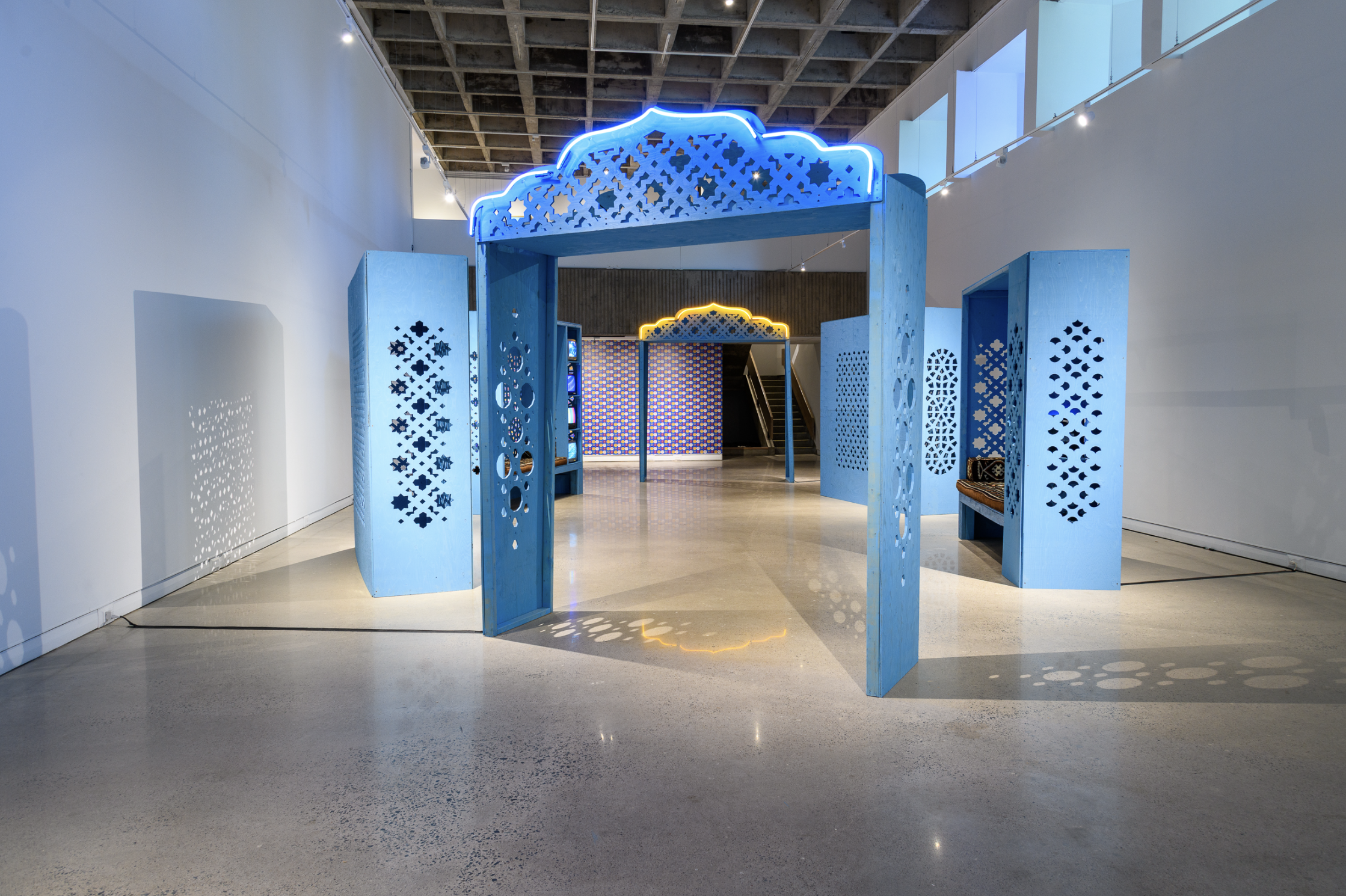
Jude Abu Zaineh, i look to the skies, 2025. Neon, wood and textiles. Photo: Michael Valiquette.
S: How would you describe yourself, personally and professionally?
JAZ: Curious, playful, driven, inquisitive, probably to a fault. I ask a lot of questions, of myself, of the people around me, of the world in general, and I've made peace with the fact that I don't always have or need the answers right away. I'm intuitive before I'm strategic, and passionate in a way that shows up in how I work as much as what I make. Professionally that same curiosity means I move between roles just as easily as I move between mediums: artist, curator, researcher, community member. I don't experience those as separate hats I put on and take off. They inform each other constantly. I think if you asked people who know me well, they'd say I lead with intuition and follow through with rigor, and that I take both play and seriousness completely seriously.
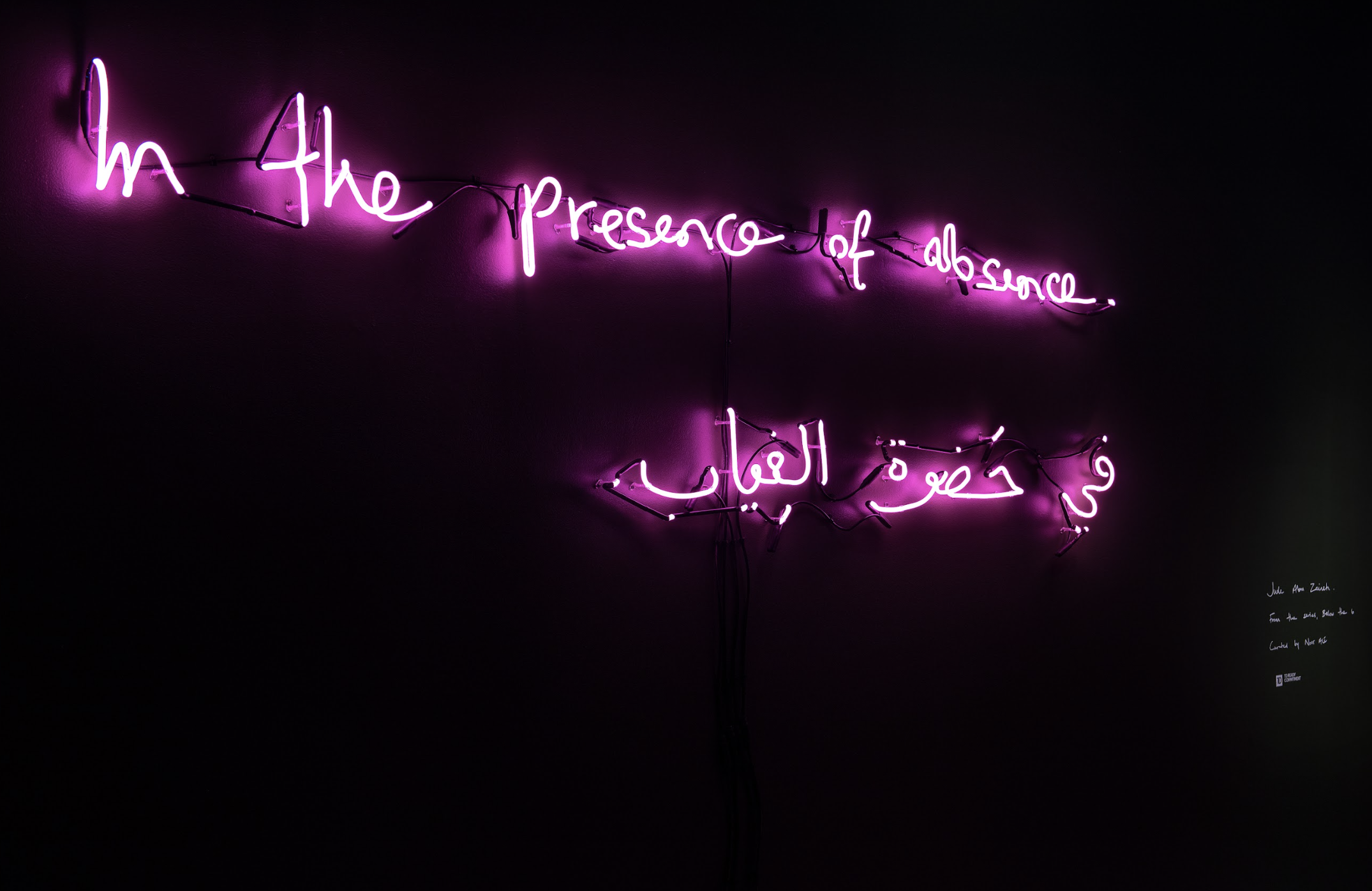
Jude Abu Zaineh, In the presence of absence | في حضرة الغياب (after Mahmoud Darwish), 2022. Argon in phosphor coated glass tubes, electrodes and transformers,
30 x 10 cm. Photo: Michael Valiquette.
S: What inspires you?
JAZ: Palestinian steadfastness, sumud, the will of a people to remain and to insist on a future. The legacy of my parents, both of whom I lost young, and everything they passed on to me about resolve without them ever having to name it as such. I'm surrounded by a community of astute thinkers and makers who move through the world with such clarity and conviction, and they inspire me endlessly, often more than any object or exhibition could. I look at what's happening locally and globally and find inspiration in both registers at once, the big historical forces and the small daily gestures. My cat Mowgli inspires me too. He reminds me to be silly, to rest, to stay curious about things that have no stakes at all. I think that's an important counterweight to everything else I carry.
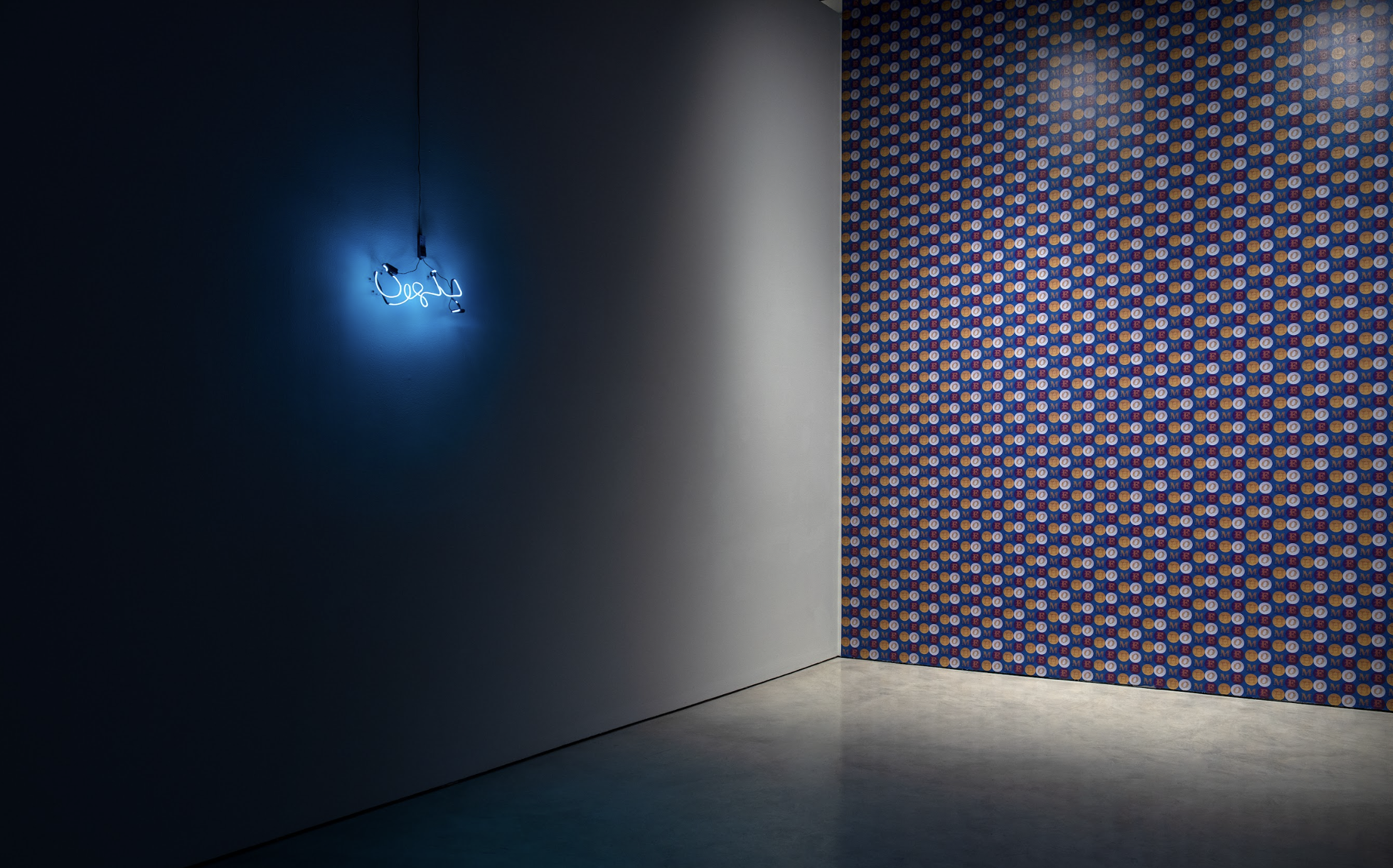
Jude Abu Zaineh, Bithoon; and HOME (blue), 2021. Argon in phosphor coated glass tubes, electrodes, transformer; digital print of bacteria, agar, food and petri dish, 51 x 23 cm ; 43 x 46 cm. Photo: Frank Piccolo.
S: What do you see as your contribution to the field of your craft?
JAZ: I mentioned earlier that I wear a lot of hats: artist, curator, researcher, academic, community member, and that means I often fit and don't fit at the same time. I belong and don't belong, because I'm usually looking at any given project or idea from several vantage points at once, offering perspectives that don't sit neatly inside one discipline or one identity. There's also a quieter tension in that. Certain titles come with an unspoken expectation of how you should look, sound, or carry yourself, and I often don't match that shorthand, which is part of where the fitting in and not fitting in comes from. I do think it points to a broader friction between interdisciplinary approaches, and the more fixed categories institutions have historically been built around, but that’s a different conversation! That said, I feel a real openness meeting that friction right now, a willingness to make room for people who don't arrive in the expected shape, and that’s exciting.
My contribution has something to do with that malleability itself, the ability to be impactful while holding space for multiple forms of oneself at once, without collapsing into just one. And beyond that, I think about my contribution to contemporary visual culture specifically as a Palestinian woman making and working in exile, doing that in a way that's experimental, interdisciplinary, and refuses to simplify itself for legibility.
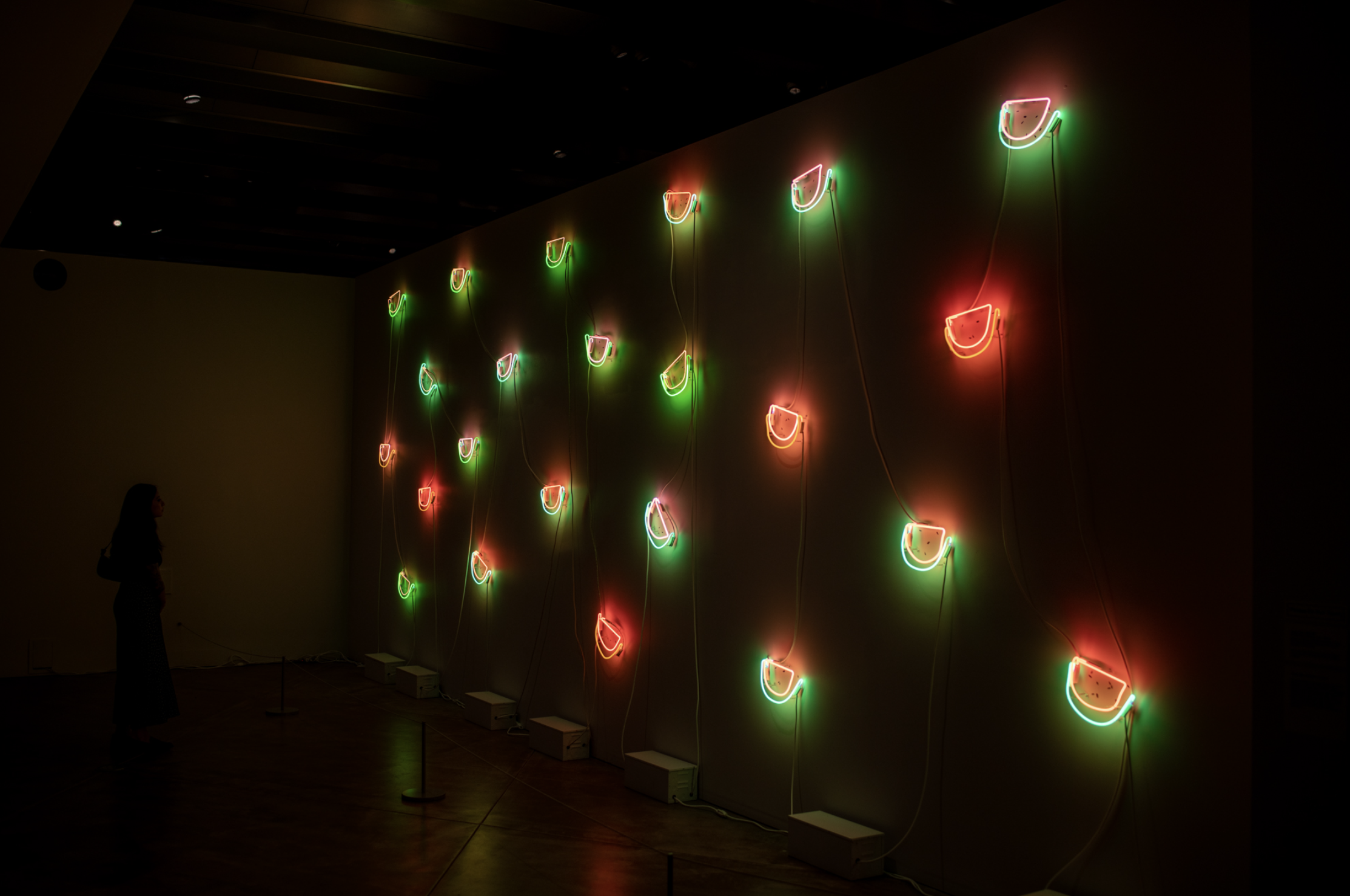
Jude Abu Zaineh, tend to grow (watermelons), 2022. Varying glass tubes and gases, electrodes, 30 x 72 cm. Photo: Michael Valiquette.
S: What wisdom do you want to impart to younger makers?
JAZ: Be curious! It's the thing that will keep carrying you forward long after any single project is finished. Don't lose touch with yourself, but just as importantly, don't lose touch with others. Art and artists are so often made in collaboration and in community, even when the final work reads as a solitary gesture.
I also think artmaking itself gets romanticized in a way that does us a disservice. There's this image of the “artist as genius” alone in the studio, brush in hand, painting a nude model by window light…and sure, that can be part of it. But it's been so fetishized as the picture of what "making art" looks like that it eclipses everything else that actually constitutes the practice. So much of my work happens when I'm just sitting with a cup of tea, thinking, not producing anything visible at all. Those still, seemingly unproductive moments are often where the real thinking happens, where an idea gets to sit long enough to tell you what it actually is.
And just as important is having peers you can sit with and talk through works in progress, ideas, roadblocks, dead ends. That's not ancillary to the work, it's part of it. Artmaking gets sold as this siloed, singular thing, when so much of it is a group activity happening quietly behind the curtain. I'd want younger makers to know that the tea, the conversation, the not-yet-resolved thought shared with a friend, all of that counts as much as anything that ends up on a wall.
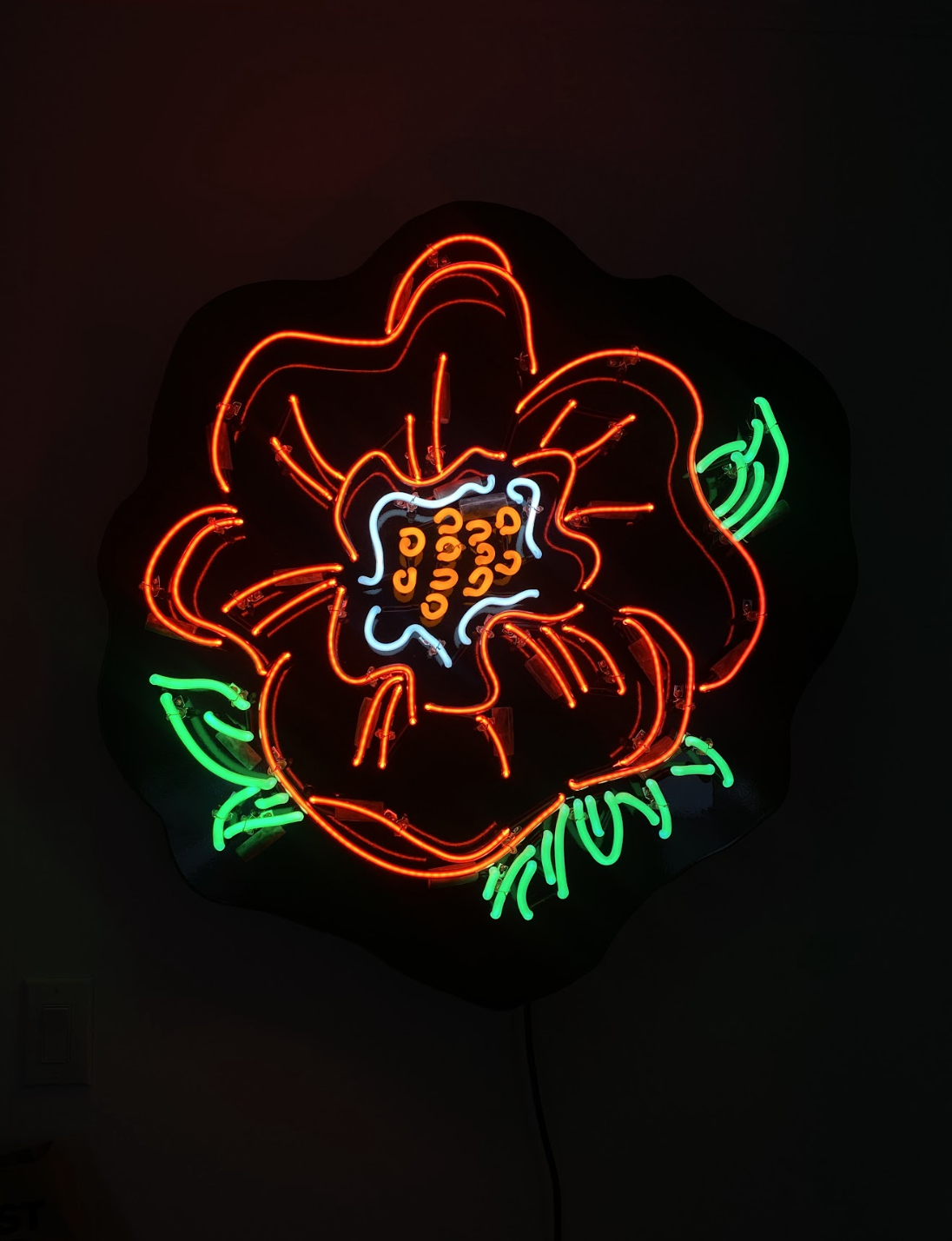
Jude Abu Zaineh, Palestinian Poppy, 2024. Neon mounted to painted metal frame, 97 x 102 x 13 cm. Photo: Michael Valiquette.
Jude Abu Zaineh
instagram: @judeaz_
website: https://www.judeaz.com/
This article was published in the Fall/Winter 2026-2027 issue of Studio Magazine.