

Lexus Award 2026 - Emerging Craftsperson
With craft continuing to grow in prominence and popularity, the sea of emerging craft artists seems to be ever-expanding, and we are better as a culture for it. Ushering in an irresistible vision of the future of material practice, the upcoming generation is reigniting tradition, thinking expansively about making and belonging, and bringing generous sensibilities to an already flourishing landscape.
In June 2026, the Canadian Crafts Federation (CCF/FCMA) introduced a new award, the Emerging Craftsperson award, to further support emerging Canadian craft artists. Members of the CCF/FCMA selected each nominee, and the recipient will receive a $10,000 CAD prize courtesy of Lexus Canada, the initiative's sponsor.
The Emerging Craftsperson Award champions unique creative perspectives, particularly from rising artists who are shaping the future of Canadian craft — a future close at hand and looking very bright. The award celebrates artists whose work synthesizes their gifted vision with their capacity for lasting, leading impact on the next generation of art, and seeks “new ideas, innovative materials, and bold experimentation."
The three up-and-coming nominees certainly fit the bill. Vi Houssin (Manitoba), Charlie Larouche-Potvin (Quebec) and Gordon Sparks (New Brunswick) each work in very different mediums and regions, but together as a shortlist they exemplify the impressive spectrum of material exploration happening across the nation.
I spoke with the artists about this stage of their career, their thoughts about being nominated and what galvanizes them most about the future of this field.

Vi Houssin photographed by Vincent Wolfgang.
For Vi Houssin, beadwork has an expansiveness that pushes it beyond a medium: it is a true expression of her Indigeneity. A Two-Spirit transgender artist raised and based in Winnipeg, Houssin uses both traditional Métis two-needle stitch method as well as off-loom beadweaving to continue the legacy of her ancestors. Houssin creates works that honour her cultural traditions while engaging urgent contemporary issues, including environmental change, identity, grief, and resilience. Her intricate imagery, bold textual pieces, and incorporation of drag elements have been supported by the Canada Council for the Arts and she has exhibited across Canada as well as Switzerland.
"I see this nomination not only as an acknowledgement of my personal practice, but a recognition of the long legacy of Métis beadwork artists whose contributions to the canon of Canadian art have only recently been appreciated in 'fine art' spaces," she says. This legacy is doubly honoured by the CCF/FCMA this year – her mentor, Jennine Krauchi, is nominated in the other award category, Craftsperson of the Year. While relieved not to be competing against her idol, Houssin sees the dual nomination as a significant honour.
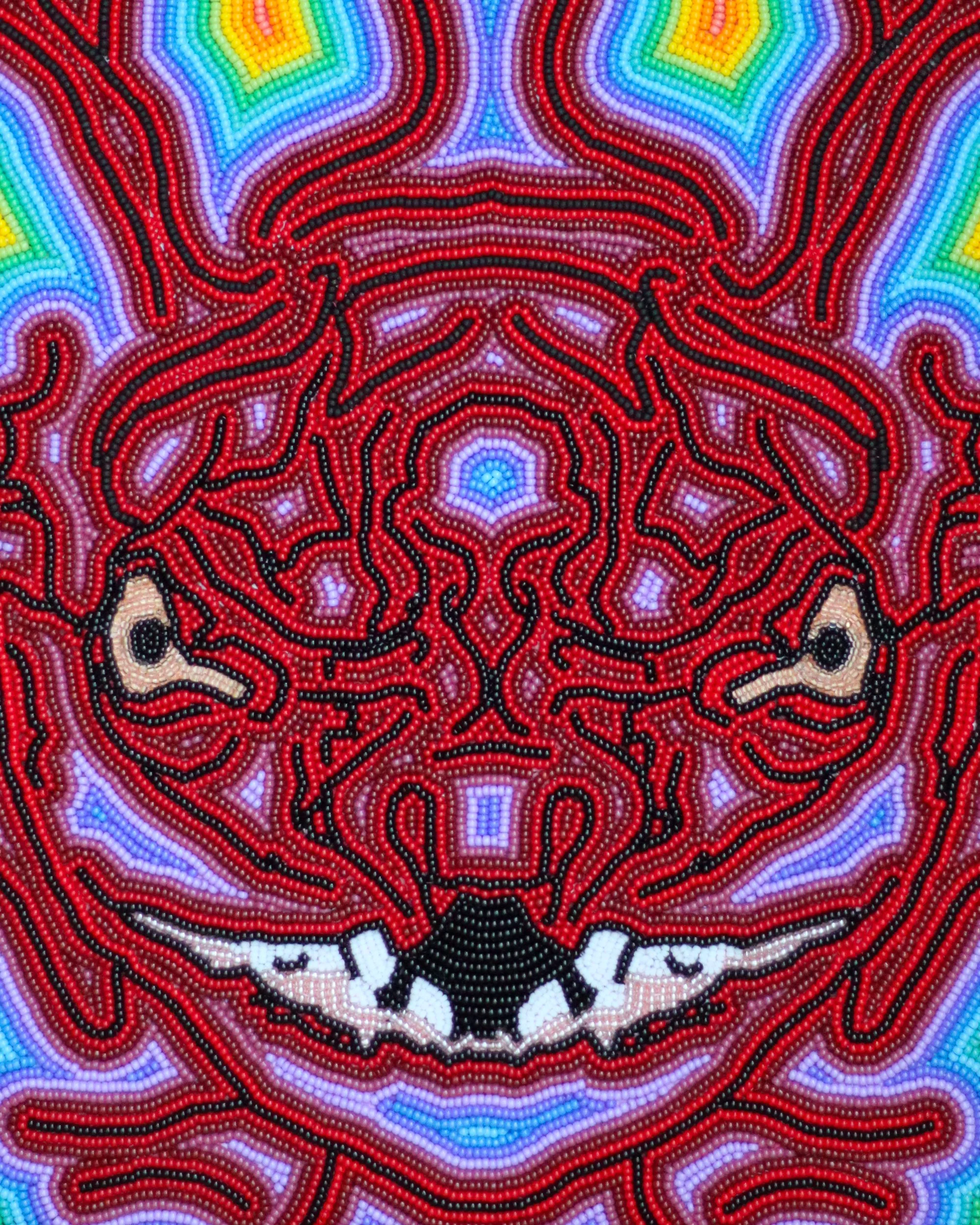
Vi Houssin, Centurio Senex, 2026. Size 11 & 15 glass seed beads, nylon & polyester thread on felt. 8x10”. Photo courtesy of the artist.
The generous support of the award would grant Houssin the means to experiment with new technologies and techniques to push the boundaries of the medium, which is already growing significantly in popularity and visibility. Houssin says this possibility is exhilarating.
"I'm always so excited by Indigenous craft artists. The many ingenious ways that countless artists are combining traditional and contemporary techniques and aesthetics just blows my mind." When asked what makes her hopeful about the future of craft in Canada, she replied, "I think the continued shift towards platforming Indigenous art and craft as fine art worthy of being witnessed, not only through anthropological but contemporary lenses, brings me a lot of hope. We're seeing more and more galleries and institutions recognizing new works by Indigenous artists – as well as ancestral works – as true art, not artefacts."
She continues, "A future where our grandmothers' works are placed at the same level of prestige and respect as other paintings and sculptures by 'fine artists' who lived in the same time period is the kind of future I want to live in."
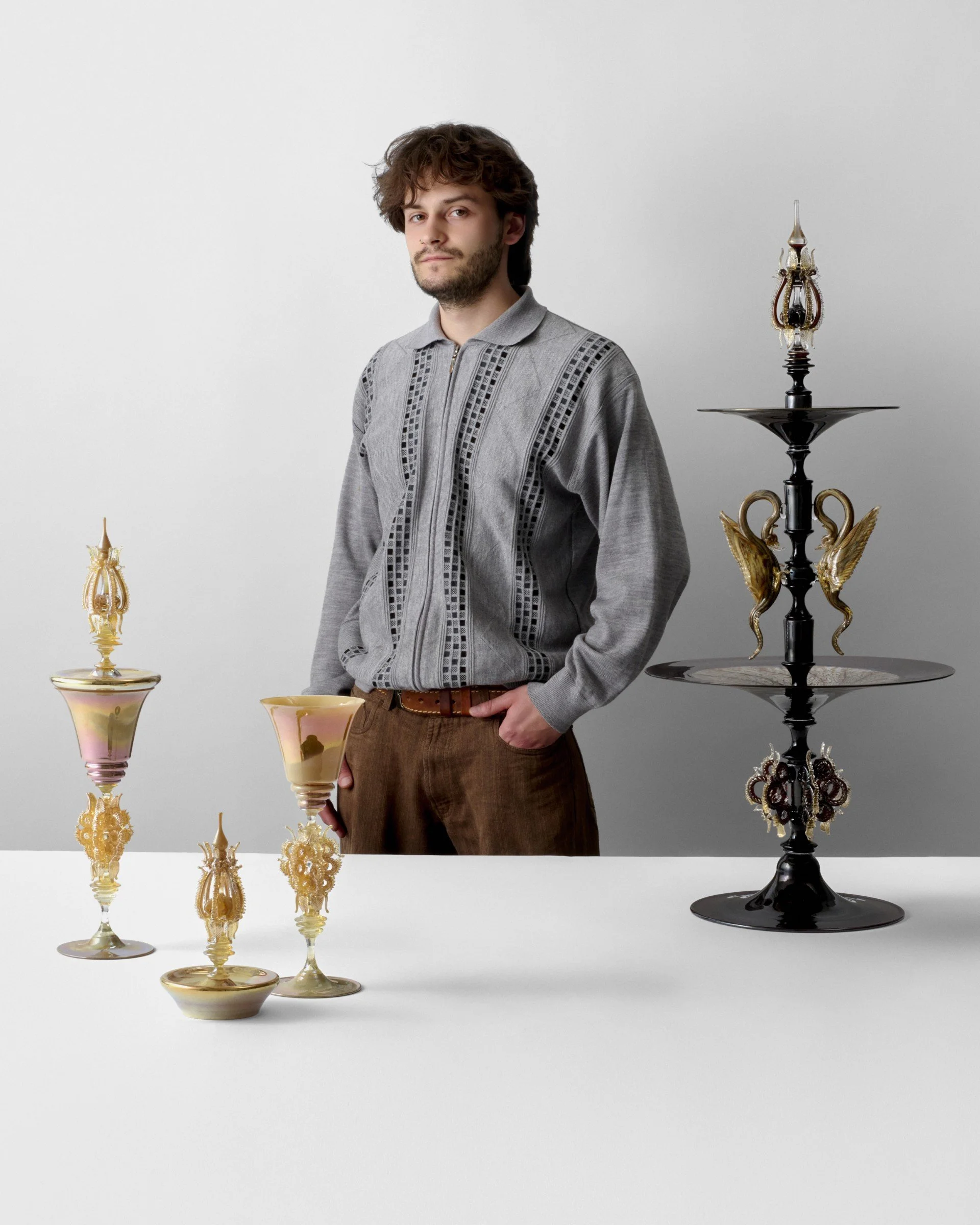
Charlie Larouche-Potvin photographed by Michael Kazik.
A resident of Montreal but trained as an artist-designer in Murano, Italy, Charlie Larouche-Potvin has been increasingly recognized for his expertise in Venetian glassmaking techniques. His infusion of the classic method with thoughtful, contemporary nuance and elaborate fantasy elements has earned him both the Prix François-Houdé from the City of Montréal and the RBC Glass Award from the Canadian Clay and Glass Gallery in 2024. His work has been presented at the Révélations Biennial in Paris and Contemporània in Barcelona.
There is an immense, demanding labour associated with glassblowing, Larouche-Potvin recognizes, especially as a mentor to younger glassblowers and teaching alongside large teams of passionate artists. "It becomes a lifelong journey that requires a complete devotion to the craft," he says, adding that to receive an award for this dedication would carry real weight, and validate his transition into his own studio.
Throughout his practice, Larouche-Potvin has been reworking historical Venetian forms through contemporary colour, surface treatment, and personal touch. He loves how this work keeps him close to the furnace: "everything is made hot – the oldest way of working the material." It is this experimentation that earned him a spot at Homo Faber 2026, an international biennial of artisans hosted in Venice, an accomplishment he calls "both humbling and energizing."
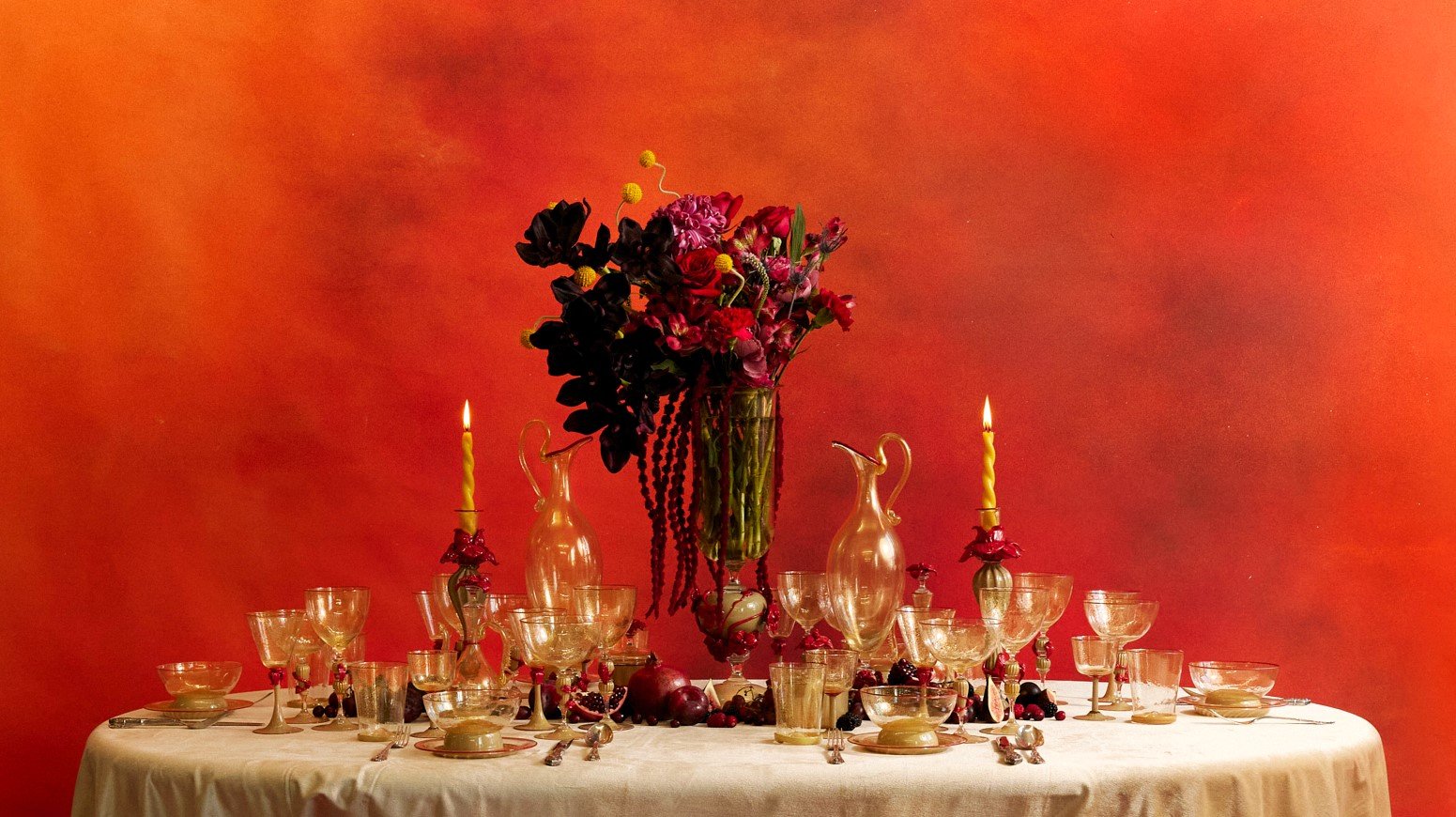
Charlie Larouche-Potvin, Roses of the sands, 2025. Blown glass, furnace-worked glass, 24K gold leaf. Various dimensions. Photo: Hallie Arden Ford.
He feels honoured by his experiences and opportunities that have opened up for him, opportunities that directly complement his role as educator – when he learns, his students learn. "I’ve had the chance to travel abroad and learn through renowned institutions, as well as one of the world's most renowned master glassblowers," he tells me, speaking of his formative apprenticeship under master Davide Fuin. "I want to bring this back to Canada, to give to the next generation of glassblowers and ensure the perpetuity of our craft."
Influenced by the genuine pathways that have emerged from his graduation from Espace VERRE and current residency at the Harbourfront Centre, Larouche-Potvin is grateful that the culture around these spaces "is remarkably generous with knowledge." He also observes the impressive growth of emerging artists gaining success in the field: "I see more and more young Canadian craftspeople stepping onto the international stage, which tells me the ambition and the talent are here. If we keep investing in those infrastructures and passing techniques from one generation to the next, Canadian craft has a very bright future ahead."

Gordon Sparks photographed by Toonasa Jordana Luggi.
Further east in New Brunswick, Gordon Sparks' expertise lies in wood: specifically, in carving wood masks that embody Mi'kmaw stories, traditions, and teachings. A Mi’kmaw artist from Pabineau First Nation and currently based in Rough Waters, Sparks creates masks that reflect his personal journeys through life. Harvesting wood and animal materials through ceremony, his masks come to life through collaborations with dancers, drummers, and regalia makers, as well as his skill in tattoo design. When we meet, Gordon has just finished up a Mi'kmaw blackwork tattoo for a client.
He says this is the first nomination of this scale that he's ever received, and sees it as solidifying and honouring the amount of care and effort he puts into his work. "My main goal has always been to work with communities, to bring nature to the people and share the immense knowledge of the Mi’kmaw culture," he tells me. "I think of my work connecting our world and promoting reciprocity between beings, not just among our human relatives but Msit No'kmaq, or “all our relations” — animals, mammals, plants, fish, birds, water, insects, land, sky. So I’m happy to know that my work and its values are being seen and heard, and that these ways of life are being recognized on such a large scale."
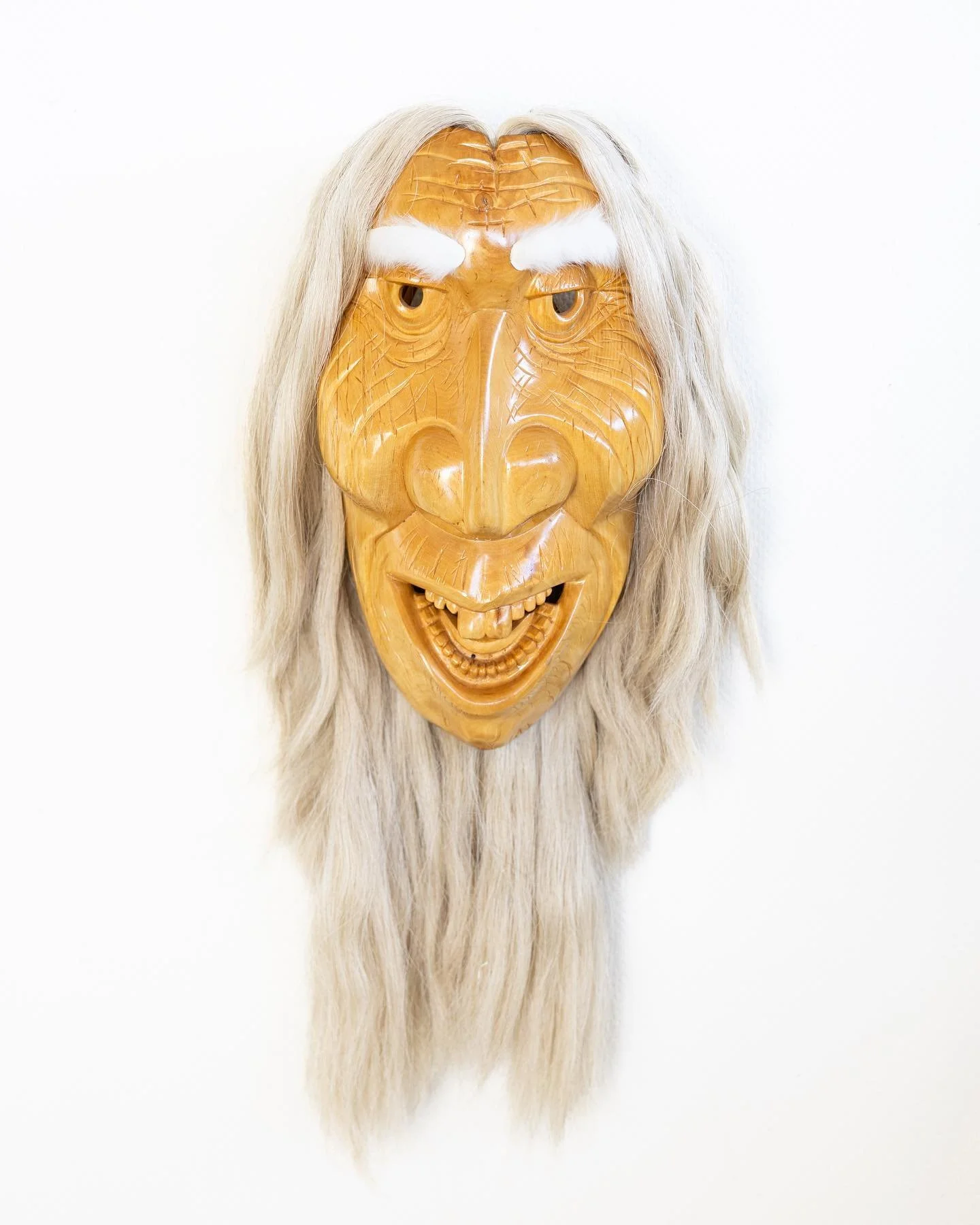
Gordon Sparks, Medicine Women, 2021. Hand-carved wood mask with horse hair and fur. Photo courtesy of Sasha Robichaud.
His mask work has been exhibited across Atlantic Canada and internationally, including at London’s Collect Art Fair. Still, he hopes that the award will help him be taken even more seriously as an artist, and open further doors to local and international recognition so he can embark on all the projects he has in mind. "I have a lot in the works, but something that’s exciting me right now is that I’ve just begun working on my largest mask to date, a protection mask meant to protect people from negative energies. I'm making it in collaboration with Ampere, a digital skills program working with rural and Indigenous communities." This large-scale project aligns with Sparks' ongoing commitment to cultural preservation, which he manifests through guidance and mentorship of Indigenous artists and communities across Mi’kma’ki.
Thinking of the future, Sparks is optimistic, noticing a sector-wide recognition of Indigenous artistic ingenuity, and is pleased to see that Indigenous craftspeople are able to move freely into and within more fine art spaces. This is especially exciting given Sparks' drive to expand and share East Coast Indigenous culture – here since before colonization – and he's deeply motivated to keep it in the public consciousness. "I hope that as people visit the East Coast, they'll see the visual language that's being made more visible, and know that the Mi'kmaw or other nations made their mark there."
Check out the interviews with the Craftsperson of the Year nominees here.