
The Power of Objects: Atlantic Canadian Craft at Collect
Reflections from a visit to Collect Fair 2026 in London, UK. The fair ran from February 25 to March 1, 2026.
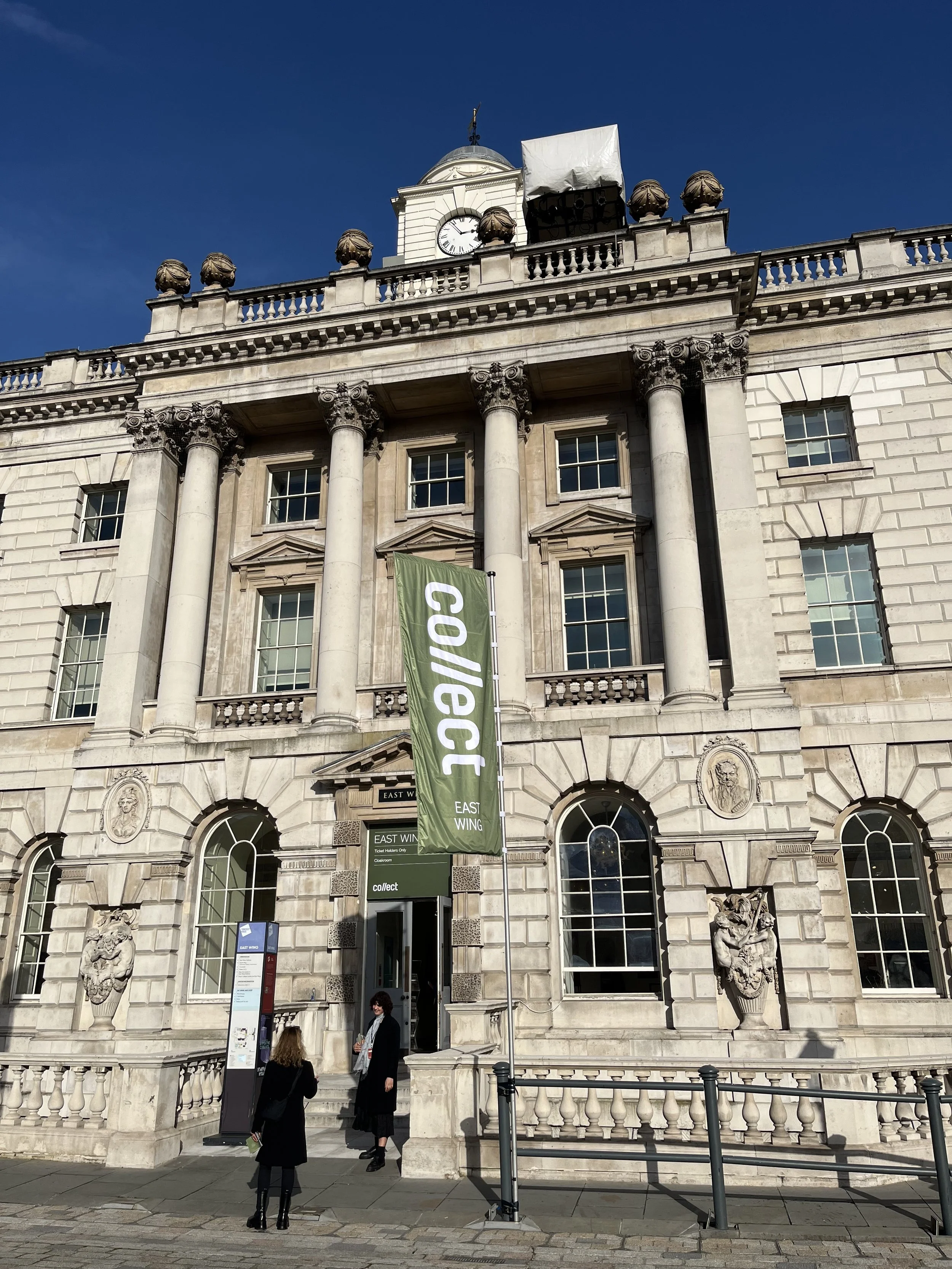
Somerset House. Photo: Pasha Moezzi.
On an unusually spectacular sunny day in London, I had the privilege of visiting the annual Collect Art Fair at the historic Somerset House. Known internationally as one of the leading fairs dedicated to contemporary craft and collectible design, Collect gathers galleries, makers, and institutions from around the world. This year, however, my focus was firmly set on the presence of Atlantic Canadian artists presented in the exhibition The Power of Objects: Voices of Atlantic Canadian Craft Artists.
At the request of Studio Magazine — exploring Canada’s east coast presence at the fair — I headed straight toward Booth E12 in the West Wing of Somerset House, not allowing myself to get distracted by the countless mesmerizing objects scattered throughout the building on the way.
From about a metre away, I had a strange sense that I had already reached my destination before even checking the booth number. Whether it was instinct, familiarity, or something subtler in the presentation itself, the work seemed to quietly signal its origins. I prefer to think it was the strength of the curation — and the objects themselves — that made the identity of the space immediately recognizable.
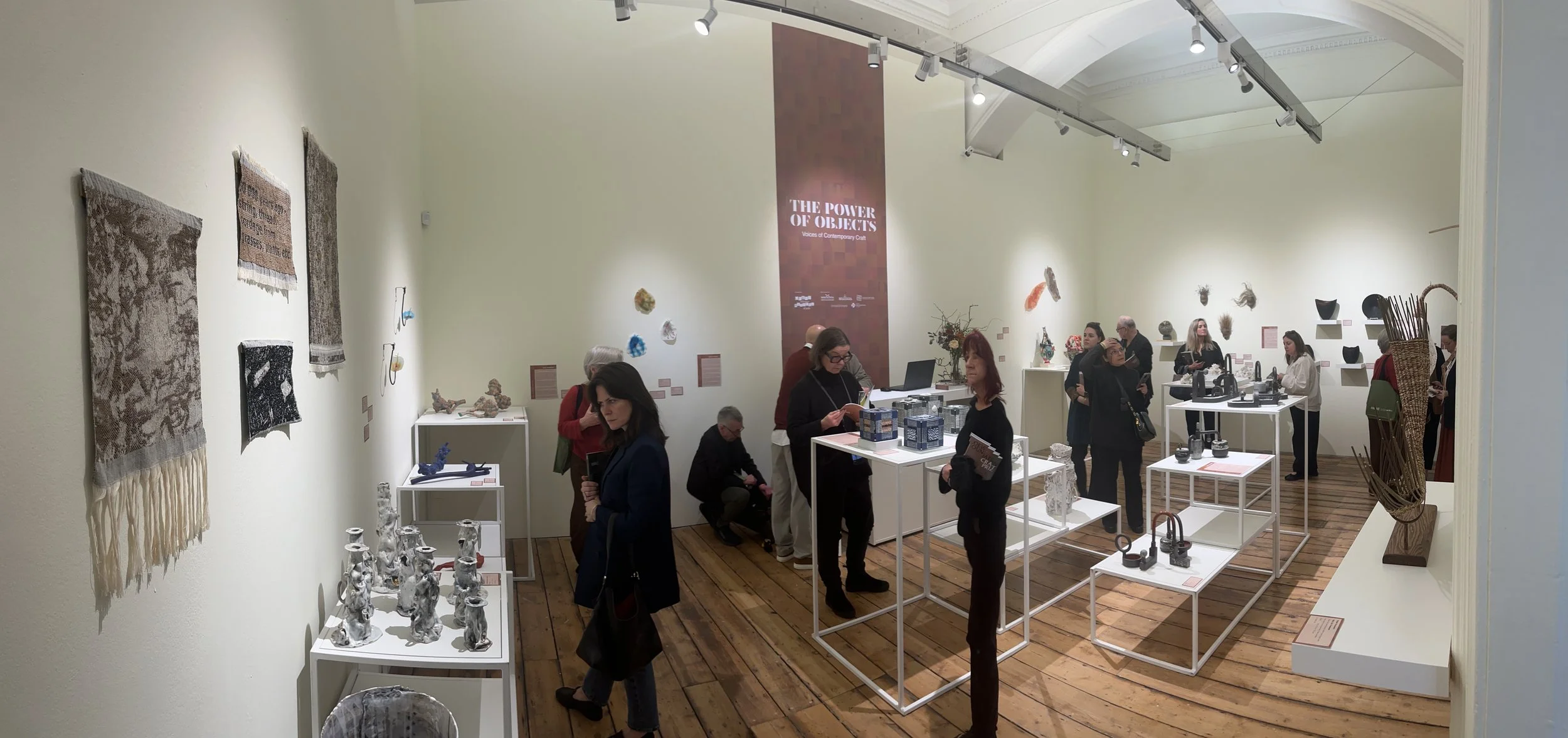
Booth E12. Photo: Pasha Moezzi
Curated by Bruno Vinhas, the exhibition brought together eleven artists and more than thirty-five works representing the breadth of contemporary craft practices in Atlantic Canada. The curatorial premise was rooted in the idea that craft objects carry more than aesthetic value: they hold memory, identity, and community within them. As the exhibition text suggested, craft exists in a kind of duality: objects that are both universal and deeply personal, capable of crossing cultural borders while remaining anchored in the specificity of place, history, and lived experience.
Shortly after arriving, I had the chance to speak with Vinhas about the process behind the exhibition. Our conversation quickly revealed a shared enthusiasm for the relationship between art, culture, and community. He explained that the artists were selected through an open call followed by two rounds of jury review. What surprised me, however, was that the process did not end there. Each work also had to pass through Collect’s own selection committee before appearing in the final display. The result is an exhibition where every object feels carefully considered, reinforcing the sense that each piece has earned its place.
The exhibition’s strength was not only in the quality of individual works but in how cohesively they were installed. The booth managed to balance a wide range of materials and approaches — from ceramics and textiles to wood and mixed media — without allowing any single work to dominate the space. Instead, the installation created a dialogue between objects, allowing each artist’s voice to emerge while contributing to a larger narrative about craft in an Atlantic Canadian context.
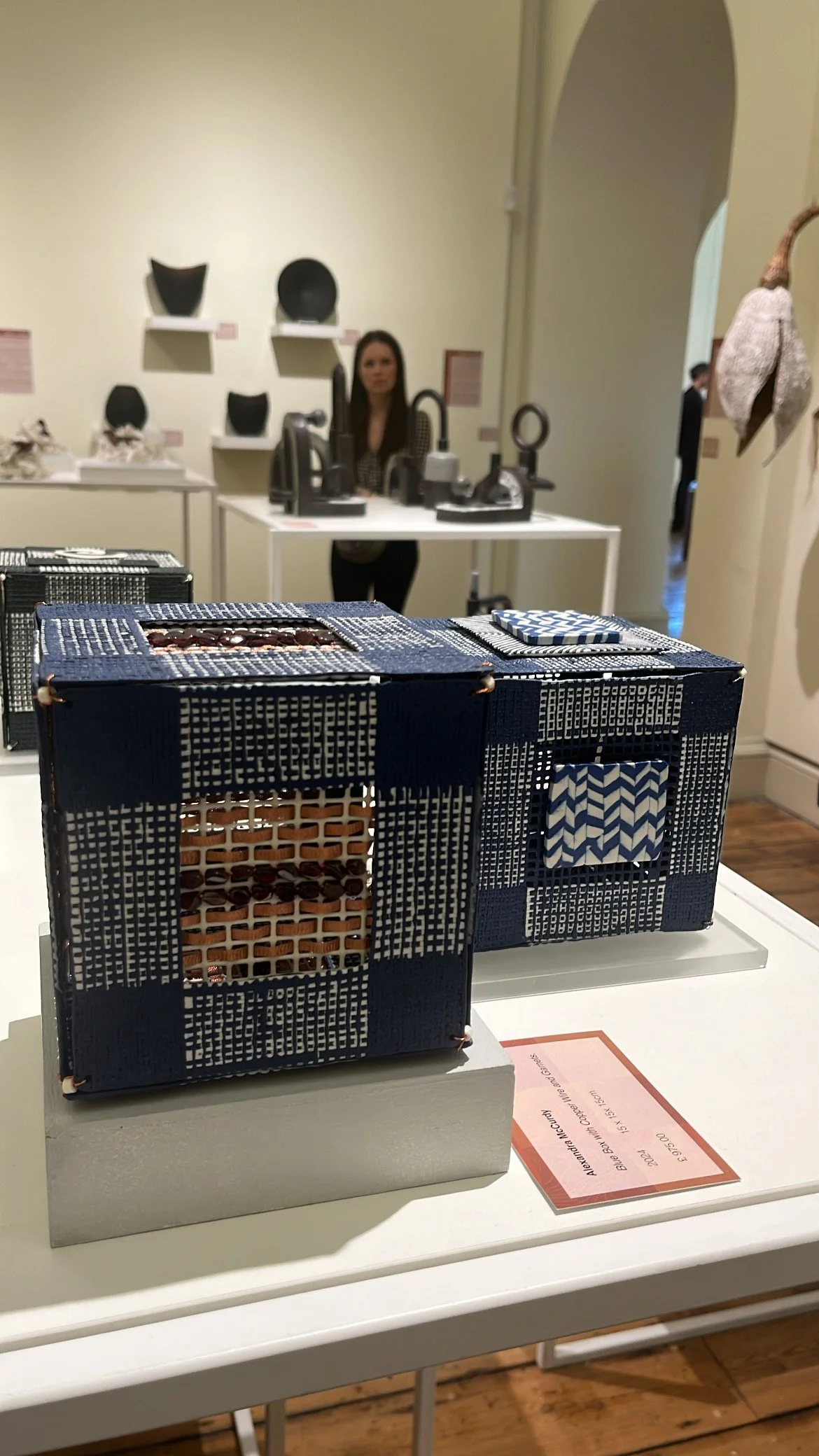
Alexandra McCurdy, Blue Box with Copper Wire and Garnets, 2024. 15 × 15 × 15 cm. Photo: Pasha Moezzi. Courtesy of the artist.
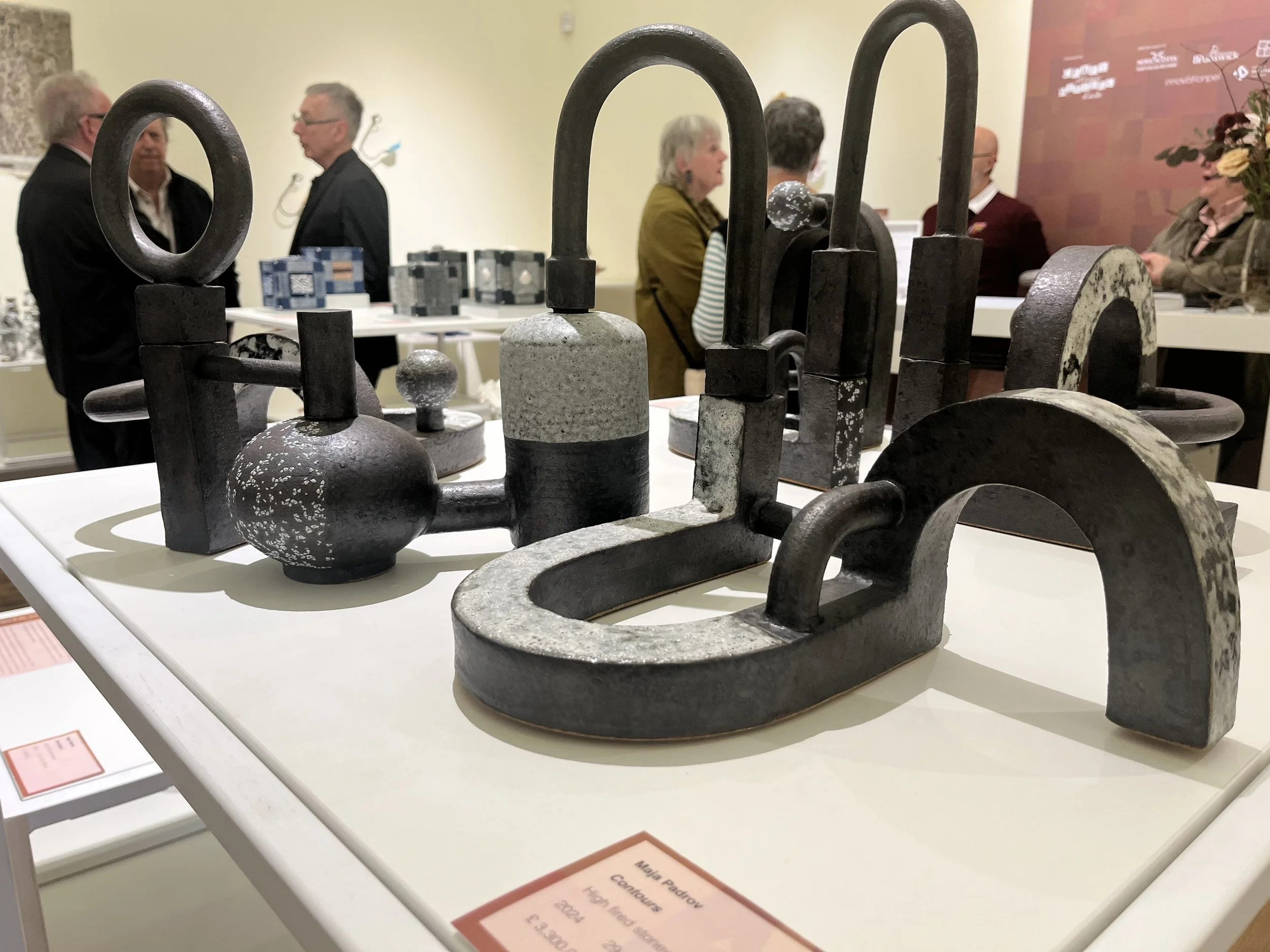
Maja Padrov. Contours, 2024. High fired stoneware. Photo: Pasha Moezzi.
Several works stood out immediately. The ceramic pieces by Maja Padrov presented a refreshing architectural sensibility, combining decorative elements with a structural clarity that felt both contemporary and playful. Nearby, Alexandra McCurdy’s intricate porcelain boxes — interweaving wire structures with textile elements — created intimate objects that felt simultaneously fragile and complex, suggesting hidden interior worlds within carefully constructed frameworks.
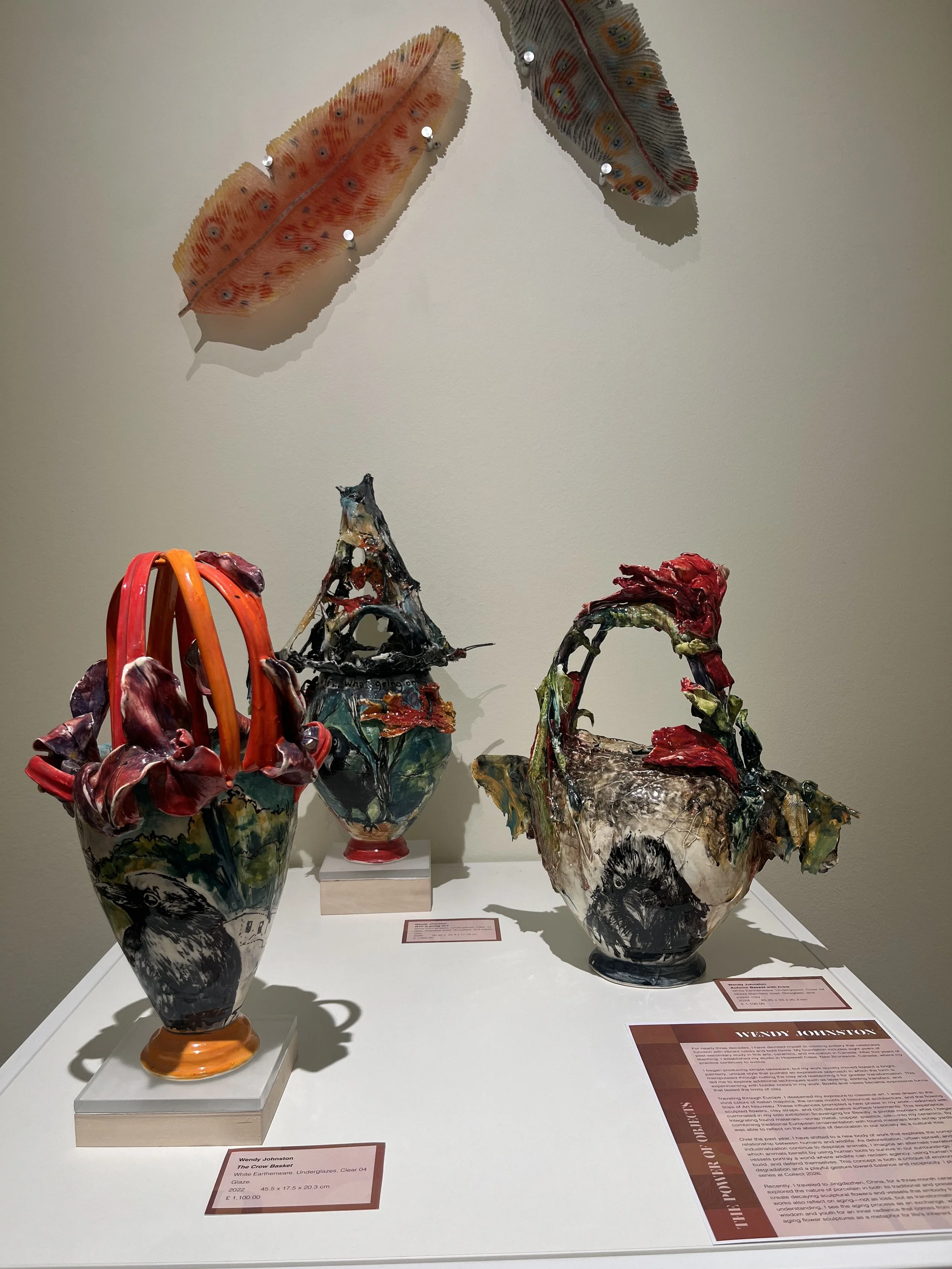
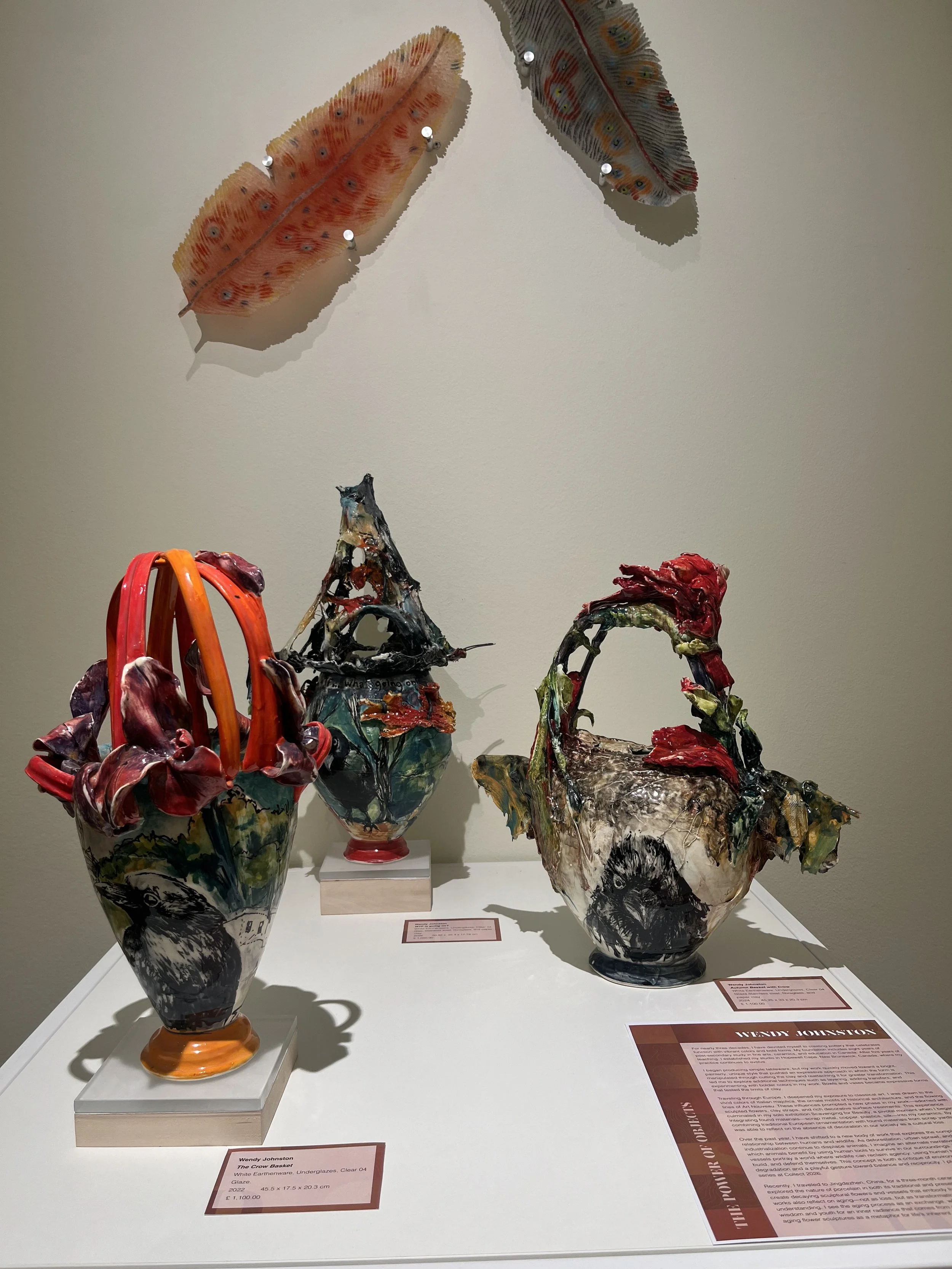
Wendy Johnston Ceramics, 2026. Photo: Pasha Moezzi.
Equally striking was a vibrant ceramic vase by Wendy Johnston, whose bold use of colour and form drew viewers into the space. Its presence within the booth acted almost as a visual anchor, demonstrating how traditional ceramic techniques can be transformed into something strikingly contemporary. In contrast, the woodturning work of Darrell DesRoches offered a quieter yet equally compelling presence. His pieces highlighted the remarkable possibilities of wood as a material, revealing delicate surfaces and fluid forms that speak to both patience and technical mastery.
Together, these works reflect what is perhaps most compelling about contemporary Canadian craft: its refusal to be reduced to a single aesthetic or narrative. Instead, the exhibition embraced plurality — multiple cultural backgrounds, artistic languages, and material approaches existing side by side.
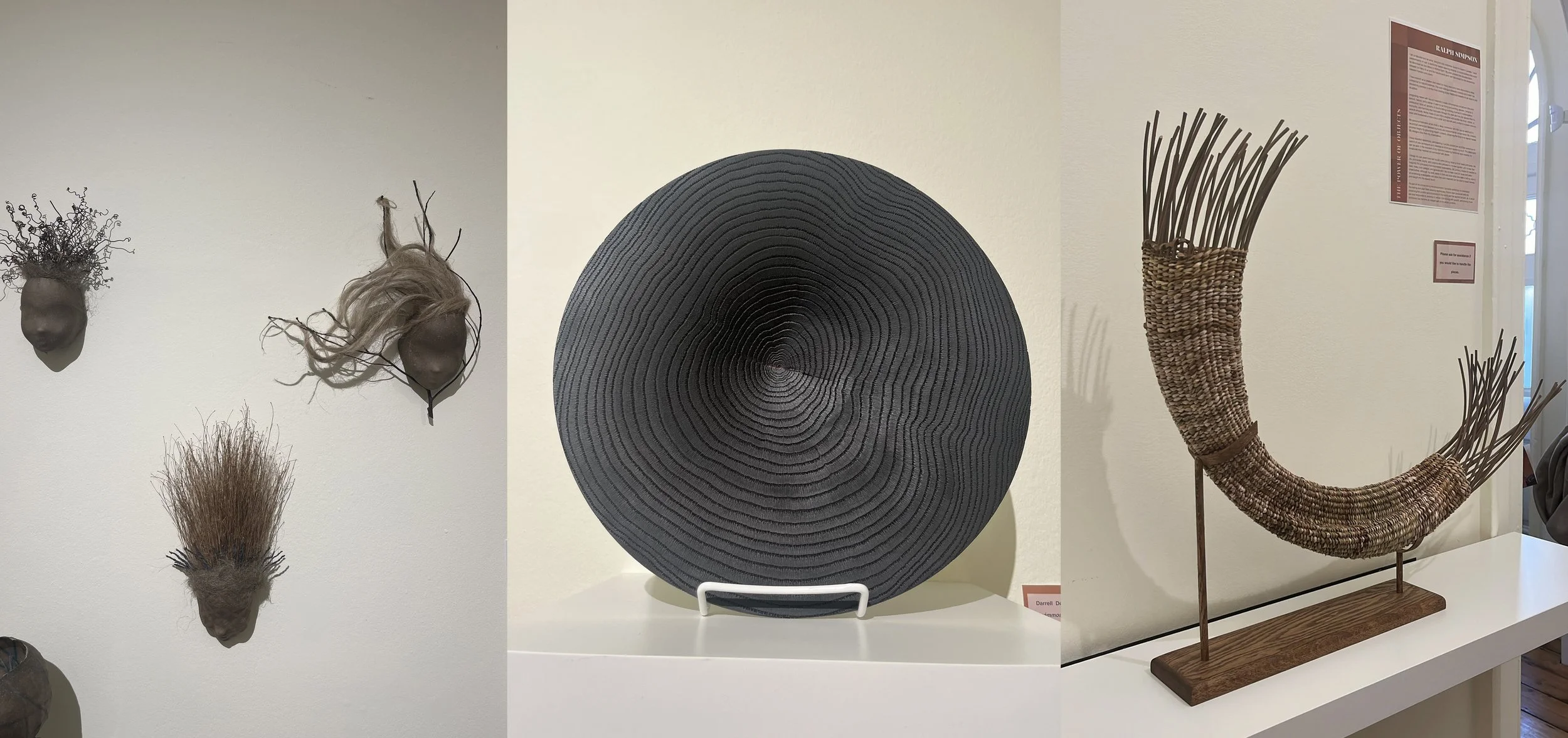
Works by Kristi Farrier, Darrell DesRoches, and Ralph Simpson. 2026. Photo: Pasha Moezzi.
During the hour I spent observing the booth, the level of audience engagement was striking. Visitors lingered, asked questions, and returned for second looks. In the fast-paced environment of an art fair — where hundreds of booths compete for attention — this kind of sustained engagement was notable. The exhibition seemed to encourage a slower form of looking, inviting viewers to consider the stories embedded in each object.
Many of the works also carried subtle political and social undertones. Craft has long functioned as a medium of resistance and storytelling — from protest textiles to contemporary craftivism — and the artists presented here continue that tradition. Themes of identity, colonial history, diaspora, and resilience appear throughout the exhibition, demonstrating how craft can operate simultaneously as cultural expression and social commentary.
As an Iranian-Canadian artist, I have often found myself navigating between two artistic worlds: one shaped by the ancient material traditions of Iran, and another influenced by the contemporary craft discourse I encountered in Canada. Seeing Atlantic Canadian artists present their work on an international stage at Collect felt particularly meaningful in this context. Their work demonstrates how craft can bridge histories and geographies, allowing personal narratives to resonate within broader global conversations.
Ultimately, The Power of Objects succeeds because it foregrounds what craft does best. Beyond technical skill or aesthetic beauty, these works remind us that objects carry stories. Through material, form, and process, they connect makers to communities and histories — allowing voices rooted in specific places to be heard on an international stage.
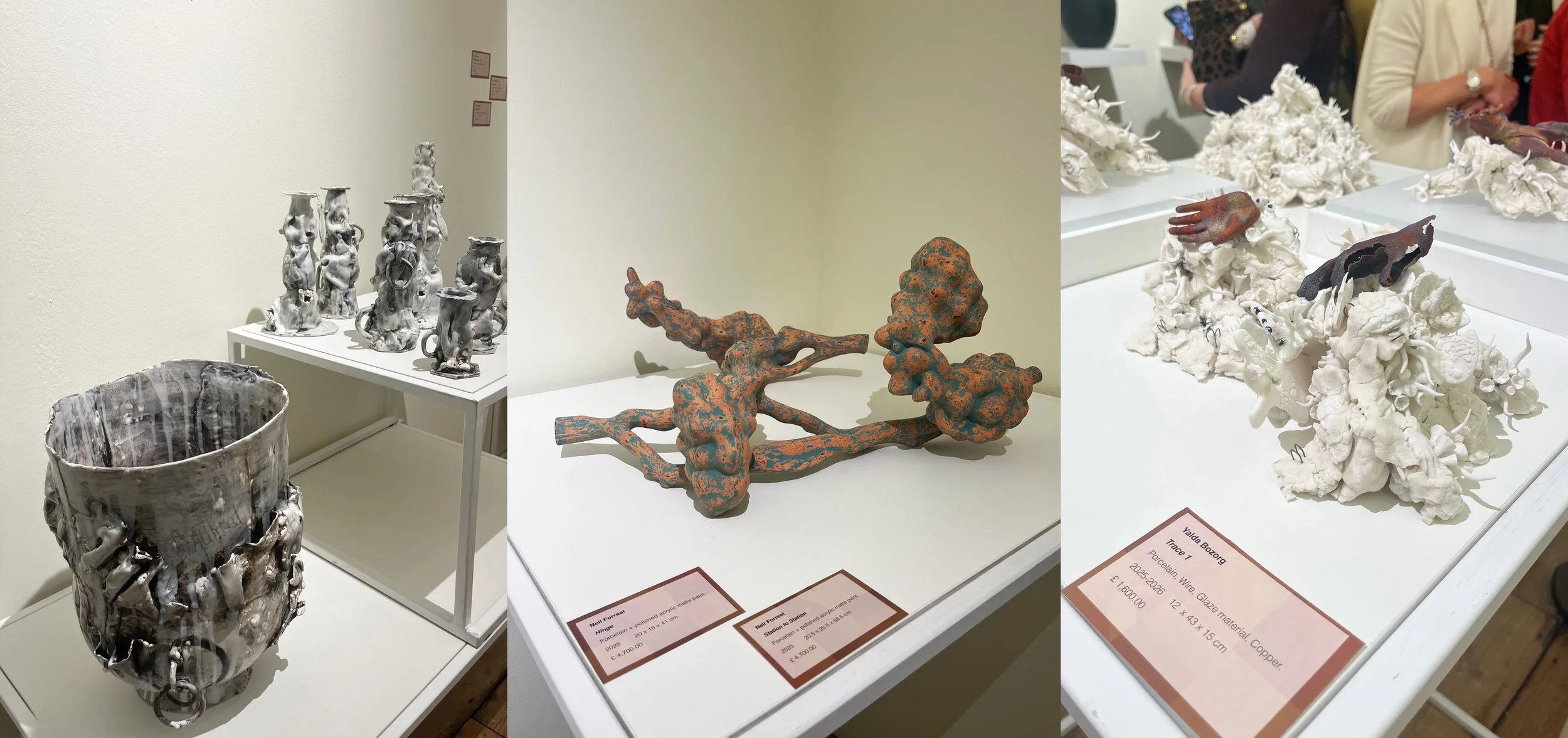
Works by Heather Pitts, Neil Forest, and Yalda Bozorg. 2026. Photo: Pasha Moezzi.