
Yellowknife: The Craft Capital of Canada?
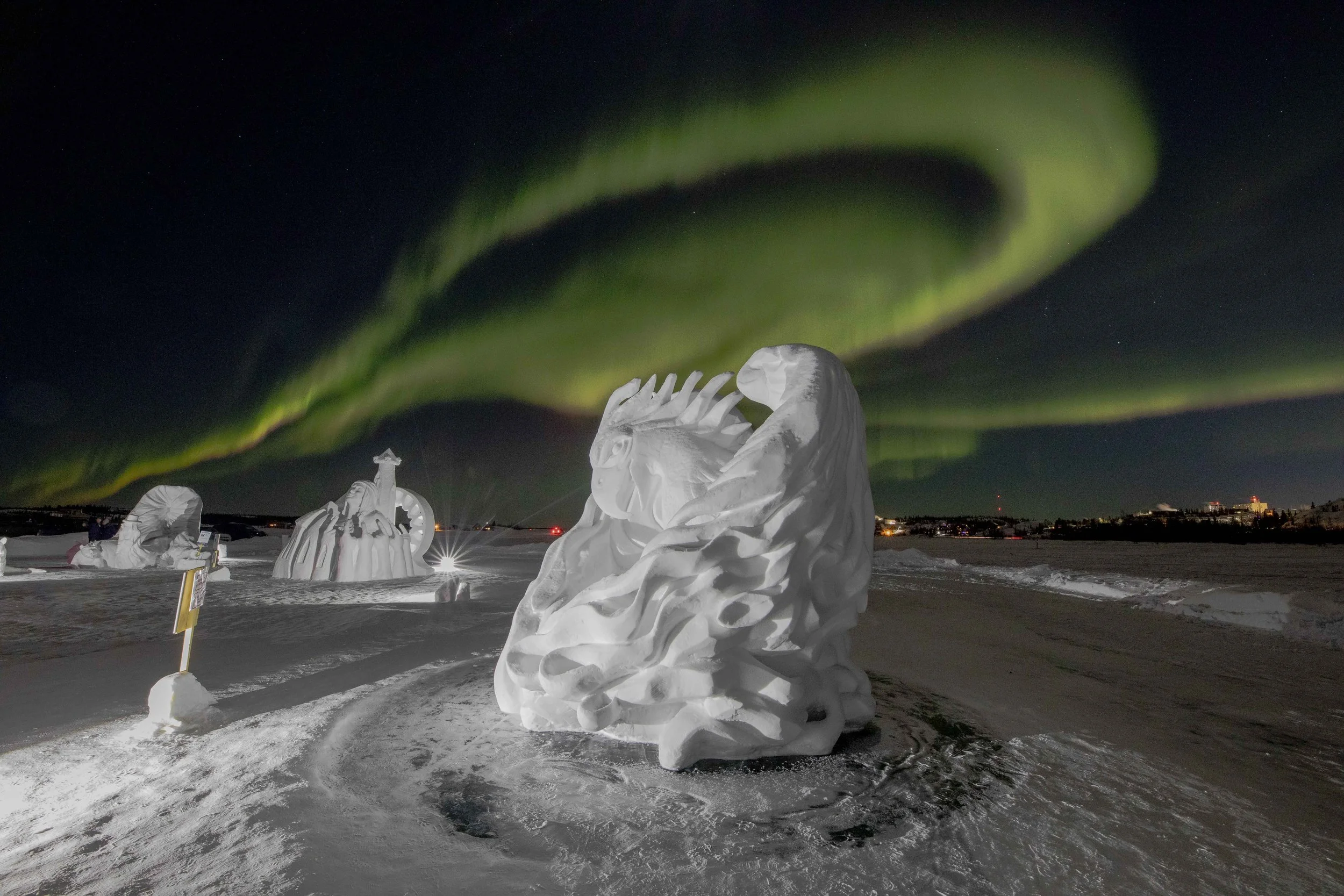
Photo: Snowkings' Winter Festival/FreezeFrame.
I live in a craft mecca.
Though perhaps only residents of Yellowknife, Northwest Territories (NWT), think of it as such. This could be because there is no craft council north of the 60th parallel and exhibition spaces are hard to come by. School gymnasiums are our commercial galleries, Instagram and Facebook act as our art dealers. Despite this, artists like Hana Steinwand, embrace what the lands of Denendeh [1] have to offer their art practice. Maura Meng lives in a remote off grid cabin, collects clay from the land, and fires her ceramic wares in the same woodstove that heats her home. A giant castle made of ice and snow is created by the Snowking, Tony Foliot, and his expert team on the frozen Great Slave Lake annually from January to March since 1995.
There is a centuries-long history of art and craft in the North. What art historians might today describe as “visual art” has been produced in the NWT since long before European contact. Porcupine quillwork and birchbark baskets are two of the earliest art forms recorded upon contact though many other forms were produced by Indigenous Peoples of the north since time immemorial. From fishnets, snowshoes, and fish traps to willow root/spruce root baskets, birch bark biting, fish scale art, parkas, mittens, moccasins, and other clothing, to ornately make a functional object beautiful demonstrates that Indigenous Peoples in the North had the time and resources to go beyond mere survival. The detail and care placed into NWT artworks then and now express a quality of life rich with abundance. Thus, it is unsurprising that the NWT continues to be saturated with creativity.
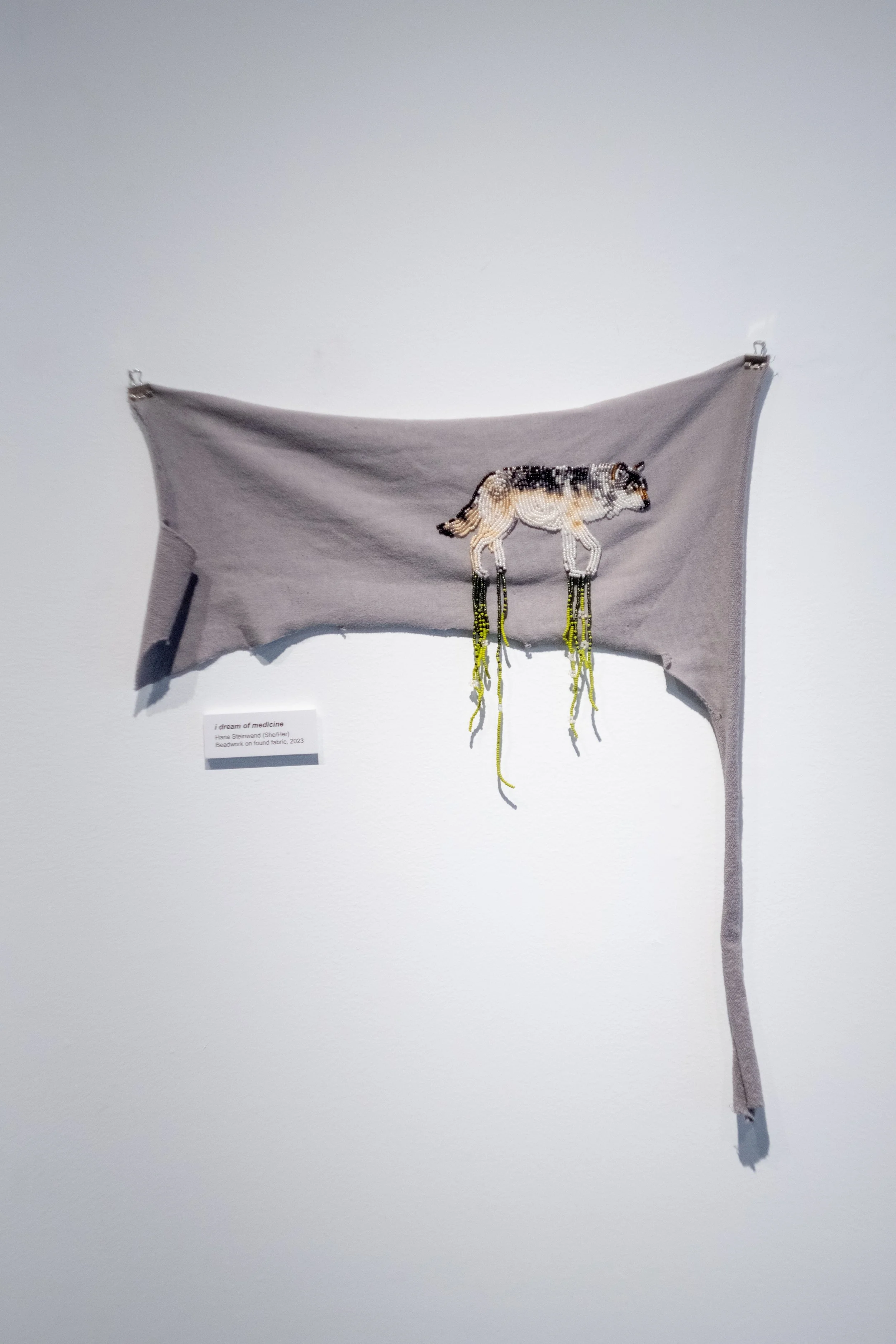
Hana Steinwand, i dream of medicine (Wolf), 2023. Beadwork on found fabric, 42 x 20 cm (or 50 cm with tail). Photo: Jonny Vu.
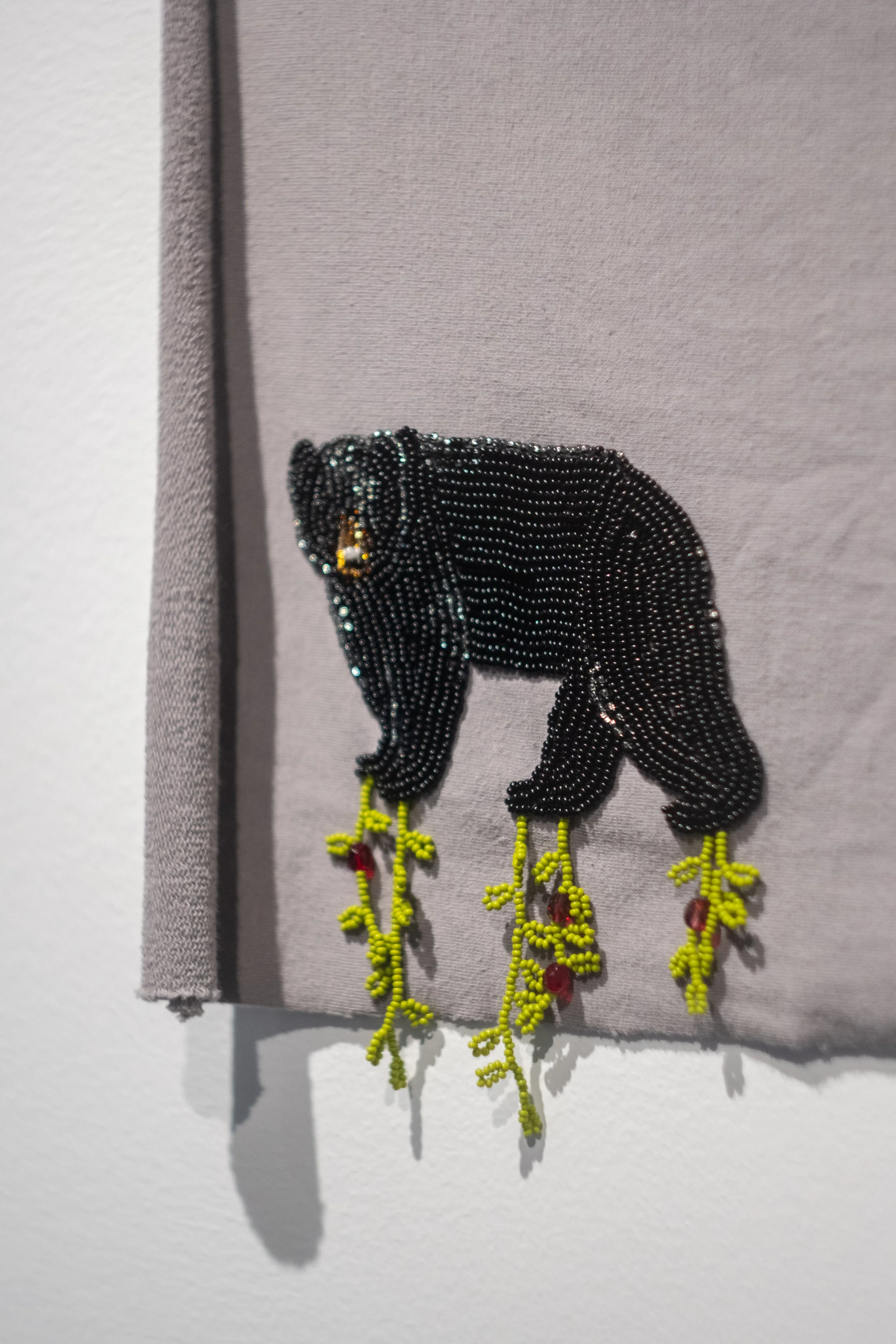
Hana Steinwand, i dream of medicine (Bear), 2023. Beadwork on found fabric, 44 x 32 cm. Photo: Jonny Vu.
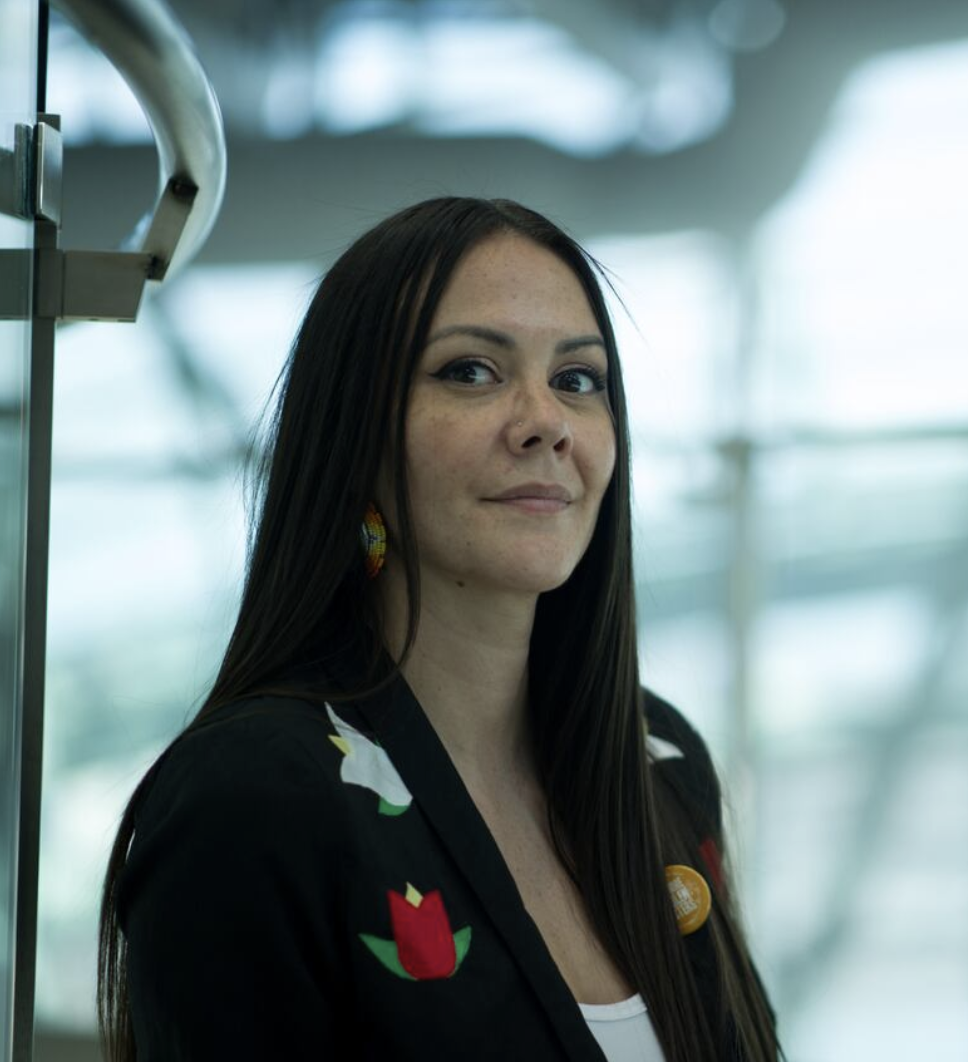
Hana Steinwand is a Tłı̨chǫ Dene artist who recently moved back to Yellowknife after completing her BFA at Simon Fraser University. Steinwand felt a certain discomfort living in southern Canada, feeling disconnected from the land, plants, and animals of her home territory. Since returning, she has been paying close attention to the cycles of the seasons to utilize the land and its cyclical teachings.
"Every year, I watch out for the signs that the spruce tips are coming, and when I can harvest certain species of berries, and when the fireweed seed pods break and all that white seed fluff starts to disperse,” she said “I look forward to that season, because then I can collect the seed fluff and make paper with it. Utilizing and monitoring the land as it gives and takes has been a really important part of my practice and keeping me feeling connected to the land, my culture, and its people.” [2]
In Steinwand’s 2023 I dream of medicine series, she used glass seed beads to depict the relationships between fauna, flora, and the environment. Placing animals like a wolf on a neutral background with leaves and greenery stemming from each of the wolf’s paws, Steinwand emphasizes the importance of land to her art practice.
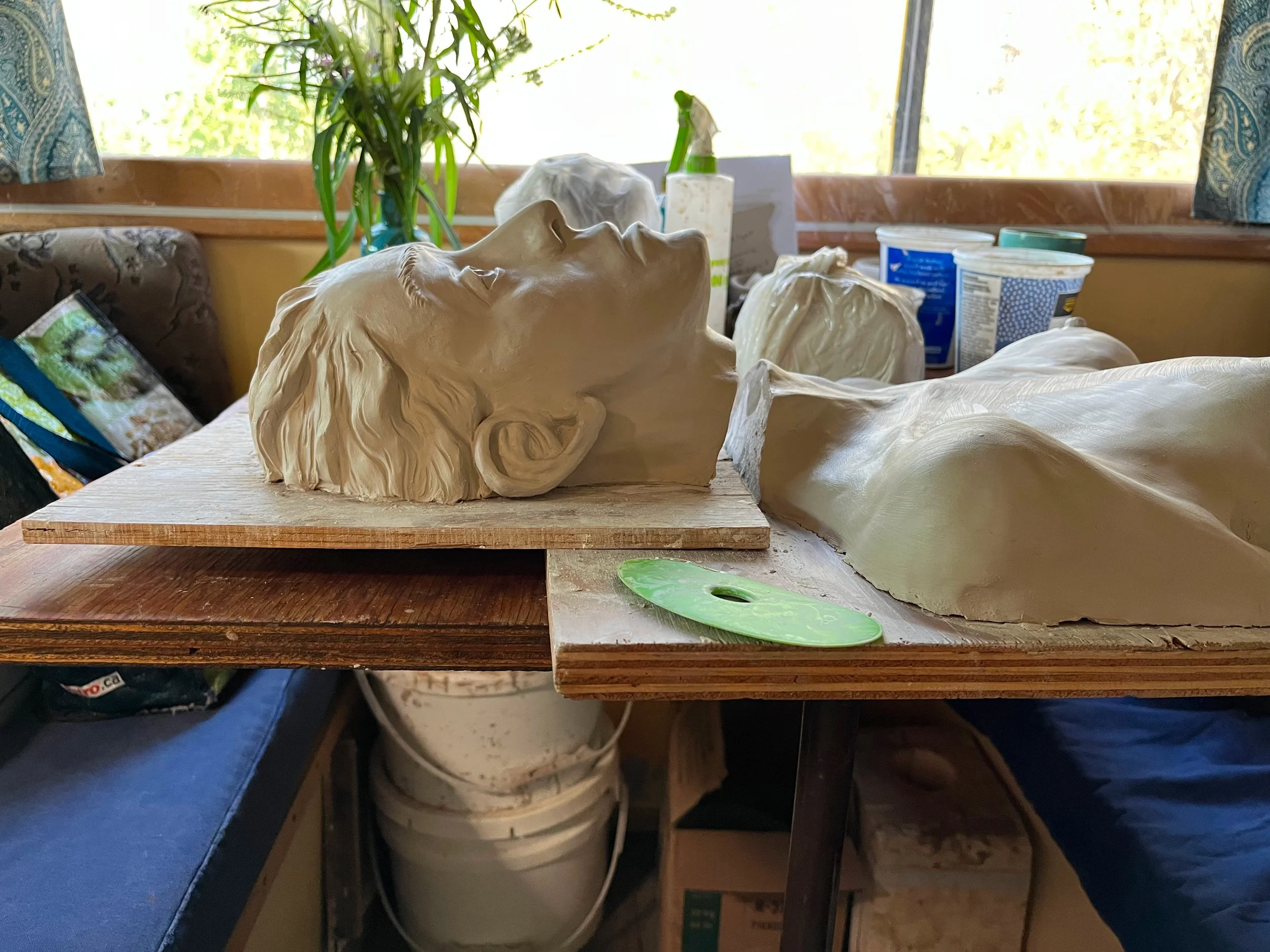
Maura Meng’s studio works in progress, 2025. Photo: Maura Meng.
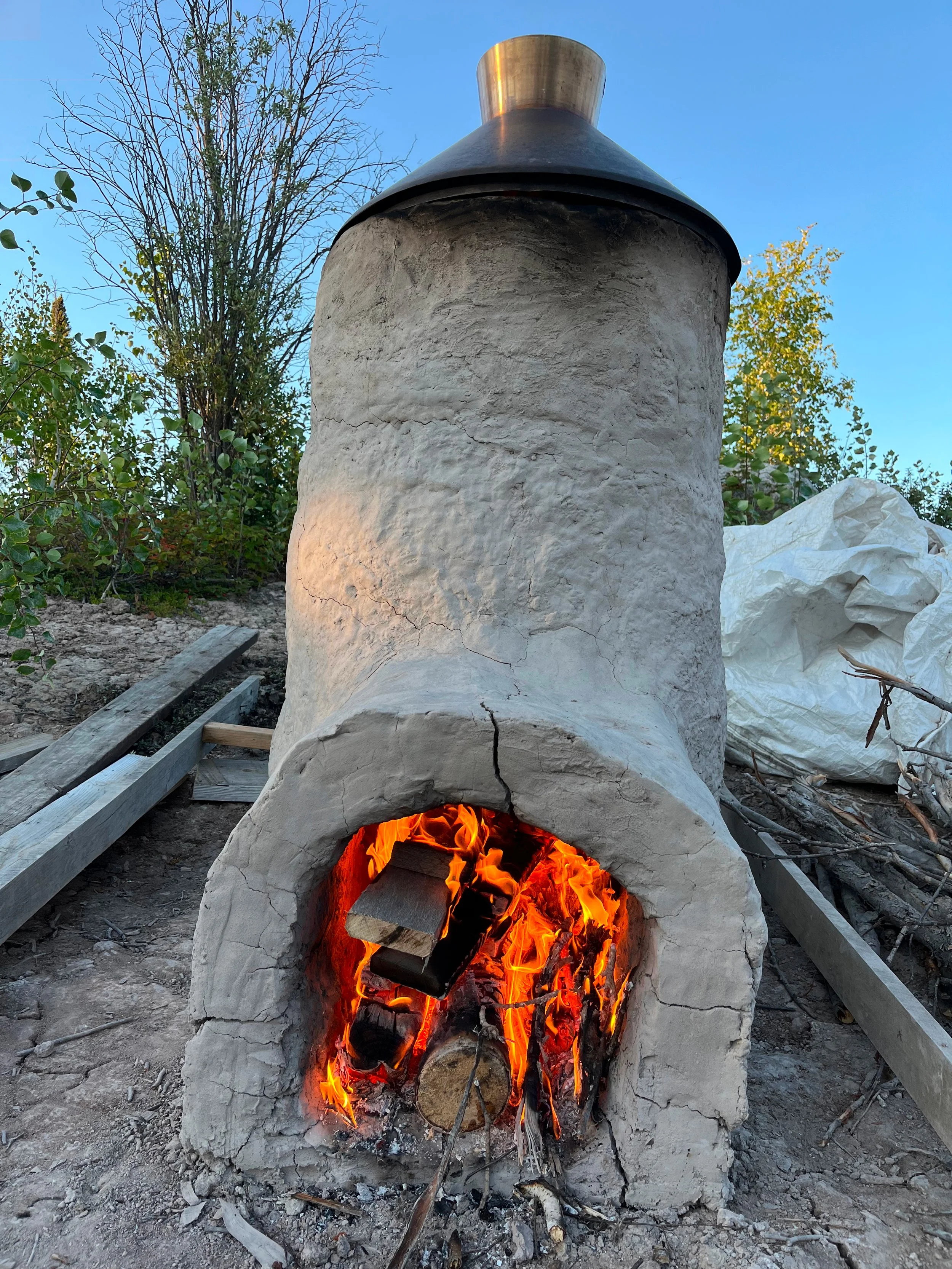
Maura Meng’s wood fire kiln, 2025. Photo: Maura Meng.
Northern craft aims not to be anything other than what it is. Its relevance lies in its demand to exhibit in living rooms and to be worn, not hung only in white cube galleries. I love it for its scrappy attitude and humility.
Maura Meng is a ceramist who lives off-grid outside of Yellowknife. In August 2025, I visited her home and studio, a 1980s Winnebago camper van with degrading tires, moored permanently on the spot. The van dashboard is covered in greenware ceramic sculptures in various states of drying.
Meng uses various methods to fire her works: a gas-fired kiln constructed out of an old fuel drum, her wood fireplace, and the other is a mud kiln. Last summer, Meng dug a 5-foot-deep hole in the clay earth near her camper. Using this mud, she constructed a wood-fired mud kiln to fire her ceramics and used the clay from the same pit to form 150 delicate slip-cast sculptures of hands. The first time I encountered Meng’s work, she was displaying her wares at the Folk on the Rocks music festival, in a vendor tent set up in the sand alongside many other artists. From this first interaction at an outdoor festival, Meng has now opened a solo exhibition at the local museum.
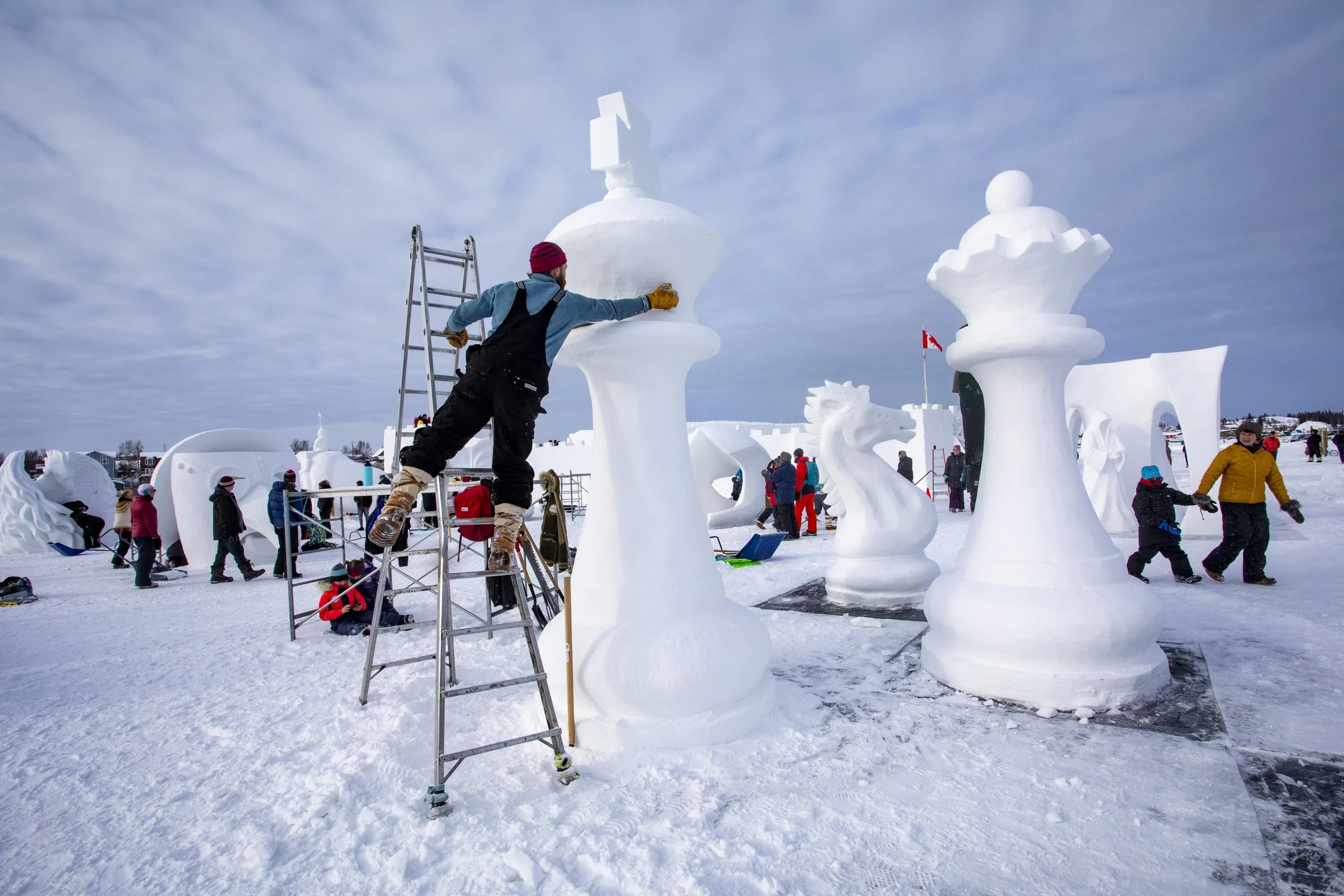
The Snowking's International Carving Symposium attracts artisans from around the world, plus northern and other Canadians. In deep winter weather, starting from 3-metre square cubes of pure, solid snow, they have four days to create - by hand, no power tools allowed - extraordinary sculptures that may or may not follow a given theme. No prize money is awarded, but teams do get travel and living expenses, attracted by what most say is the finest carving snow in the world, The gallery is free to the public, and the sculptures typically last for weeks before strong spring sunshine slowly returns them to the waters. Photo: Snowkings' Winter Festival/FreezeFrame.
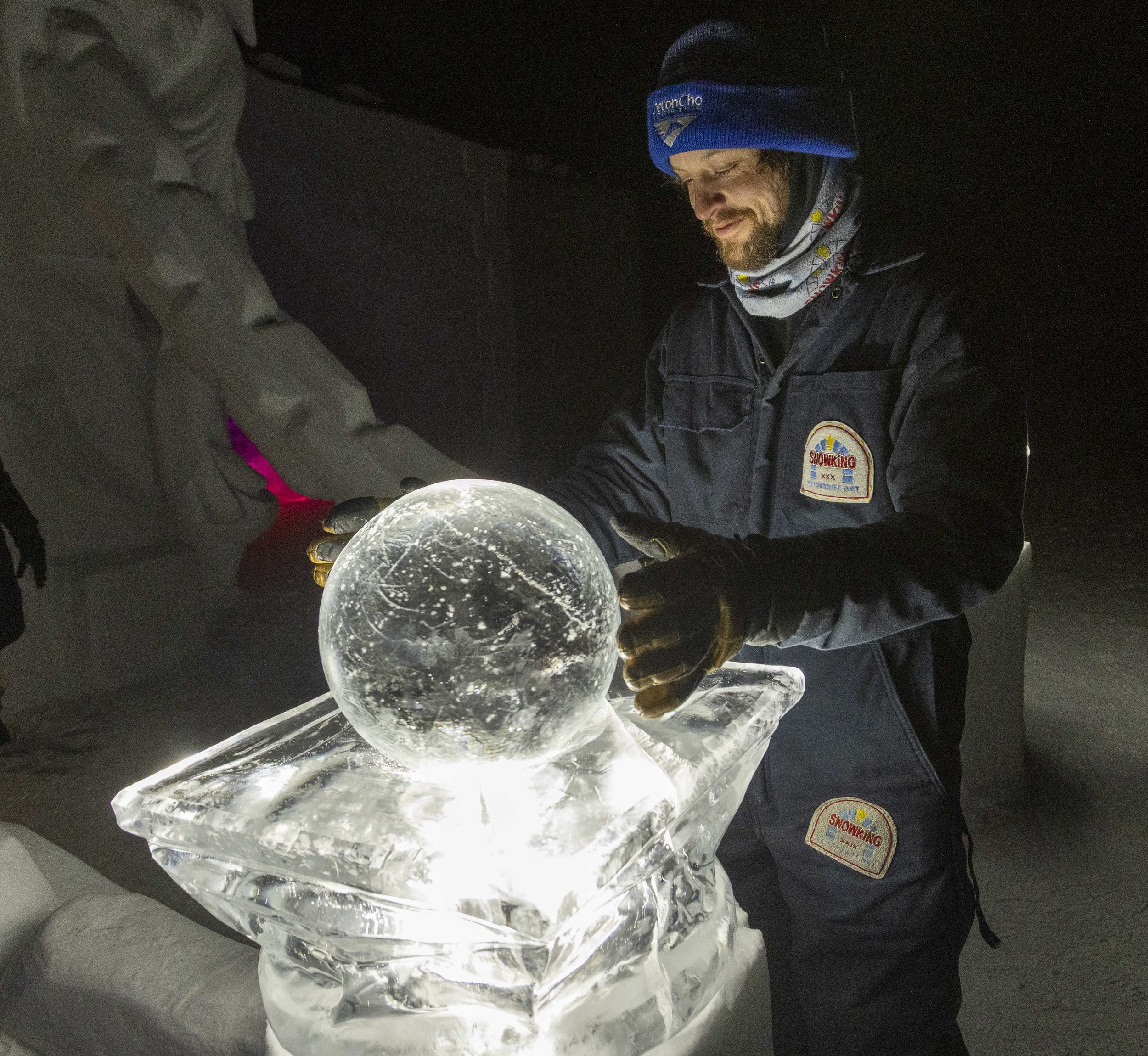
Photo: Snowkings' Winter Festival/FreezeFrame.
About 20 kilometres down the highway from Meng’s creative bush atelier, on the Yellowknife bay of Great Slave Lake, is a 12,000-square-foot castle made of snow and ice, open annually for the month of March. The Snowking’s castle is the brainchild of Tony Foliot and now includes a crew of 40 dedicated craftspeople, carvers, and “snow cadets” who have two months to form it by pouring snow into plywood forms — like concrete — to make thick walls. Using an arsenal of handmade tools, they create clear icy windows, archways, tunnels, slides, a dance floor, and perfect glassy spheres of ice like crystal ball oracles. The castle, a feat of architecture and craftsmanship, boasts a month-long schedule of cultural events like concerts, film screenings, a fashion show, art exhibitions, and more. It is both a venue for cultural production and an example of creativity. The events at the Snow Castle every March draw people out of their homes in the dark of winter, a time when most people hibernate, not to be seen for months.
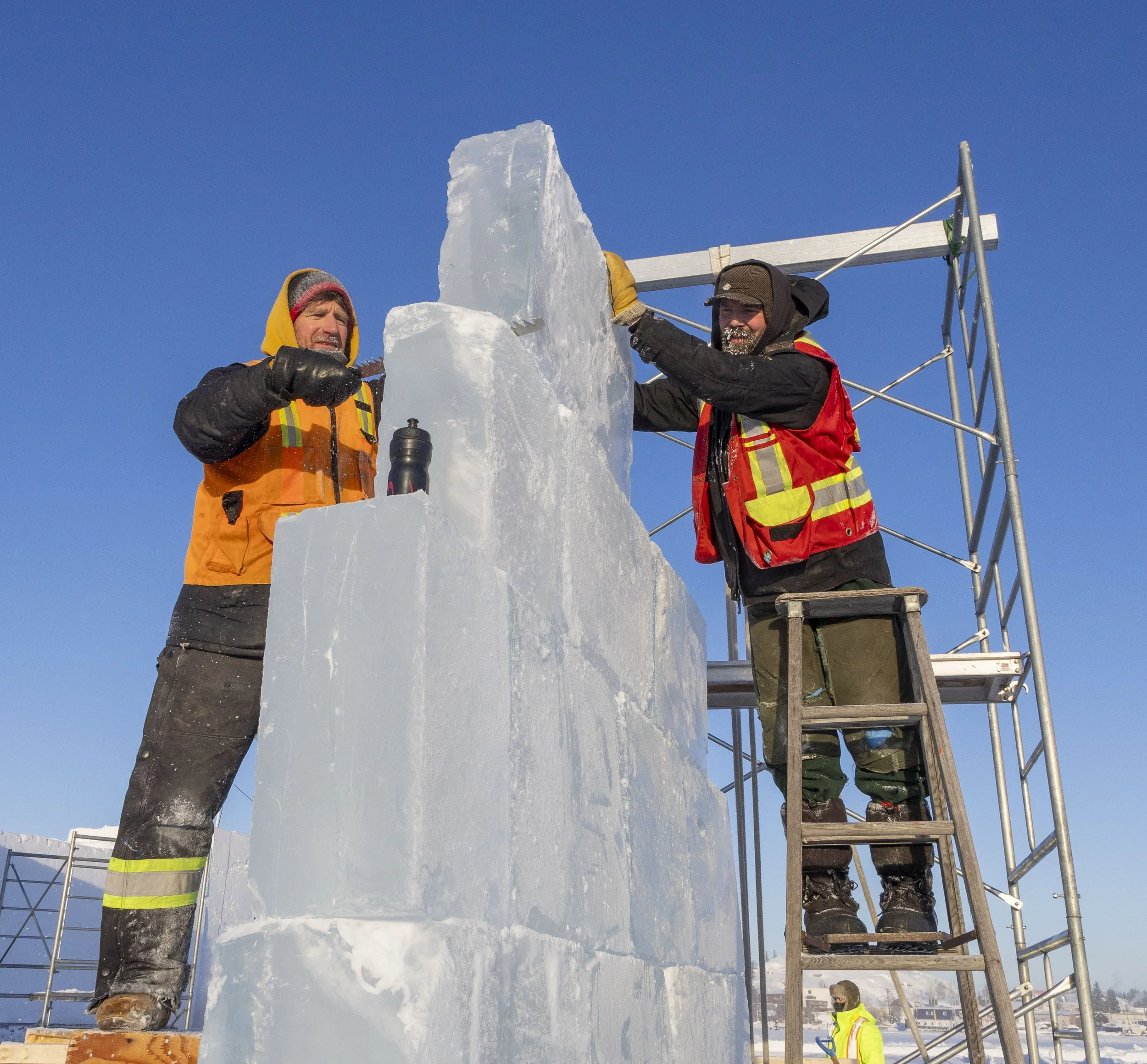
Pat'r'ice and Joe Snow place 100-kg ice blocks for a window in this year's Great Hall. Photo: Snowkings' Winter Festival/FreezeFrame.
The Snow Castle rivals trendy ephemeral, site-specific, temporal art installations in a large metropolitan city but the local patrons attend in plaid jackets and Red Baron gloves. Northwest Territories art movements are resonant to its populations and need not be defined by art fairs and auctions, which has always been the case in the north. The Yellowknife arts scene is thousands of kilometres away from the tastemakers of the Canadian art world, but Northern artists do not feel “far away,” because our epicentre of culture stems from here. Sámi author Carola Grahn explains that “far away” is relative to where you start, it assumes a centre and a periphery. [3] Our word-of-mouth economies uphold hyper-local and culturally resonant craft practices like Steinwand, Meng, and the Snow Castle.
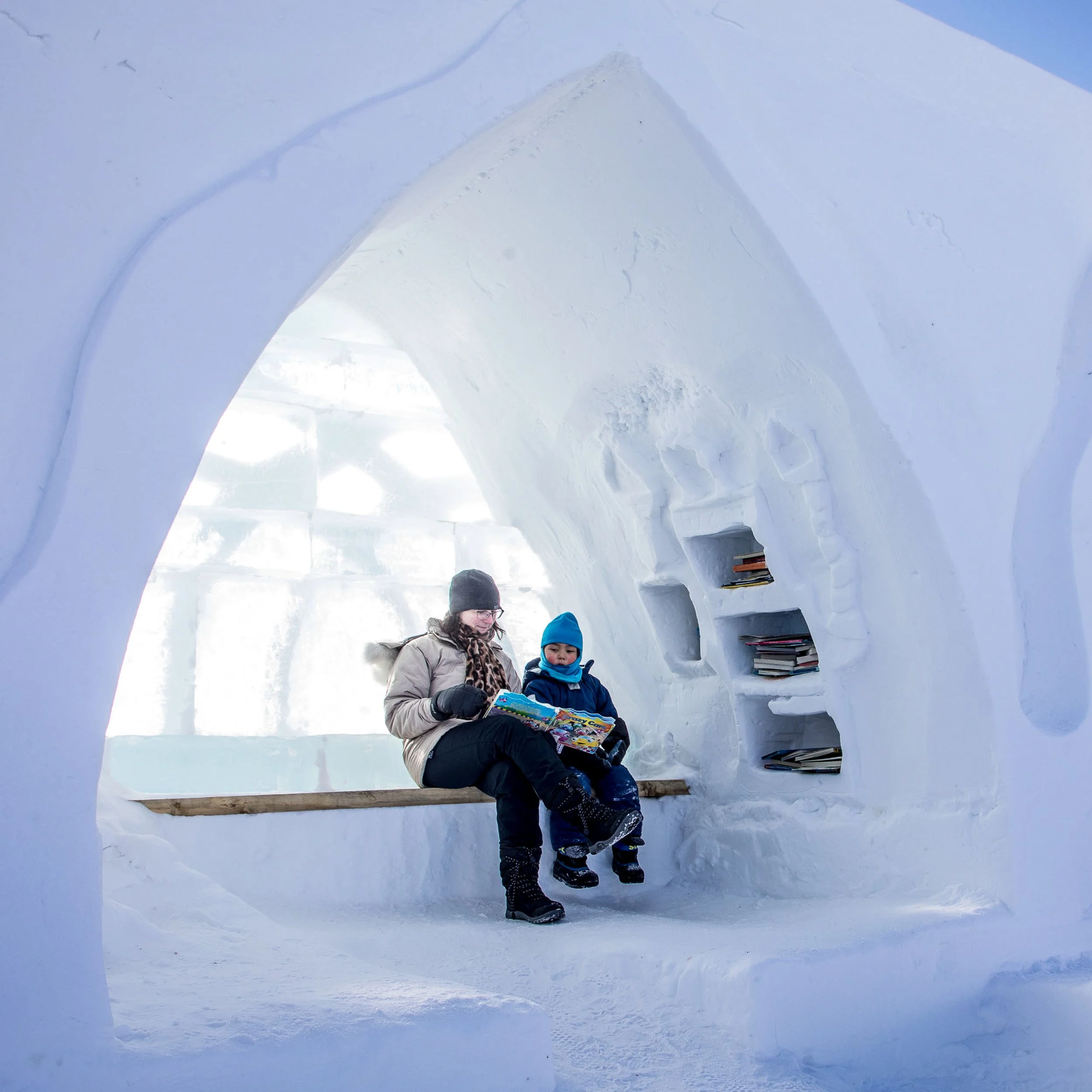
Snowkings' Book Nook is shaped by pouring the castle's metre-thick snow walls around arch-shaped moulds. Ice block windows, cut from pristine Great Slave Lake water, accent the solid snow walls throughout the castle. Photo: Snowkings' Winter Festival/FreezeFrame.
“Crafts are essential to being able to live comfortably here, like the craft of beautiful mitts made of fur and hide, for example, or even simpler things, like dummy-strings for your fur mitts. Crafts like that have been around for a very, very long time and made by many different peoples living here to make these harsh weathers more comfortable. Northern artists share more than just the craft itself; there are often important stories, lessons, or information in each detail of the arts and crafts around here." [4]
[1] Denendeh (Dënësųłinë́ Nëné) is the traditional homeland of the Dene First Nations, meaning “The Land of the People.”
[2] Hana Steinwand in conversation with the author, January 7, 2026.
[3] Carola Grahn, “The Delicate Difference Between ‘Thinking at the Edge of the World’ and Thinking About the Edge of the World,” Afterall 44 (September 2017): 32–43, https://doi.org/10.1086/695511.
[4] Hana Steinwand in conversation with the author, January 7, 2026.
This article is from the Spring/Summer 2026 issue of Studio Magazine.