
Bojagi Biomorphic
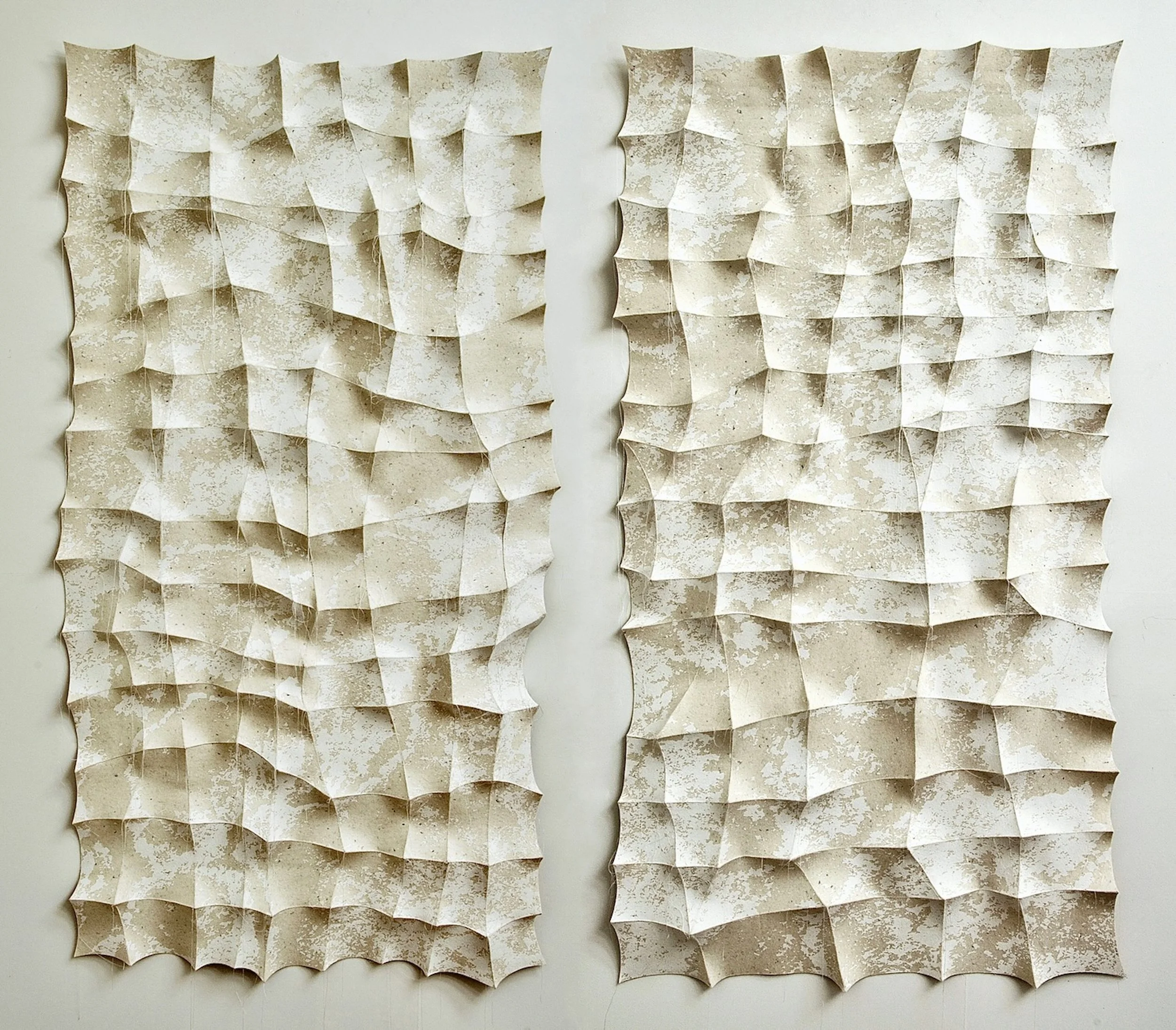
Chung-Im Kim, Fingerprints of the Earth, 2021. Industrial felt, photography, screen printing, digital mapping, hand cut and stitched, 193 x 101 x 8 cm each. COURTESY OF THE ARTIST.
Fine threads dangle from Chung-Im Kim’s biomorphic wall sculpture Fingerprints of the Earth (2021)—nearly invisible, they reveal themselves when they subtly sway with a current of air or glint with a shift of light. Their delicate character draws an attentive viewer closer, revealing a varied topography of hundreds of industrial felt sections, the fine threads trailing from a lattice of impeccably hand-stitched seams. No two pieces are the same shape or dimension; the contoured abutment of the roughly 0.3 cm-thick pieces of industrial felt, carefully hand-bevelled by the artist to achieve flush, near-seamless joins, elaborates the undulating terrain. Visible, though barely, in colour-matched thread, the seams zip along peaks and valleys of the textile quietly, sure-handedly, articulating the emergent biomorphic form. Emblematically significant, Kim’s exposed seams act at once as bond, armature, and narrative continuance. Kim has been piecing this body of work together since childhood when she learned the bojagi quilting method stitching alongside her mother in South Korea. Through shared acts of stitching and storytelling, Kim inherited not only the technical precision of bojagi but also its emotional resonance—a craft tradition grounded in reuse, care, and continuity. Unlike Western quilting, which conceals its seams, the bojagi double-stitch technique is unique in that it creates a finished seam visible on both sides and crafts a versatile, multi-purpose textile that can be used for gift-wrapping, wall hangings, or bedding. Kim later adapted her stitching technique from the bojagi method to accommodate the thick-bodied industrial felt: a material-method encounter that made possible her move into three-dimensional form. While the technique is modified, the philosophy of bojagi, which reveals its construction—its strength and integrity visible in equal measure—remains bedrock to Kim’s iconic visual-material vocabulary.
Rooted in the physicality of industrial felt and the delicate precision of the traditional Korean bojagi quilt methodology, Kim’s practice represents a thoughtful merging of industry and intimacy, structure and softness, tradition and innovation. It is this synthesis, between the industrial and the traditional handmade, that has earned Kim Canada’s highest distinction for craft: the 2026 Saidye Bronfman Award, granted by the Canada Council for the Arts.
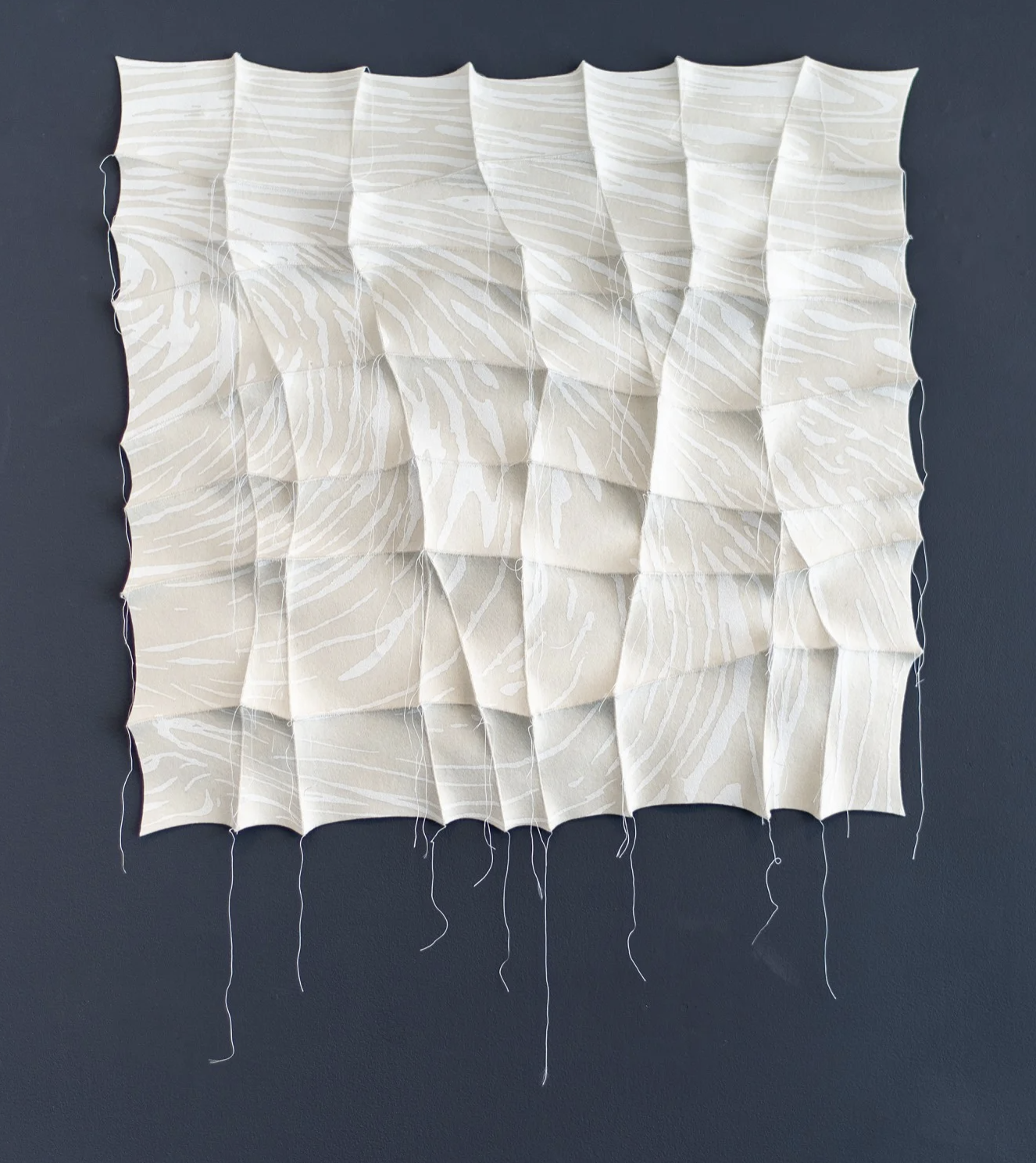
Chung-Im Kim, White Sand 1, 2020. Industrial felt, 66 × 68.6 × 3.8 cm. COURTESY OF OENO GALLERY.
Born in Seoul in 1955 to parents displaced from North Korea, Kim’s work carries a layered diasporic consciousness. Her meticulous handwork serves as remembrance, a reweaving of cultural and familial threads severed by displacement. I first encountered Kim’s practice while developing the exhibition Negotiating Diaspora for Oeno Gallery in 2021. I understand her practice through a feminist posthuman lens: an approach that resists treating the maker as sole author, and instead attends to how material—felt, thread, seam—exerts an agency of its own in the process of making. Through the fusion of industrial felt, the bojagi stitch, and modern design technologies, Kim constructs a language of resilience and transformation. Her work embodies what she calls the “logic of nature”: growth, decay, and regeneration, where structure and impermanence coexist. Within this framework, Kim’s exploration of industrial felt through the bojagi technique becomes a form of material abstraction, of textile and patchwork craft. It is both conceptually rigorous and deeply emotional. In Kim’s practice, the logic of bojagi stitching operates simultaneously as method and philosophy. By maintaining her commitment to hand-stitching rather than automation, she preserves the handmade as an active space of thought, presence, and continuity.
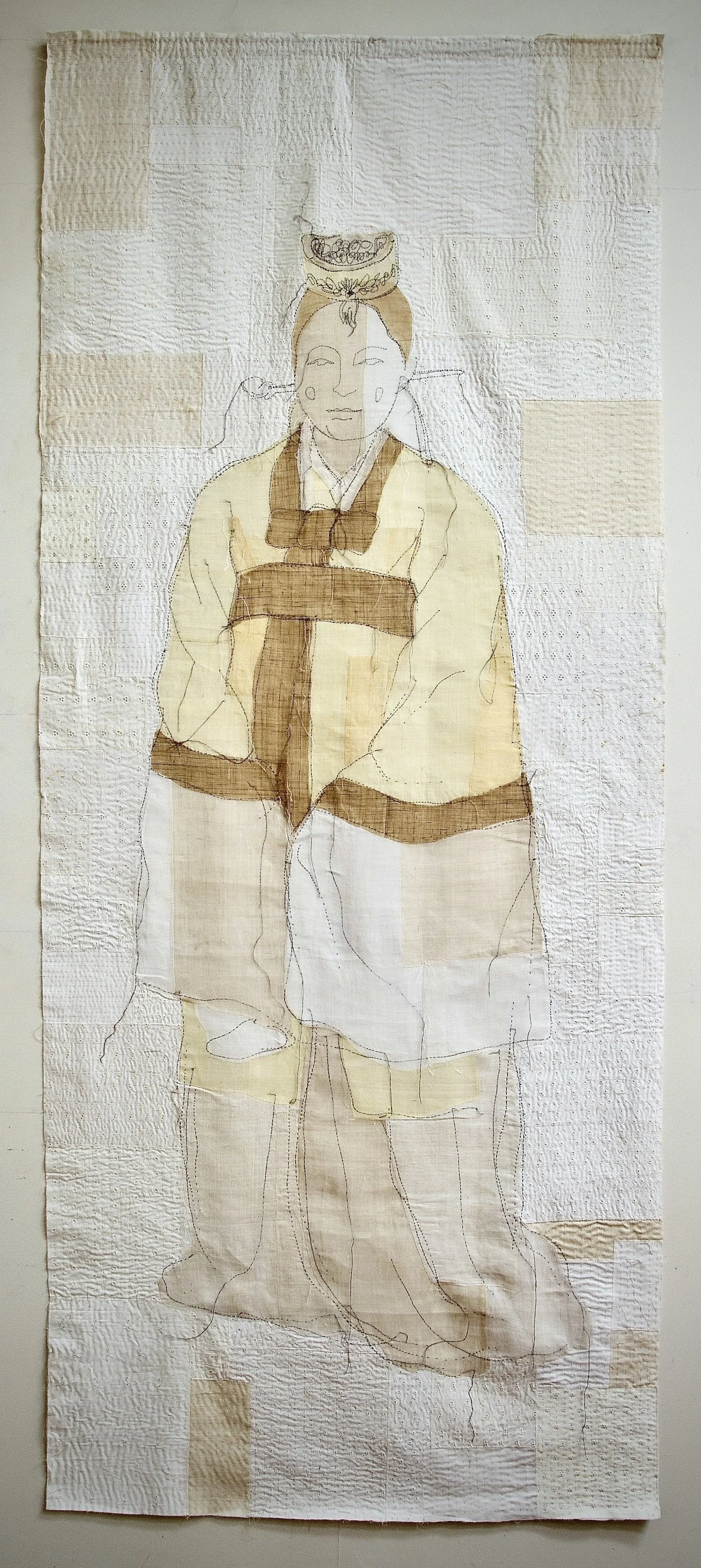
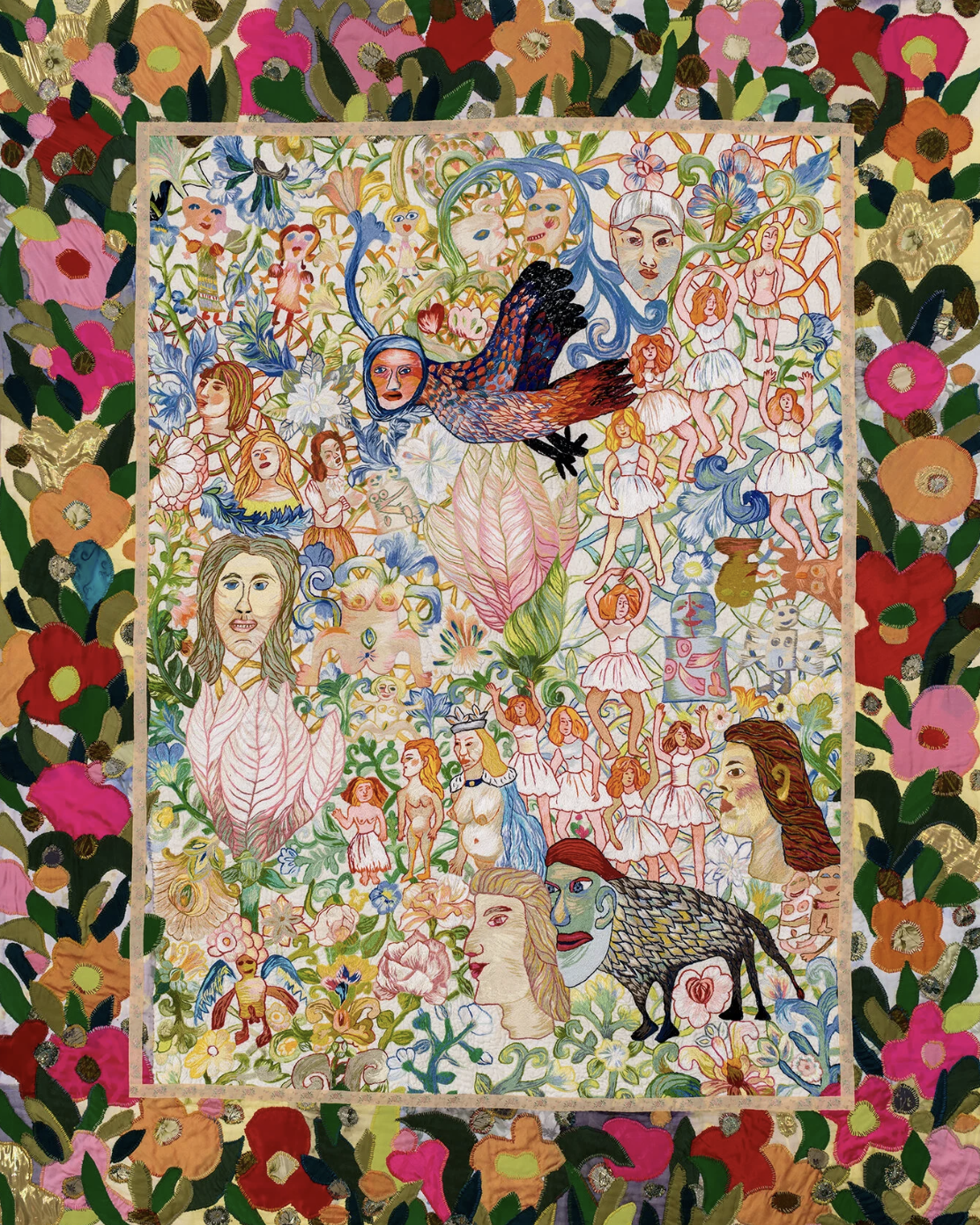
Chung-Im Kim, Wedding Day (diptych), 2005. Repurposed ramie, hemp, and commercial cotton, hand cut and stitched, 241 x 100 cm, each. COURTESY OF THE ARTIST.
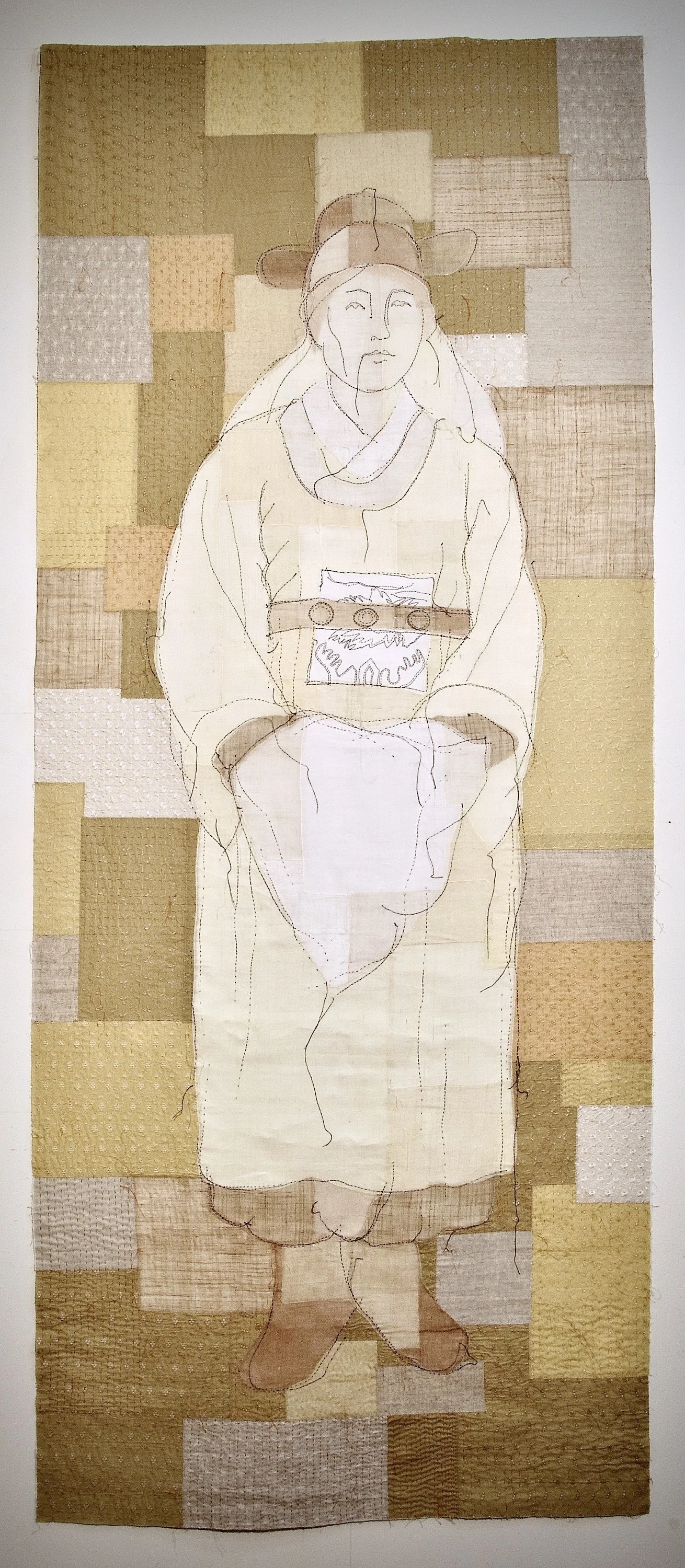
Chung-Im Kim, Wedding Day (diptych), 2005. Repurposed ramie, hemp, and commercial cotton, hand cut and stitched, 241 x 100 cm each. COURTESY OF THE ARTIST.
A pivotal transition occurred with her work, Wedding Day (2005), a life-size diptych first exhibited on opposing walls of the Justina M. Barnicke Gallery in Toronto and setting the conditions for the three-dimensional industrial felt works that Kim is known for today. A rare figurative work, Wedding Day is a diptych bojagi wall hanging portraying the artist’s mother and father, their likenesses drawn from their 1947 wedding photograph. The life-size figures installed on opposing walls stage an embodied encounter: the visitor moving between the two panels recreates a threshold-crossing, which mirrors the diasporic passage of the work itself. Visually, the repurposed cotton pieces—out-of-season samples Kim collected from commercial fabric stores around Toronto—lay ground to the larger-than-life figures comprised of pieces of hemp and ramie—mosi in Korean—that Kim’s sister sent to her, by the artist’s request, from South Korea [1]. The fabrics sourced from Canada and Korea symbolically and materially seam together time, culture, and memory; the dangling threads are a gesture that embraces open-endedness, and non-linearity in continued becoming.
Kim’s interest in industrial felt began early in her textile design career in Korea; the material’s weight, density, and structural capability made a lasting impression on the artist. A later encounter with the fresh interior face of a newly opened seed pod propelled Kim to explore the formation of the void—for this she needed a medium with greater density than cotton or ramie. By 2009, Kim was working exclusively with industrial felt. Merging its rigidity with the sensual tactility of her hand stitching, her technique took on new sculptural weight, negotiating the significantly denser body of the material while retaining the visible seams and bojagi patchwork approach. At first working monochromatically, Kim studied how the bodied forms pitched shadow and cast light, later integrating her own photography, screen printing, and natural dyes.
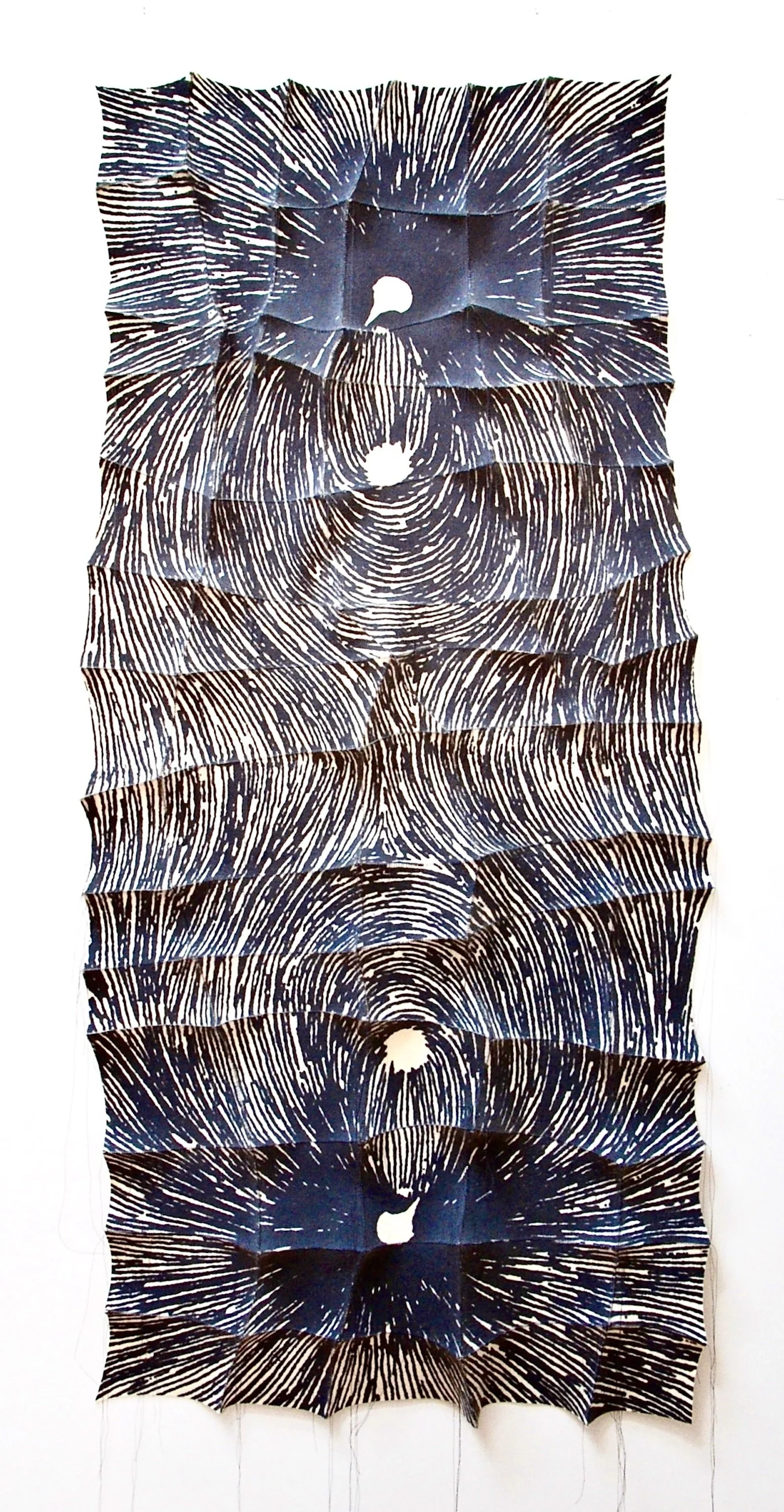
Chung-Im Kim, Jaryu, 2012. Industrial felt, digital mapping, screen printing, hand cut and stitched, 130 x 61 x 5 cm. COURTESY OF THE ARTIST.
Kim’s wall-mounted sculptures occupy a liminal zone between surface and volume. Jaryu (2012) and Fingerprints of the Earth (2021) extend a dialogue between pattern and structure. The screen-printed surfaces, reminiscent of bark, sand, and sediment, both reveal and conceal the patchwork beneath.
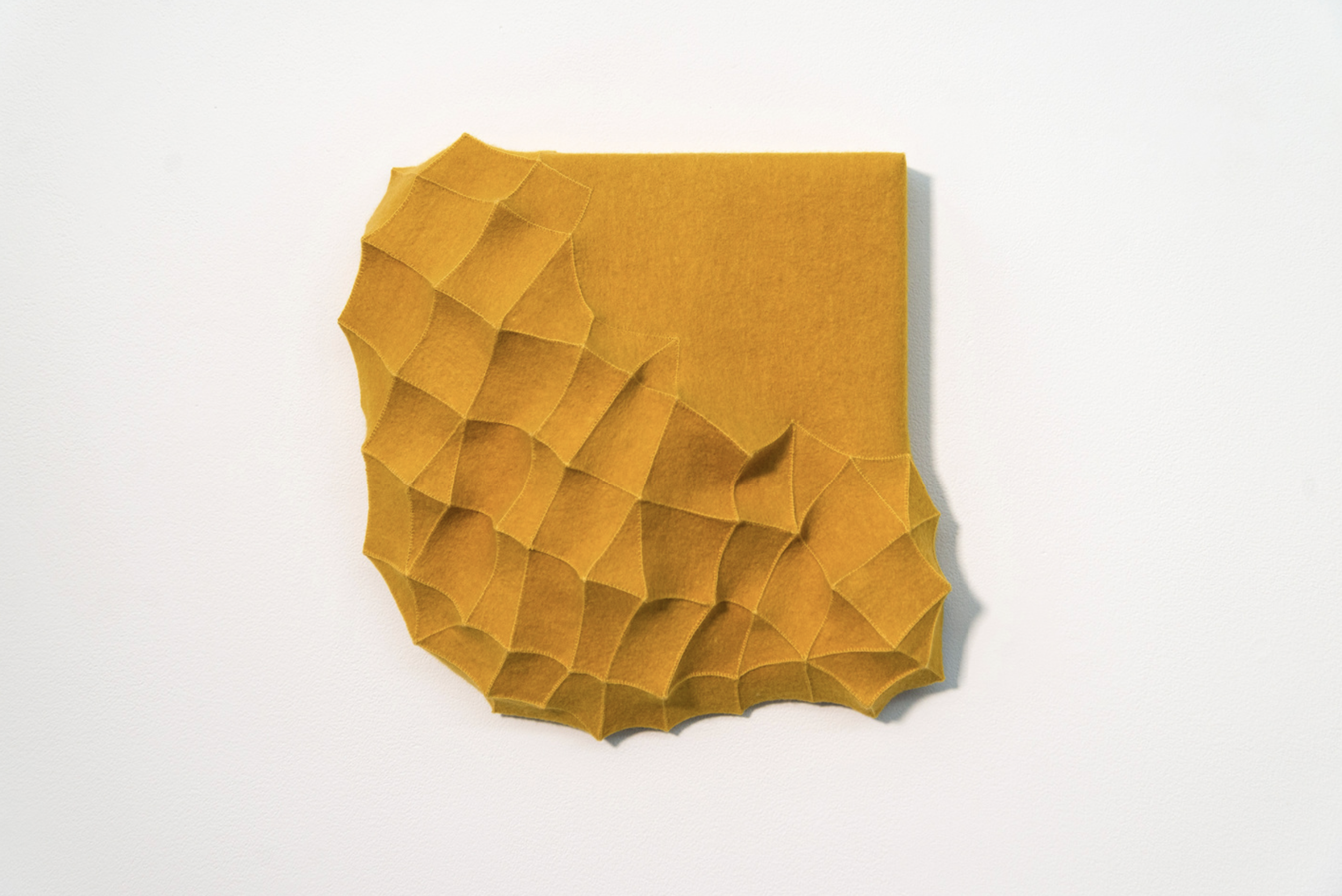
Chung-Im Kim, Mutation 6, 2015. Industrial felt, natural dyes, hand cut and stitched, 34 x 33 x 9 cm. COURTESY OF OENO GALLERY.
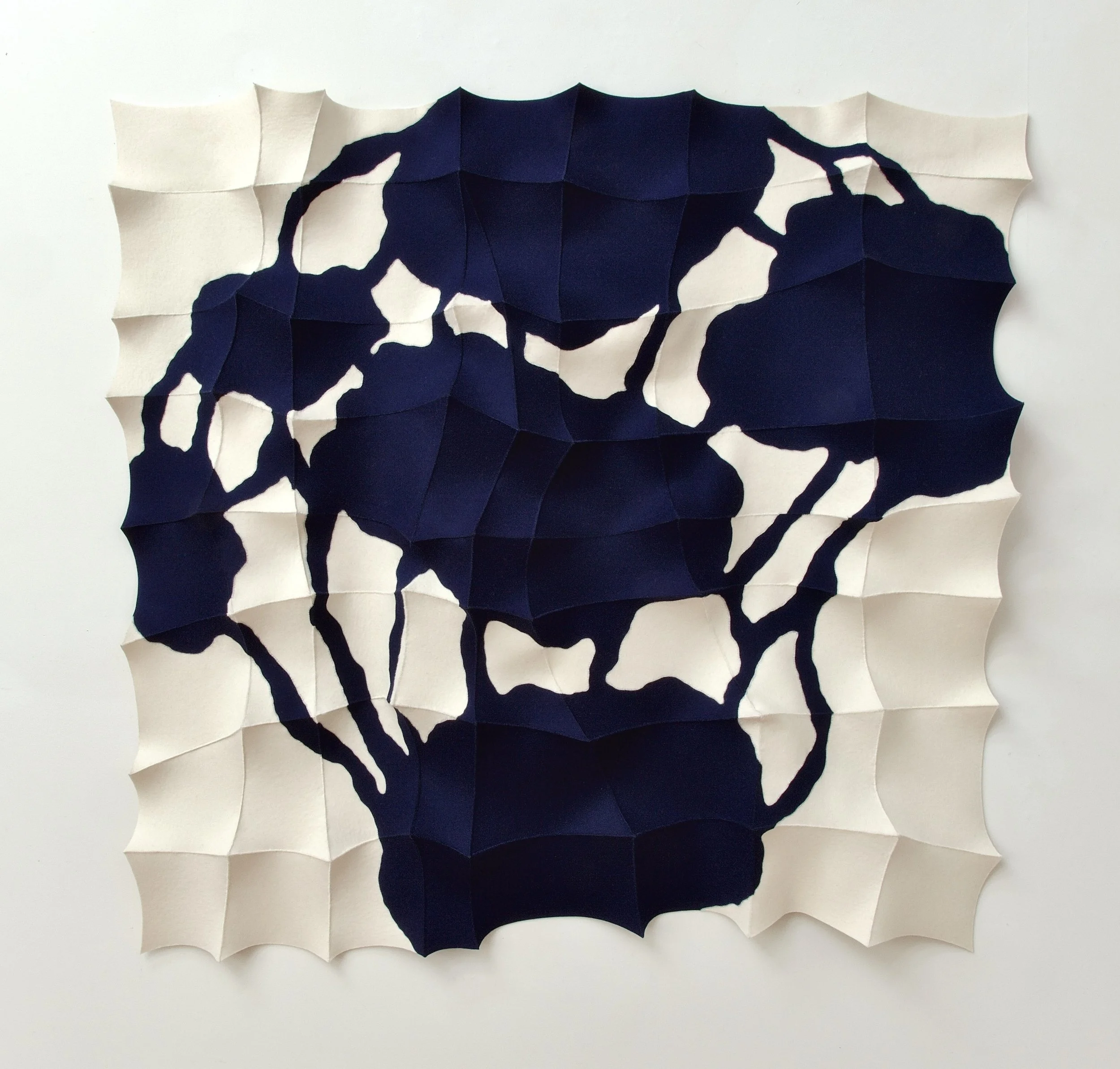
In her Mutation series (2015) and Segmentum works (2024), Kim extends the logic of bojagi into sculptural abstraction. The extrusive, chrysalis-like forms of Mutation 6, 8, and 9 appear to grow organically from their felt substrates, emergent, transitional, and alive. They echo the barnacled exoskeletons of utilitarian clay pots recovered from a centuries-old shipwreck Kim was inspired by at the Aga Khan Museum in Toronto. The trailing threads that animate Wedding Day give way to a different emphasis: the integrity of form itself, the hand-stitched seam doing its structural work visibly but without ornament, integrated into the surface. Matching thread tones to felt fibres in indigo, ochre, and off-white, Kim achieves near seamlessness, allowing form to emerge through shadow and light The Segmentum series integrates large, irregularly shaped pieces of bold, naturally dyed indigo into the felt patchwork. Kim’s immaculate stitchwork traces the contours of the tenuously connected, nearly segmented, deep indigo pools, suggesting processes of fission and fusion simultaneously. The works evoke the elastic logic of natural systems translated into textile structure.
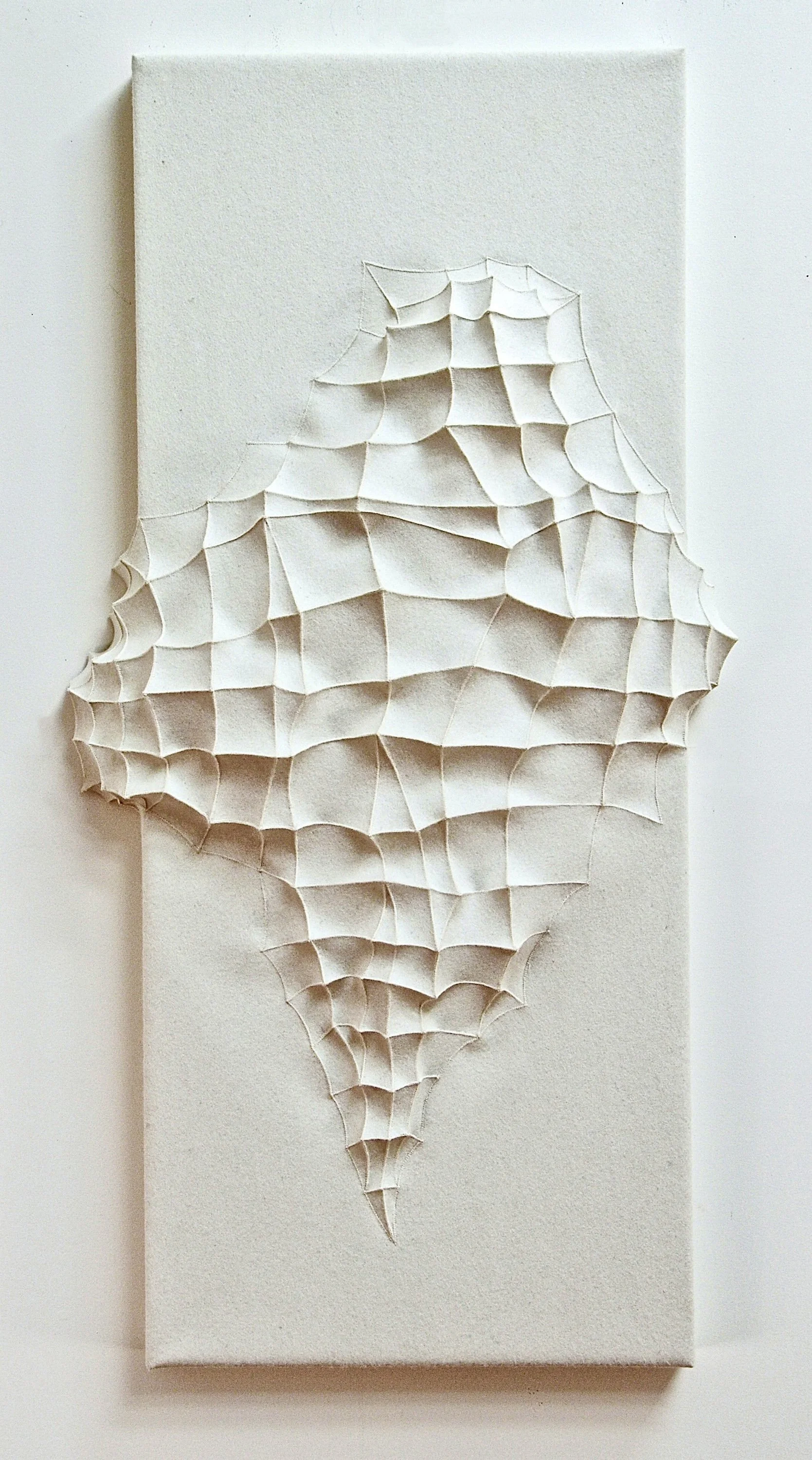
Chung-Im Kim, Mutation 8, 2015. Industrial felt, hand cut and stitched, 122 x 64 x 13 cm. COURTESY OF THE ARTIST.
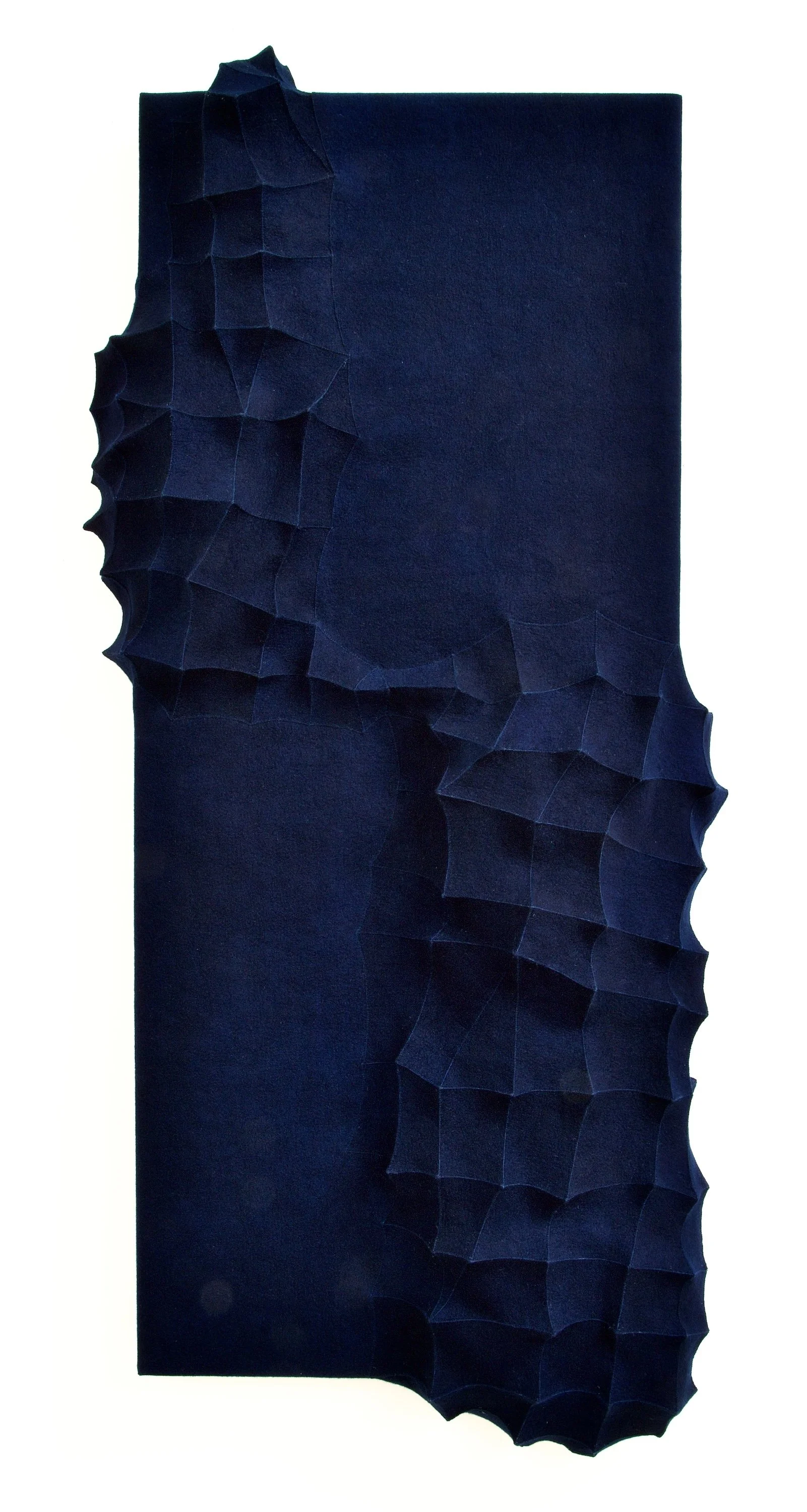
Chung-Im Kim, Mutation 9, 2015. Industrial felt, natural dyes (indigo), hand cut and stitched, 132 x 64 x 13 cm. COURTESY OF THE ARTIST.
The same attentiveness to transmission, making something passed hand to hand, has shaped Kim’s contributions as an educator. She taught in Korea and in Canada including nearly two decades as Associate Professor of Textile, Material Art & Design at OCAD University. Beyond academia, Kim has served as juror, speaker, and mentor across Canada since the late 1990s, and has built an international exhibition record recognized for its technical innovation and poetic restraint.
Chung-Im Kim, Segmentum 1, 2024. Industrial felt, digital mapping, natural dyes, hand cut and stitched, 137 x 101 x 10 cm. COURTESY OF THE ARTIST.
What Kim inherited from her mother’s stitching was never just technique. It is a way of making that refuses to disappear into what it produces: visible, deliberate, and unautomatable. In Kim’s hands, bojagi becomes a living inheritance, memory carried forward not by preservation alone, but by transformation, as cloth becomes felt, and craft process is a form of thought made visible in every seam.
[1] Mosi is a plant-based fibre cultivated in eastern Asia since prehistoric times and known for its strength and lightness. The weaving and all related processes of Hansan mosi, a fine mosi, were inscribed into South Korean Intangible Cultural Property since 1967 and included on the UNESCO Intangible Cultural Heritage List since 2011.
This article will be published in print in the Fall/Winter 2026 issue of Studio Magazine: Possibility.