
Canadian Craft at Homo Faber 2026
This year has been explosive for Canadians on the international craft stage, beginning with the inclusion of Canada in the Homo Faber guide. Now, six makers from across the country were featured in the Homo Faber exhibition in Venice, running September 1 - 30, 2026, titled An Island of Light.
Studio sought out these six makers, and Isabelle Fish of Rue Pigalle, to get their thoughts on this moment, and what it means for their practice.
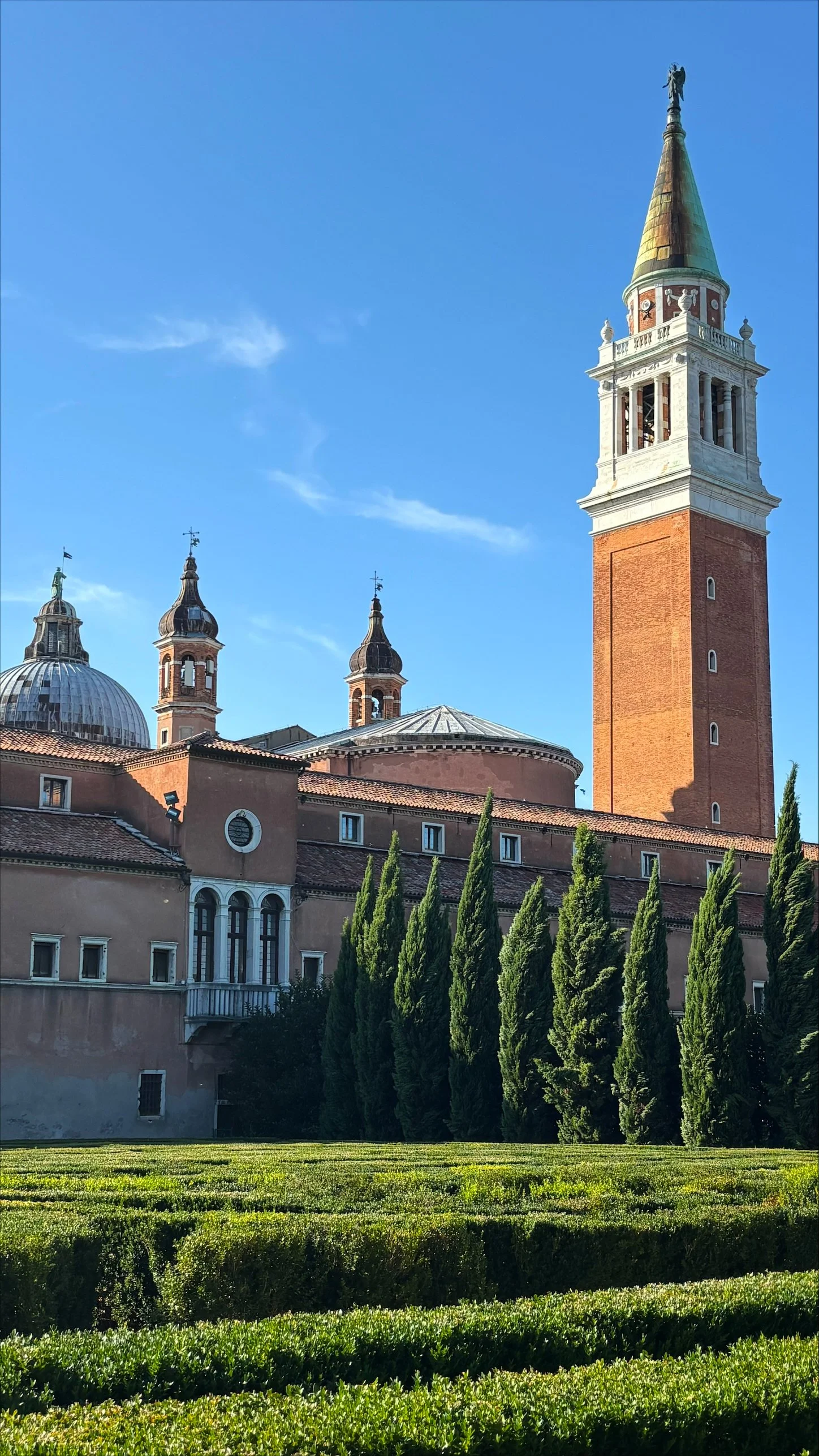
Cini Foundation, Venice, Italy. Photo: Susan Collett.
Isabelle Fish
What does seeing Canadian craft on the international stage mean to you?
Isabelle Fish: Canadian craft has always been present and strong but not necessarily very visible. It is serendipitous that it is bursting onto the international scene at a time when Canada's leadership is celebrated for nurturing and protecting our communities, skills and cultural diversity - all values profoundly embedded in craft. Within its own cultural and historical context, Canadian craft is undoubtedly on par with international craft. If we strive for excellence in our skills, breadth in our teaching, innovation in our creativity and ambition in our reach, Canadian craft can have a transformational effect on the economic health of many communities. Being on the international stage gives our craft eco-system the strength, self-belief and ambition to do so.
What do you see as unique about craft exhibitions (versus art)?
IF: Not having an academic background in either art or craft, I would say that both art and craft exhibitions celebrate a cultural moment. One does it from an ideas perspective, and the other from a skills perspective. Art-craft is at the intersection of both. It's important not to perpetuate the artificial ranking of art above craft; of the mind above the hand. They are equal in value. We must remember that whether in art or craft, excellence requires a perfect alignment of the mind, the hand and the heart. They cannot operate independently, so why rank them? Art should tone down its slight arrogance, and craft needs to believe in itself. Both art and craft create moments of awe. The role of exhibitions is to celebrate and share that awe with visitors.
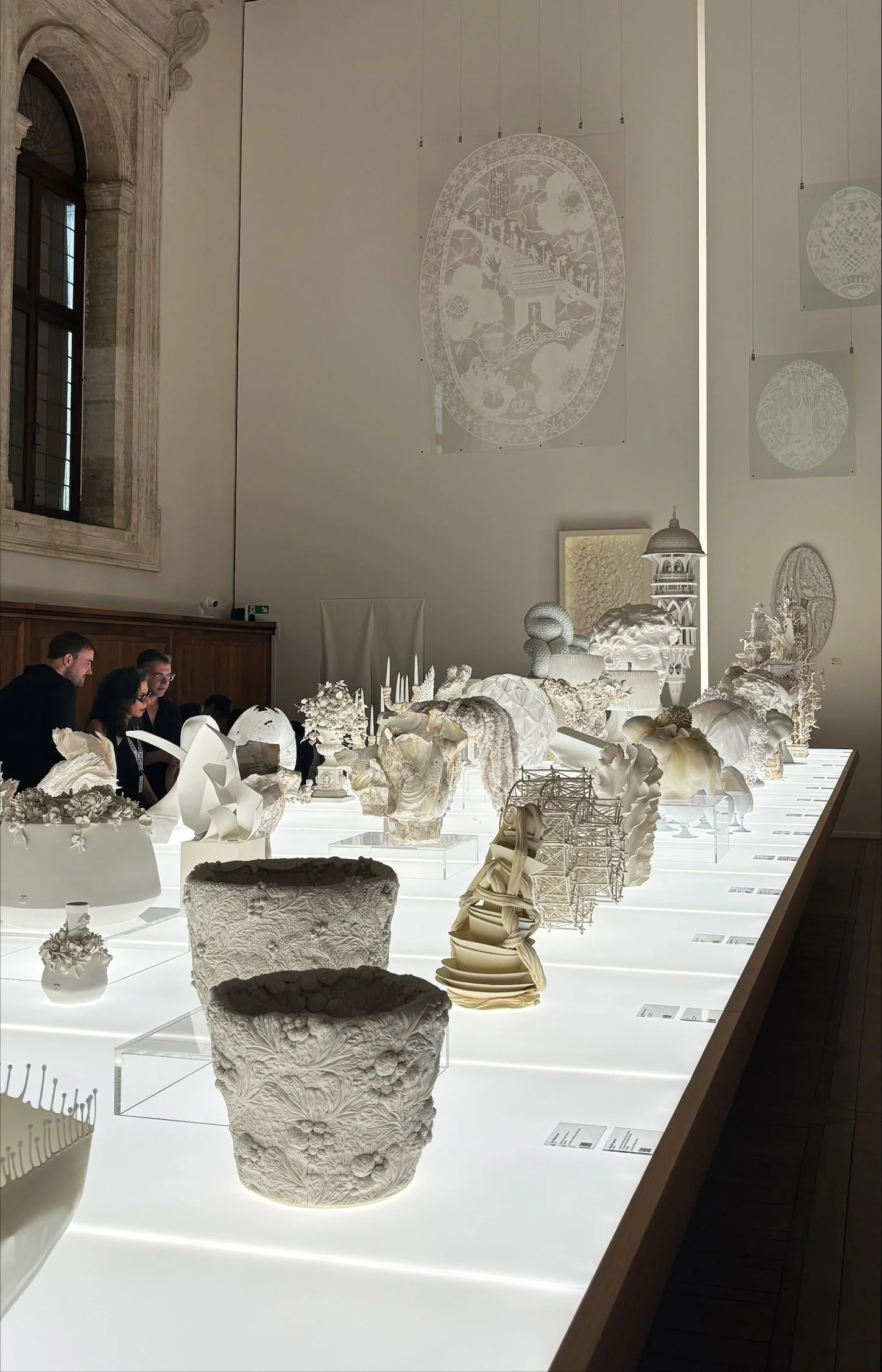
A Feast of Light exhibition room, Homo Faber 2026, Venice, Italy. Photo: Susan Collett.
Susan Collett
What is exciting about showing your work amidst and International cohort of craft artists?
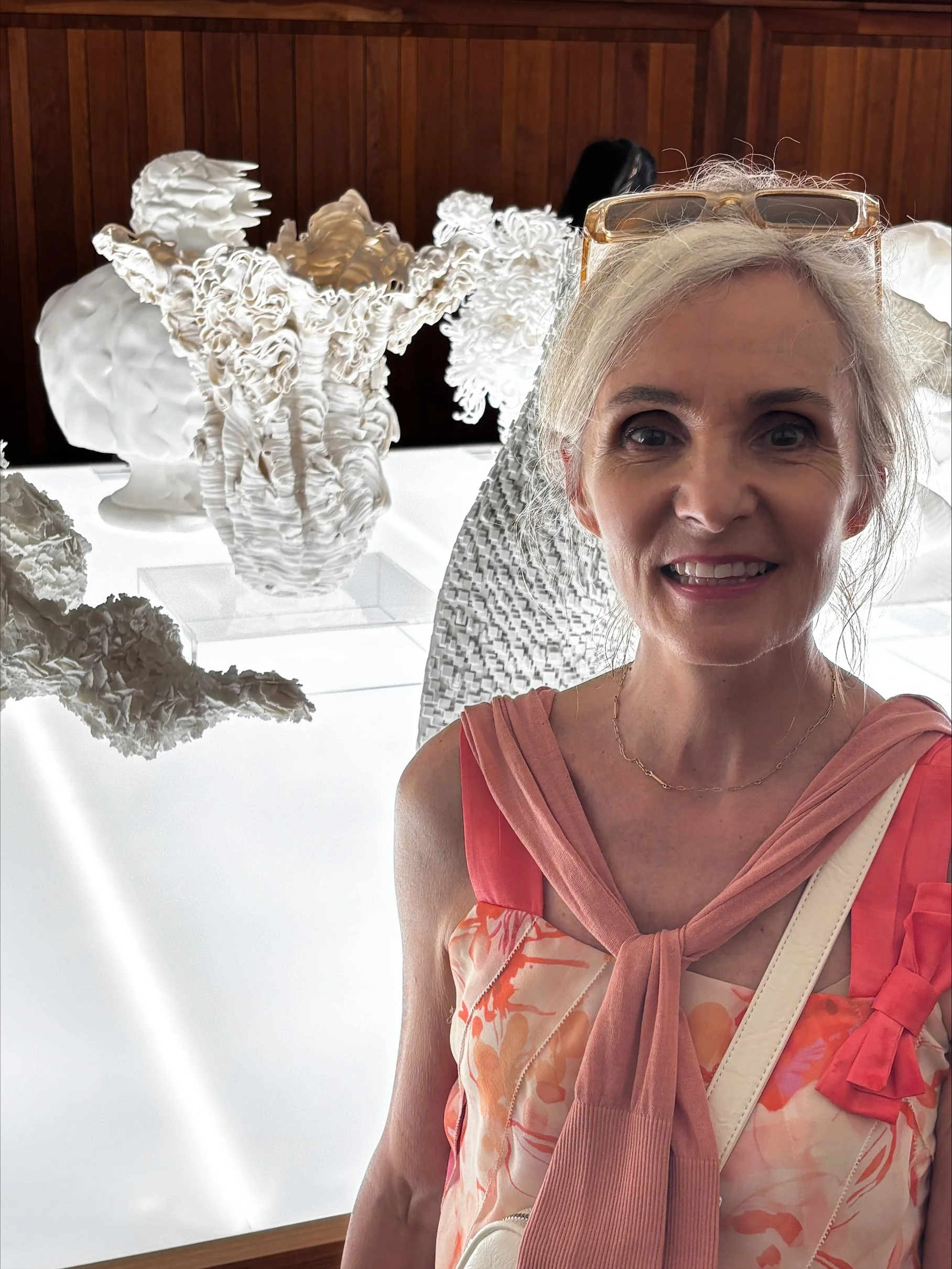
Susan Collett with her piece LUMEN. Photo: Susan Collett.
Susan Collett: For 33 years, I have been a full-time studio artist, working largely alone in my studio. After so many years of working independently, it can be easy to feel that you are the only one on this particular path—that the small, quiet decisions and steps you make each day exist in isolation.
What is exhilarating about showing my work alongside an international cohort of craft artists is the realization that our individual practices are actually part of something much larger. To see such diverse artists, materials, traditions, and ways of thinking gathered together is a powerful reminder that the work we do individually contributes to a broader and important cultural movement.
For me it represents something increasingly meaningful in a world moving rapidly toward AI and continued commercialism. It is deeply our human nature to make with our hands, there is a positive and vital movement in this exhibition toward valuing the handmade and the knowledge carried through craft. I am thrilled to be a part of this.
How do you approach storytelling through porcelain?
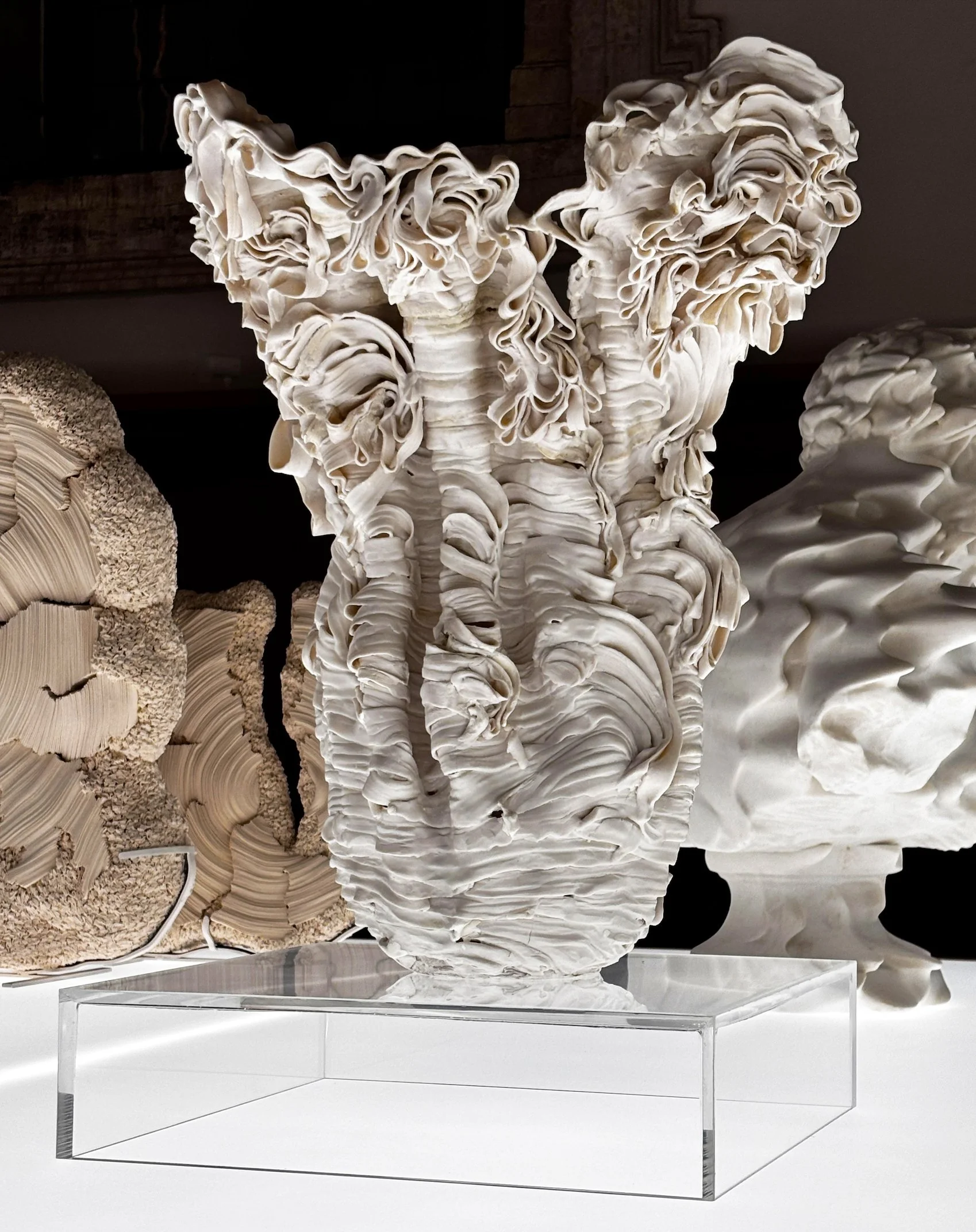
Susan Collett, LUMEN, 2026. Translucent porcelain, multi-fired, 57 x 58 x 43 cm. COURTESY OF THE ARTIST.
SC: My approach to storytelling through porcelain begins with making the invisible visible. I use clay to explore observations, emotions, and experiences that can be difficult to express in words. Through movement and gesture, and the unique translucency of porcelain, I try to give shape to the intangible.
I see our life built in layers, not always even, sometimes with gaps of understanding. Just as clay is shaped by touch, we are shaped by our experiences-layered through time, constantly evolving.
Light becomes an important part of this language, revealing what might otherwise remain hidden. Rather than telling a literal story, I am interested in creating a sense of something felt or remembered—allowing the viewer experience within varied interpretations. In this way, porcelain becomes both the storyteller and part of the story.
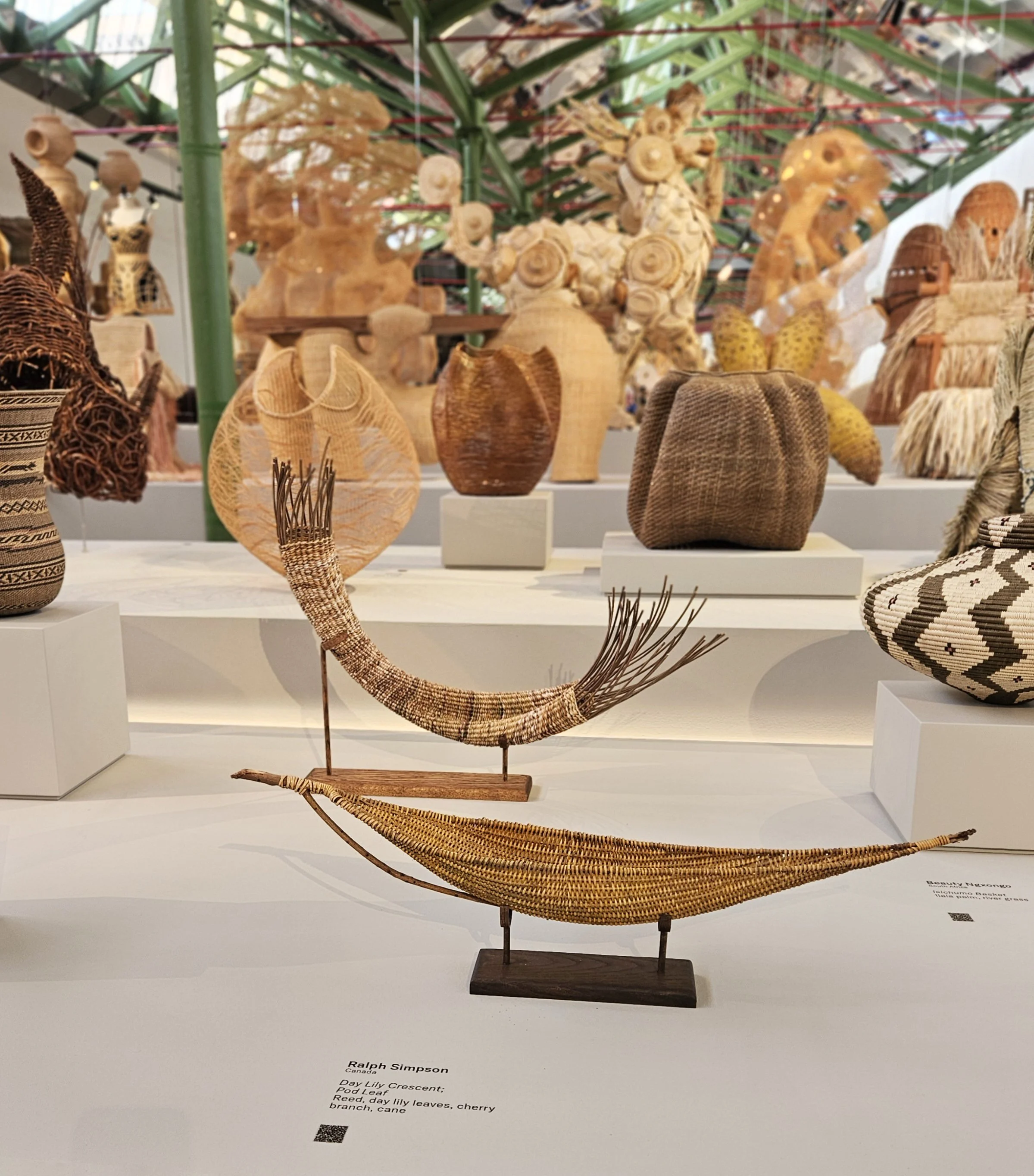
A Rooted Ascent exhibition room, Homo Faber 2026, Venice, Italy. Photo: Ralph Simpson.
Ralph Simpson
What is exciting about showing your work amidst an international cohort of craft artists?
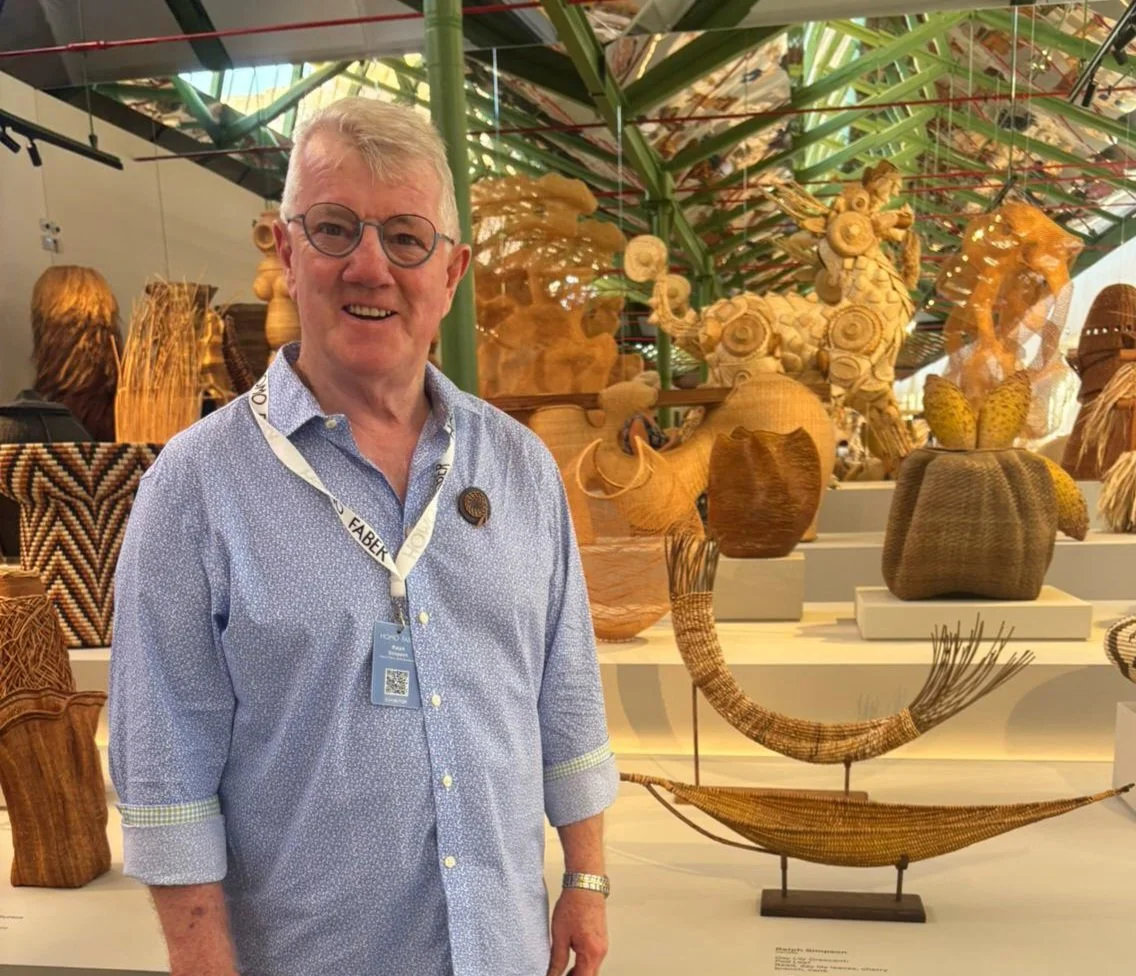
Ralph Simpson with his works Daylily Crescent and Leaf Pod. Photo: Ralph Simpson.
Ralph Simpson: It is deeply inspiring to see how artists from different cultures interpret their own landscapes and material traditions. Sharing space with an international cohort of 400+ artists from 70+ countries highlights the universal language of craft while celebrating local uniqueness. For me, it was a thrilling opportunity to bring New Brunswick’s wild, sustainably harvested plant fibres into dialogue with global practices, showing how regional botany can spark meaningful broader conversations about our relationship with nature.
How do you approach storytelling through your medium?
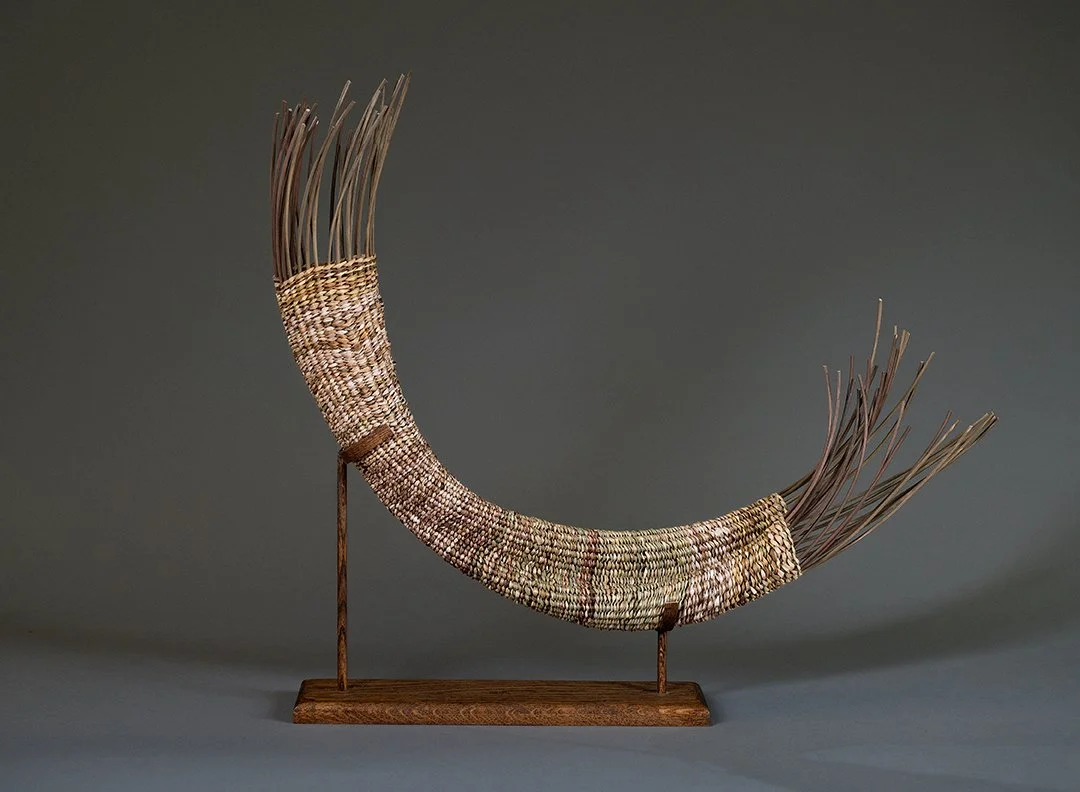
Ralph Simpson, Daylily Crescent, 2025. Day lily and plant fibre, 45 x 79 x 24 cm. COURTESY OF THE ARTIST.
RS: My storytelling begins with the land and the harvest. Every piece carries the narrative of its ecosystem—from the ethical gathering of local bark, willow, and herbaceous plants to the combination of traditional weaving with contemporary sculptural forms. By honouring the entire life cycle of these living materials, the artwork serves as a physical archive of the natural world, inviting viewers to pause and reflect on environmental integrity, renewal, and our shared responsibility to the earth.
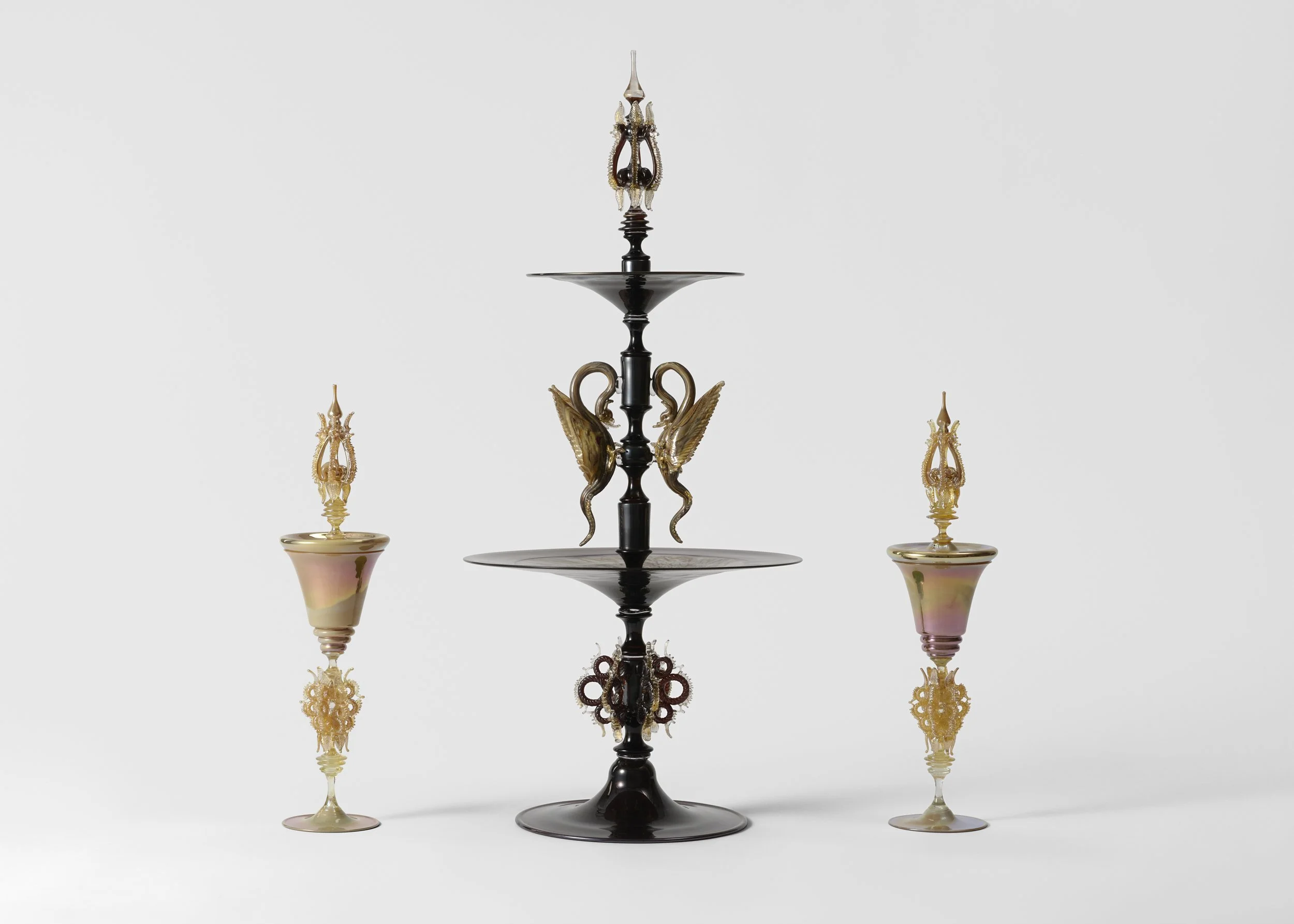
Charlie Larouche-Potvin, L’Arche sombre and Sondes dorées, 2026. Photo: Michael Kazik. COURTESY OF THE ARTIST.
Charlie Larouche-Potvin
What is exciting about showing your work amidst an international cohort of craft artists?
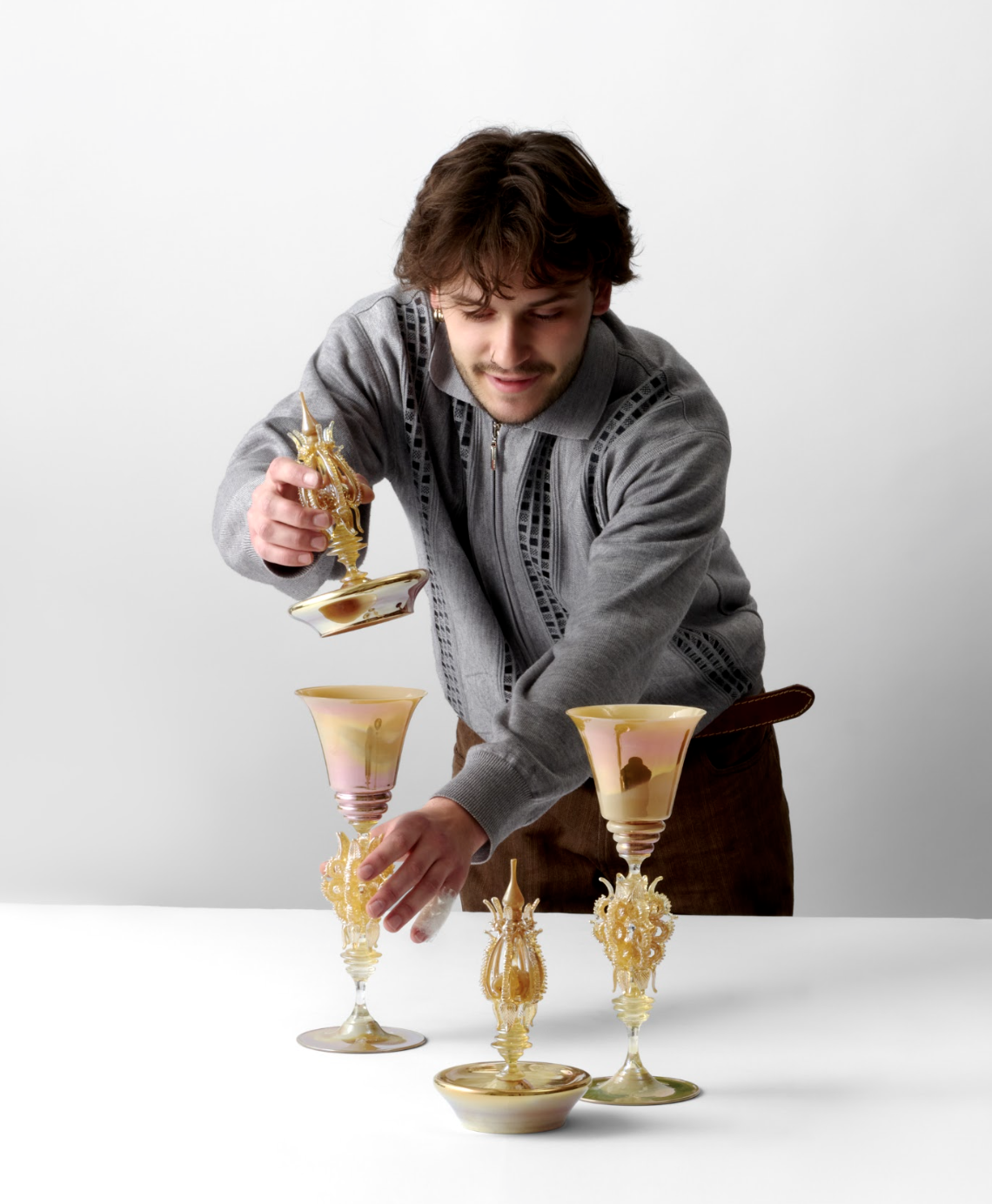
Charlie Larouche-Potvin with his work Sondes dorées. Photo: Michael Kazik.
Charlie Larouche-Potvin: Every piece I make is a conversation between the traditions of Murano and my own contemporary perspective. To be invited to present at Homo Faber is a profound honour and a testament to the enduring value of master craftsmanship.
How do you approach storytelling through glass?
CLP: The tradition of Venetian techniques, which demands not only technical precision but a kind of physical dialogue with the material itself, led me to Murano, Italy, where I spent time alongside Maestro Davide Fuin, one of the island’s most respected glassblowers. Prizing patience above all else, techniques are refined over hundreds of years and passed down to generations of glassblowers through gesture, repetition and trust. I am committed to preserving this lineage of Muranese glassblowing, as an artist who brings a narrative from his own inner world into stemware and objects that trace back to the Renaissance workshops of the Venetian lagoon.
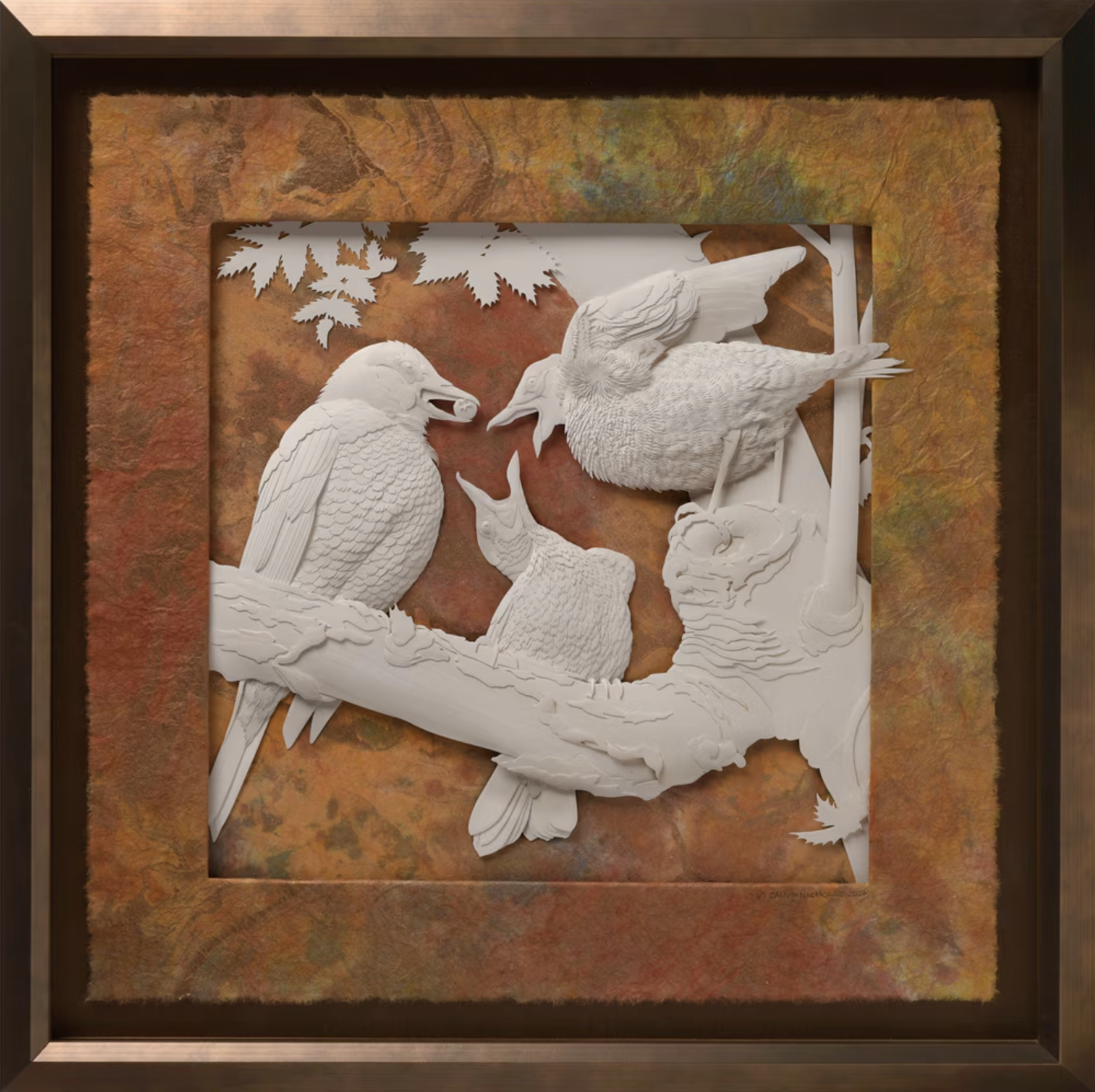
Calvin Nichols, Pretty Please!, 2026. Cotton paper and wood, 49 x 49 x 3 cm. COURTESY OF HOMO FABER.
Calvin Nicholls
What is exciting about showing your work amidst an international cohort of craft artists?
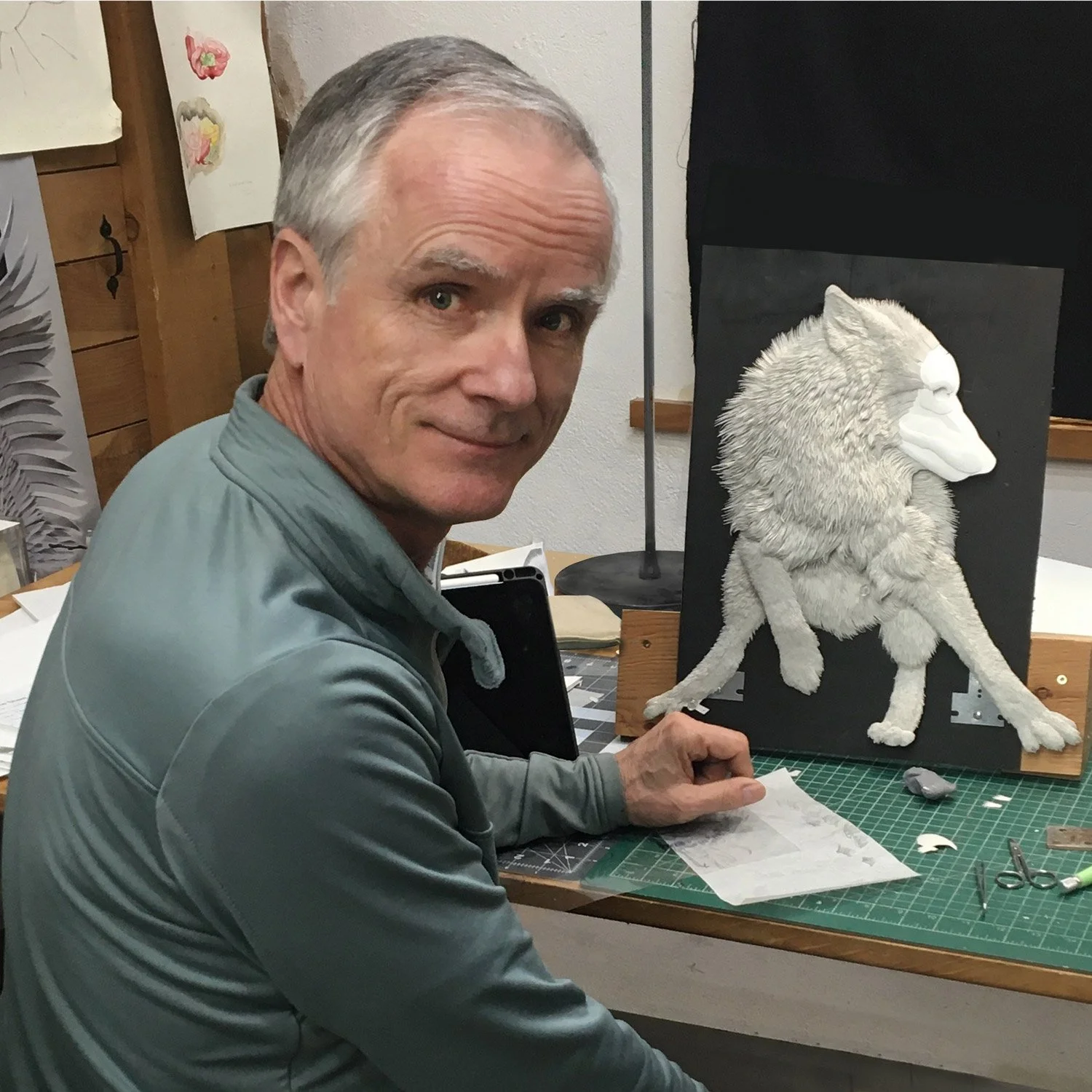
Calvin Nicholls with his work. COURTESY OF THE ARTIST.
Calvin Nicholls: I’ve had the great privilege of showing my work alongside internationally respected nature artists for many years, so there is a wonderful familiarity in that shared passion. Homo Faber opens an entirely new door for me: suddenly I am among remarkable makers from around the world whose common language is mastery of their materials. I’m enormously curious to see what happens when all those different traditions, materials and ways of thinking come together.
How do you approach storytelling through paper?
CN: There is an elegance and delicacy inherent in paper that feels beautifully suited to many of the species I portray. Yet there is an interesting contradiction too: the fine-art papers I work with are archival materials capable of remarkable longevity, which seems a fitting complement to the resilience and perseverance of the natural subjects themselves. I use the paper’s edges, layers, texture and the way it catches light to suggest everything from the softness of feathers to the tension of a wing or the character of an individual animal. Ultimately, though, the paper is there to help tell the story—to create that moment when someone stops thinking about the material and begins connecting with the subject.
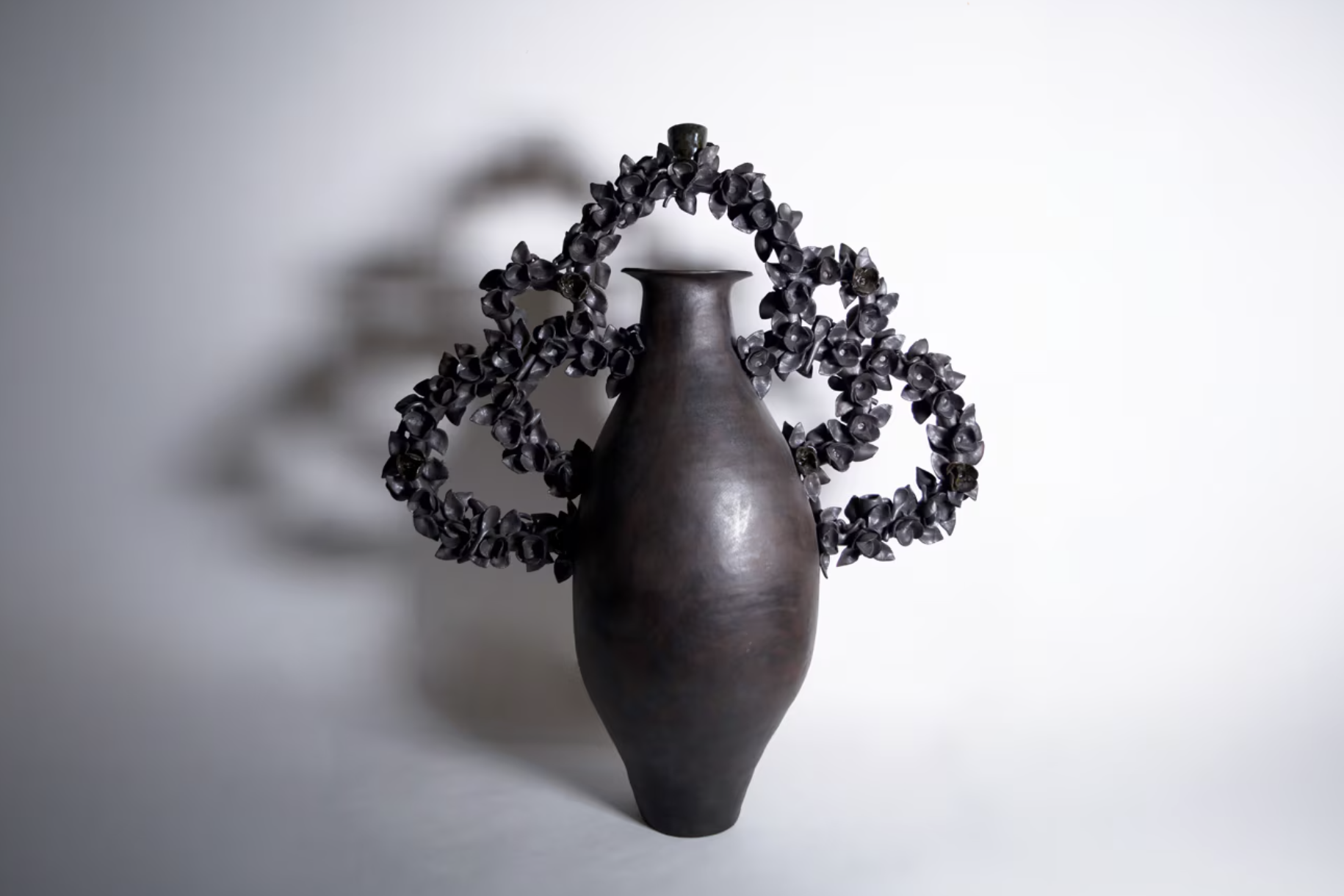
Mariana Bolaños Inclán, Tree of Life Vessel I, 2023. Ceramics, 46 x 52 x 18 cm. COURTESY OF HOMO FABER.
Mariana Bolaños Inclán
What is exciting about showing your work amidst an international cohort of craft artists?
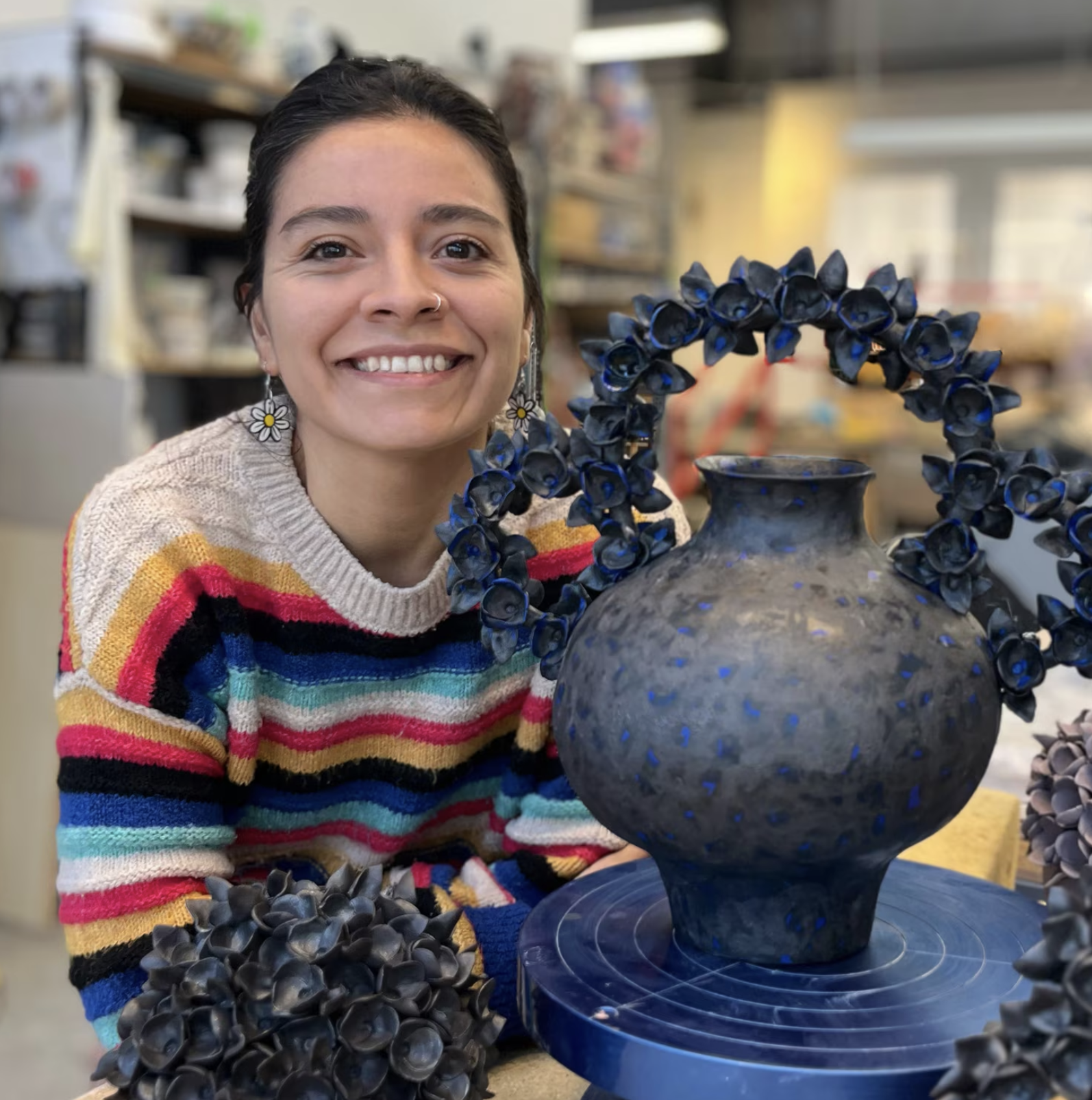
Mariana Bolaños Inclán with her work. COURTESY OF HOMO FABER.
Mariana Bolaños Inclán: Participating in Homo Faber 2026 has been truly an honour. The exhibition is curated beautifully. This is my first time being part of an international exhibition like this and it has been an incredible experience seeing artists from all over the world approach their mediums with such an amazing level of craftsmanship.
How do you approach storytelling through your medium?
MBI: The sculpture I am presenting at Homo Faber is inspired by Mexican trees of life, which are crafted by Indigenous communities adorned with flora and fauna. They are created to tell stories that fuse past traditions of the Indigenous peoples with European ideologies. With this piece, I am looking to evoke personal reflections about family dynamics that are passed down from generation to generation by storytelling, particularly the inheritance of feminine ideals and domestic roles.
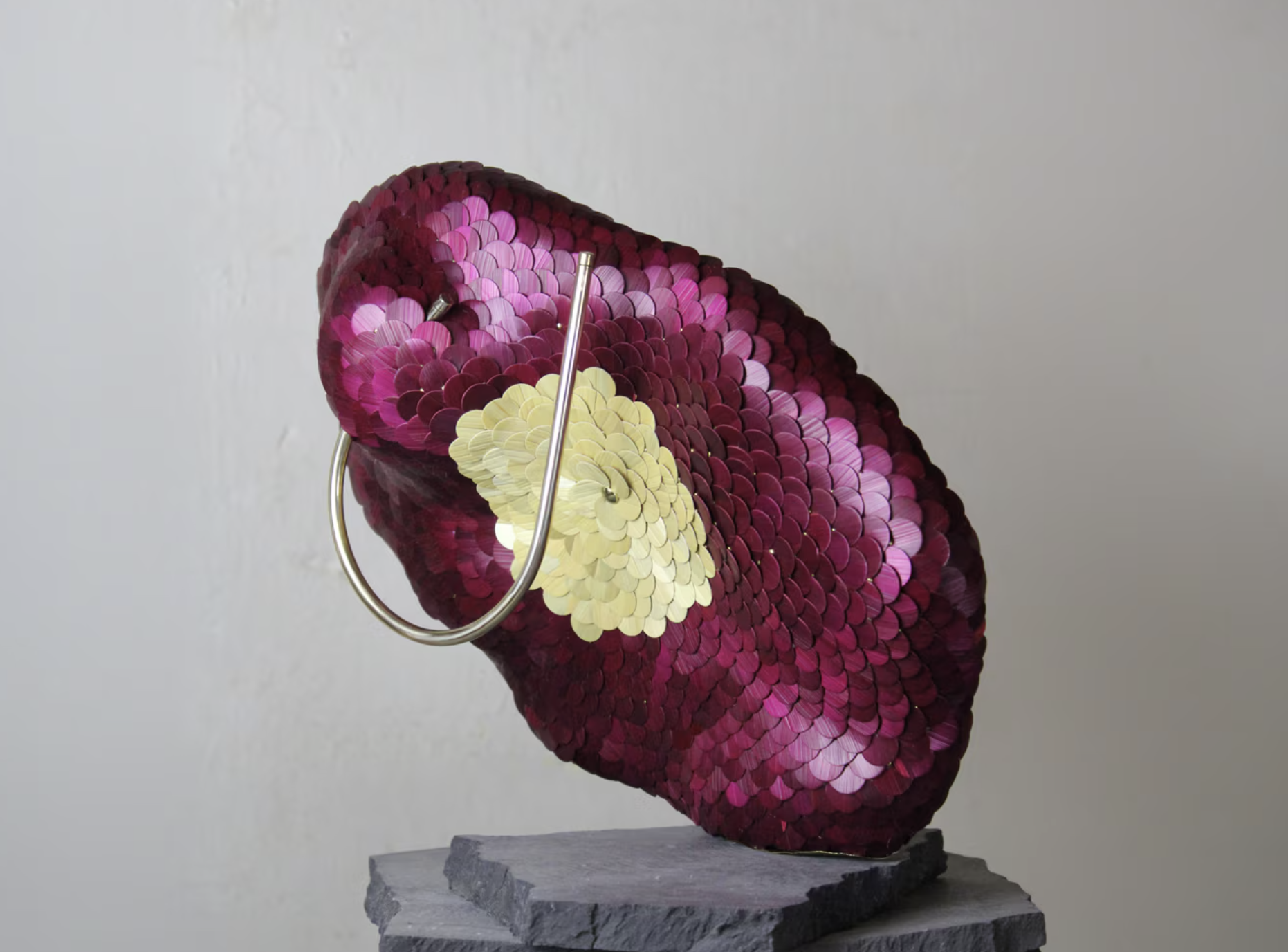
Jonathän Jouan, Invisible Monster 15, 2025. Straw, mirror, brass, marble, and oak, 27 x 36 x 19 cm. COURTESY OF HOMO FABER.
Jonathän Jouan
What is exciting about showing your work amidst an international cohort of craft artists?
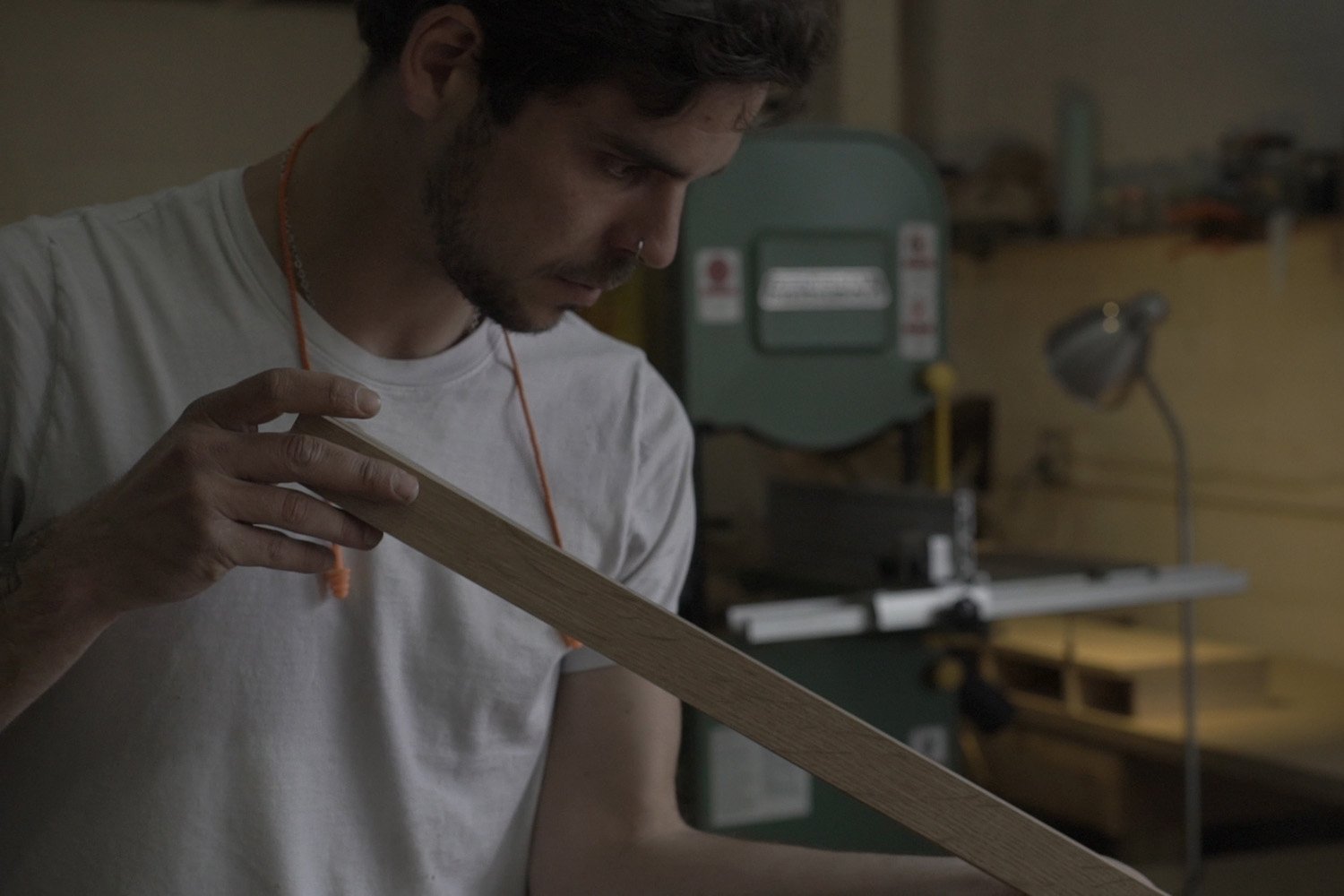
Jonathän Jouan in the studio. COURTESY OF HOMO FABER.
Jonathän Jouan: It’s always rewarding to be recognized for your works, both in craft and art. Homo Faber is a special organization that I’m really proud to be a part of, as they have succeeded to elevate the perception of high craft, and to blur the boundaries between art, craft and design.
On a more personal note, being part of that exhibition is a great accomplishment, especially when I see the quality of all the works that are presented. It has also give me a lot of strength to make even better work and push the traditional limits of straw marquetry.
How do you approach storytelling through your medium?
JJ: Storytelling is a tool. While growing up, and still today, I realized that everything is easier to learn when you have a frame, a context to make meaning, and to understand what we want to transmit.
My belief is that mythologies, legends and tales are the foundation of any civilization. Therefore, in my work I try to convey stories. Not straight-written tales, but pieces that brings both knowledge and different perspectives of our civilization.
Especially for the Amoebas Realm collection, each piece is a relic of a bigger story that doesn’t have all the answers. The collection questions our place in the evolution of the human species, how we comprehend all the invisible frames of our relationship with the nature around us, and how we learn from these tales to evolve (personally and as a civilization).
You can see more about Homo Faber 2026, including the e-catalogue, online.